Nude Art Photography in Public Spaces: Legal Realities and Creative Solutions
Photographing the nude in public is the genre at its most exposed, in every sense. It puts artistic expression, criminal law, bystander rights and a model's safety into the same frame, and it has produced some of the most argued-over images in photography. This article maps the legal terrain in principle, looks at how the photographers who defined the field actually operated, and lays out the working methods that let this work happen without anyone getting hurt. One sentence before anything else: none of this is legal advice, laws differ street by street, and the only safe counsel is local counsel.
I write it as a photographer who has made nudes in cities and landscapes for two decades and who teaches the genre in Berlin, where the questions below are not hypothetical.

Bella Donna — Burak Bulut Yıldırım
The Legal Terrain, in Principle
There is no international law of public nudity; there is a patchwork, and the patches disagree. In the United States the picture is set by state statutes and local ordinances, with First Amendment arguments available to artistic expression but never guaranteed to win, so the same shoot can be lawful in one county and a misdemeanor in the next. Much of Europe sits further toward tolerance, with wide variation between countries and, within Germany especially, a cultural tradition of Freikörperkultur that treats non-sexual nudity as unremarkable. Large parts of the Middle East and Asia criminalize public nudity outright, and there the question is not how to frame a shoot but whether it can responsibly happen at all.
Underneath the patchwork, three legal questions repeat everywhere. First, indecency: statutes typically target lewd or sexual conduct, which is why context, intent and staging matter so much, and why courts keep being asked to locate the line between art and obscenity. Second, permission: many cities require permits for any professional photography in public, separate from the nudity question entirely, and a shoot can fail on this boring ground alone. Third, other people: bystanders have privacy rights, identifiable strangers in a frame may need releases, and a passerby's complaint is the most common way a tolerated shoot becomes a police matter. Answer those three honestly for your specific location and you know most of what the law will ask of you.
What Spencer Tunick's Career Teaches
No one has stress-tested this terrain like Spencer Tunick, whose mass installations gather hundreds or thousands of volunteers into nude formations across public space. He was arrested repeatedly in 1990s New York for attempting them, and instead of retreating he litigated; in 2000 a federal appeals court sided with him against the city, affirming that his organized street installations could proceed as protected expression. The ruling did not make public nudity legal. It made one artist's carefully structured practice defensible, which is a different and more instructive thing.

Spencer Tunick
Look at how the installations are built and the method matters more than the spectacle: every participant a volunteer with a signed release, routes and timing negotiated in advance, legal counsel on call, the whole event over in minutes at first light. By 2004 he was staging an installation in downtown Cleveland with thousands of volunteers and the city's cooperation rather than its handcuffs. The arc of his career, from arrestee to invited guest, is the clearest proof available that structure, paperwork and patience can move an entire city's definition of what belongs in public.

Spencer Tunick
At this scale the individual body dissolves and the crowd becomes a single organism laid over the architecture, which is precisely the political content: the city briefly belongs to the people in it, unarmored.

Spencer Tunick
Fine-Art Nude Photography Workshops · Since 2012
Join the Workshop List
Nude Art Workshops is a small-group programme founded by photographer and educator Burak Bulut Yıldırım. We run concept-led sessions with professional model collaborators and a maximum of six photographers.
Join the list for new workshop dates, visiting models, new cities, and programme updates. Subscribers usually hear about new sessions before public announcement.
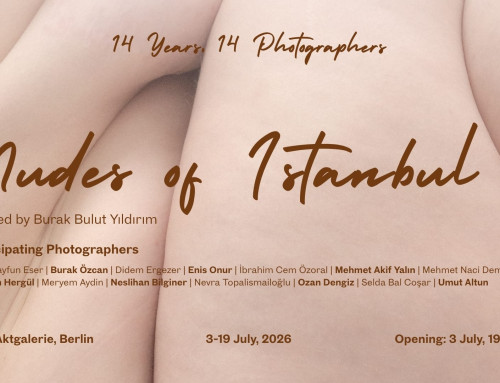
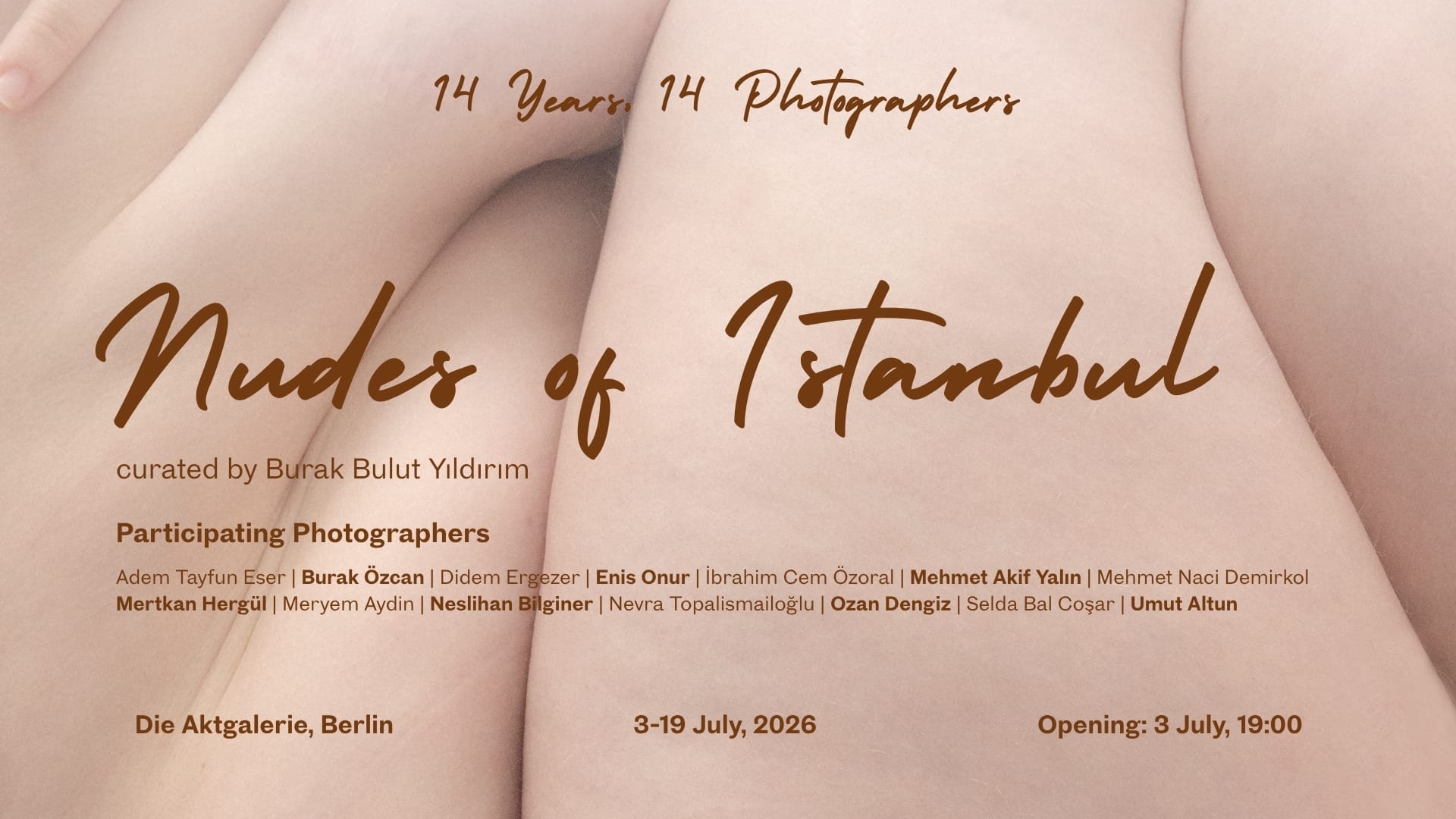
Fourteen years of our nude art workshops also became an exhibition and a hardcover book. The project is now held by the Victoria and Albert Museum’s National Art Library in London, Istanbul Modern, the German National Library, and private collectors.
Curious about the project? Discover The Nudes of Istanbul →
Maximum six photographers per session · No weekly sales emails · Instagram: @nudeartworkshops
Working Inside the Constraints
Short of Tunick's litigation budget, photographers have developed a quieter toolkit, and most of it comes down to when, where and how much. Timing first: dawn is the genre's home hour, partly for the light and mostly because an empty street at 05:30 removes the bystander problem before it exists. Location second: remote or overlooked public land, scouted in advance, offers seclusion without losing the sense of place that makes the image worth the trouble. There is also a long guerrilla tradition of fast, unpermitted city shoots, and honesty requires saying two things about it: it produced some of the genre's iconic images, and its legal risk lands hardest on the model, who is the one visibly unclothed if things go wrong. If you accept that tradition's risks, they must be shared knowingly, planned around and never discovered mid-shoot.
My own urban work runs on that discipline. The route is walked the day before, fully clothed; the crew is tiny; the model dresses between frames; and the session ends, without discussion, the moment the street stops being empty. The two images below come from that register of city work, where the constraint itself becomes the aesthetic: brief exposure, available light, a body passing through the architecture like a rumor.

Dark Alley — Burak Bulut Yıldırım
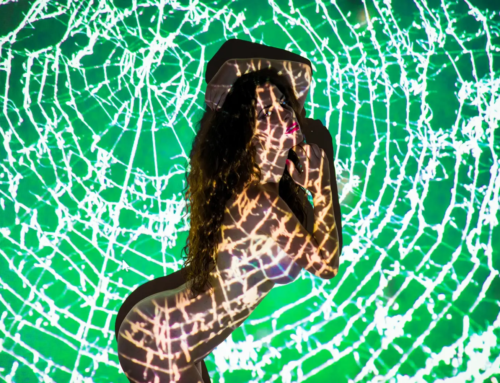
Composition carries the rest of the load. Environmental elements can shield the body; a pose can imply full nudity while concealing it; shadow, reflection and translucent fabric can suggest what is never shown; body paint occupies a legal and visual space between skin and costume. These are not compromises. Restriction has always been a forge for form, and some of the strongest public nudes derive their tension precisely from how much they withhold.

City Lights — Burak Bulut Yıldırım
The third path is the front door: permits, officials, community. It is slower and less romantic, and it is how the largest projects in this field actually happen. Authorities respond to specificity, so a proposal that names times, places, participant counts, insurance and clean-up reads as professionalism rather than provocation; framing the project's artistic and cultural intent, and involving local artists where possible, converts potential objectors into stakeholders. Tunick's Cleveland is the template, and it scales down to a single-model sunrise shoot with a location permission in your pocket.
Why the Work Is Worth the Trouble
Public nude photography earns its difficulty by doing things no studio image can. Showing real, diverse bodies in shared civic space confronts beauty standards where they live, and presenting nudity in plainly non-sexual contexts erodes the reflex that equates skin with sex, a reflex this entire genre exists to complicate.

Anthony Patrick Manieri
The body in landscape carries its own arguments: human vulnerability set against environmental change, softness against concrete, the person against the state. From climate-focused projects to protest installations, the unclothed figure remains one of the few images that can still stop a public that has seen everything.

Kestrel
Ethics on Location
The law is the floor; the ethics are the building. A public shoot borrows space from people who never consented to host it, so the borrowing has obligations: choose times that spare families and businesses, leave the location exactly as found, and treat culturally or religiously significant sites as off the table rather than as edgy backdrops. Toward the model the obligations are heavier still, because the exposure is theirs. Full disclosure of legal risk before agreement, an exit plan and cover garment within reach at all times, a crew briefed that the model's word ends the shoot instantly, and consent treated as continuous rather than a signature collected at breakfast. I have walked away from planned frames because a location's mood changed, and every one of those retreats was correct.
Field Craft
The gear philosophy is subtraction. A public nude shoot wants one small body, one or two fast lenses, and nothing that needs a stand: mobility is safety, and a low profile keeps the event from becoming one. Light is whatever the location gives, which pushes the craft toward reading natural light quickly, with at most a folding reflector or a palm-sized LED to shape it. Photographers who master this constraint find it follows them home; nobody who learns to expose a body by streetlight is ever afraid of a studio again.

Eric Lowenberg
Three More Ways In
Ryan McGinley's road-trip nudes turned the American landscape into a stage for youth and motion, shot loose and fast with friends rather than models, and made spontaneity itself the subject.

Ryan McGinley
Henning von Berg's "Naked City" series placed figures against iconic urban architecture across the world, trading wilderness for the charged formality of civic space.

Henning von Berg
And John Crawford's "Aerial Nudes" abstracted the question entirely, arranging bodies into geometry photographed from above, where the public space becomes a page and the figures its typography.

John Crawford
Knowing Your Ground
Photographers who work in public should know the protections available to them before needing them: constitutional or human-rights arguments for artistic expression where they exist, a lawyer with free-speech experience identified in advance, and relationships with artist organizations and press that can shape the narrative if a project is challenged. The photographers this article names did not avoid friction; they were prepared for it, and the preparation is what turned friction into precedent. The craft that survives the street is built on the same foundations as everything else in this genre, and the companion pieces on directing the pose and the genre's legal history show how old those foundations are.
Questions photographers ask
Is nude photography in public legal?
It depends entirely on jurisdiction, context and conduct. Many places distinguish artistic nudity from lewd behavior; many require photography permits regardless; some prohibit public nudity outright. Verify locally before planning, ideally with counsel.
Do I need releases for a public shoot?
From the model, always. From identifiable bystanders who end up in frame, very often, especially for any commercial use. The cleaner solution is timing and framing that keep strangers out of the picture entirely.
How do major artists shoot mass nudes without arrests?
Structure: volunteer releases, negotiated permits and routes, legal counsel, dawn timing and minutes-long execution. Spencer Tunick's move from repeated arrests to city-sanctioned installations tracks exactly this professionalization.
Where can I build these skills safely first?
In a structured setting where direction, consent practice and concept-building are taught deliberately. Our Berlin and Istanbul workshops build exactly that foundation, with the erotic register set aside in favor of theme and form, before you ever take the work outdoors.
The discipline this article describes, planning, consent, concept, is the same discipline our workshops are built on. Each edition works from a single theme, sexuality is deliberately demoted to third or fourth place behind form and collaboration, and models are partners in the work rather than props for it. Led by Burak Bulut Yıldırım, Berlin-based photographer and curator practicing since 2005: fourteen-plus years of nude art workshops, 50+ editions, 300+ photographers, exhibitions across Berlin, Zurich, Barcelona, Rome, Thessaloniki and Heilbronn, curator of Nudes of Istanbul (Die Akt Galerie Berlin, 2026).
Portfolio: burakbulut.org · Limited editions on Saatchi Art and Artsper · Contact: hello@nudeartworkshops.com