
The Unseen Narrative: Innovative Concepts in Nude Art Photography
A concept gives a nude photograph a reason to exist beyond the fact of an unclothed body. It determines what the body is doing, what the setting contributes, which formal choices belong in the frame and which ones are merely attractive. Technique still matters, but it becomes accountable to an idea. The following approaches are starting structures, not recipes: each one must be narrowed until the photographer can state what the image is actually testing.
I write as a practicing photographer, curator and educator in Berlin, where concept-led image making is the basis of the work developed through Nude Art Workshops.
Conceptual Foundations: Thinking Before You Shoot
Before the camera is raised, write one sentence that the image must make visible. “Identity” is too broad. “A body attempts to hold two incompatible identities in the same room” can guide pose, framing and material. A useful concept contains tension, not only a topic.
- Intention: define the question or conflict. What should remain unresolved after the viewer has understood the surface?
- Context: decide what the room, object, title or location contributes. Remove anything that repeats the same idea without adding pressure.
- Narrative position: place the frame before, during or after an implied event. Even a still pose carries time.
- Symbol: use an object only when its meaning changes through contact with this particular body.
- Emotional target: name the viewer’s likely response, then decide whether the image should satisfy or disturb that expectation.
Brooke Shaden’s staged self-portraits show how a recognisable visual world can be built from repeated decisions about scale, costume, setting and psychological fiction. The important lesson is not to imitate the surface, but to notice how each element supports the same premise.

Brooke Shaden
Practitioner note: I reduce an idea to four columns before shooting: concept, physical action, light behaviour and material. If a decision cannot be assigned to one of those columns, it is probably decoration. This simple test has saved more images than any new camera or lens.
Innovative Approaches and Thematic Explorations
1. Body as Terrain
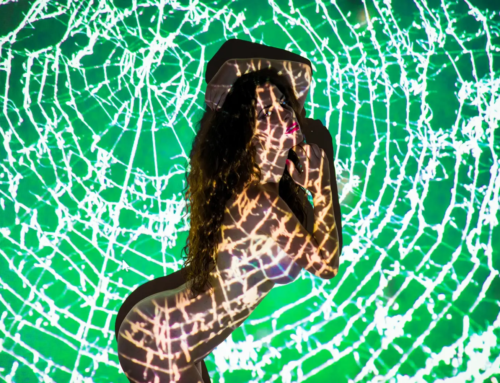
Concept: The body is photographed as topography: folds, joints, skin and shadow become a system of ridges, intervals and surfaces. Abstraction can suspend identity, but it also risks treating a person as raw material. The concept needs a reason for that removal. In Colorful Hallucinations, projected and reflected colour reorganises the body into shifting zones rather than presenting it as a neutral anatomical study.
Techniques:
- Use macro photography to transform skin textures, pores, and hair into vast, detailed terrains. A fingerprint can become a labyrinth of ravines; fine hairs on an arm can look like a windswept field of grass.
- Employ dramatic side-lighting (chiaroscuro) to carve out deep shadows and bright highlights, creating the illusion of "valleys" and "mountains" along the curves of the spine, collarbone, or hip. John Swanepoel’s black and white image masterfully uses this technique, where the stark light on the model’s back creates undulating forms that are indistinguishable from desert sand dunes.
- Physically incorporate sand, soil, leaves or water only when the material changes the body’s meaning; otherwise it remains scenic styling.
Project structure:Bodyscapes — A series of large-scale, abstract macro photographs that explore the intimate parallels between human anatomy and Earth's geography, presenting each as a record of natural design.

The colour image and the monochrome study reach abstraction by different routes: one uses chromatic interruption, the other relies on directional light and compressed perspective. Compare what each method keeps and what it removes.

John Swanepoel
2. Fractured Identity
Concept: In a world where we all perform multiple versions of ourselves, this theme explores the fragmented self, duality, and the multifaceted nature of identity. It visually represents the internal conflicts and different roles we play in our lives. Lucien Clergue, a master of classic black and white photography, explored this theme through techniques like multiple exposure. In the image shown, the female form is overlaid upon itself against the sea, creating a dreamlike, fragmented vision that speaks to the fluid and layered nature of self.
Techniques:
- Use mirrors, broken glass, or prisms to literally split, multiply, and refract the subject's body, symbolizing self-reflection, a fractured psyche, or parallel identities.
- Employ in-camera or post-production double exposure to overlay different poses, expressions, or even different subjects onto one another, suggesting an internal dialogue or a merging of identities.
- Utilize digital manipulation to "slice," deconstruct, and rearrange body parts in surreal ways, creating a visual metaphor for the feeling of being pulled in different directions.
Project structure:Kaleidoscope Self — A series of portraits that visually represents the complex and often contradictory nature of modern identity through refraction and layering.

Lucien Clergue
Practitioner note: Mirrors and multiple exposures become predictable when they merely announce “duality.” I ask what the two versions disagree about. Change the body’s action, focal plane or temporal position so the split has consequences. The same concern appears in the psychology of photographer and subject: fragmentation should not become an excuse to ignore the person being fragmented.
3. Temporality and Aging
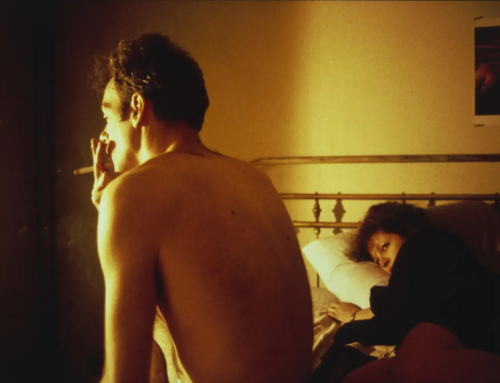
Concept: This approach confronts the universal experience of time's passage and its undeniable effects on the human form. It challenges the art world's historical obsession with youthful perfection by finding beauty, grace, and narrative power in the process of aging. Nicholas Nixon’s iconic project, "The Brown Sisters," while not a nude series, is a profound touchstone for this concept. By photographing the four sisters annually for over 40 years, he created an incredibly moving record of the passage of time, family bonds, and mortality. The two images presented here, one from the beginning of the project and one from later years, powerfully illustrate this chronological narrative.
Techniques:
- Create a diptych or triptych that juxtaposes portraits of the same person at different life stages, or places young and old bodies together in a single composition to create a dialogue about life's process.
- Use long exposure with subtle movement to capture the "flow" of time around a still figure, creating a ghostly or ethereal effect that speaks to our fleeting existence.
- Focus on the details that tell the story of a life: the lines on a face, the texture of weathered skin, the elegant grace of an elderly hand. These are marks of experience, not imperfections.
Project structure:Chronos' Canvas — A long-term documentary project that photographs the same nude subjects annually for a decade or more to create a profound visual meditation on aging.

Nicholas Nixon
The force of Nixon’s series comes from repetition under a stable rule. The interval between photographs becomes visible because the basic arrangement remains controlled.

Nicholas Nixon
4. Body and Technology
Concept: Screens, biometric systems and networked identities have altered how bodies are seen and managed. A technological nude need not look futuristic. It can examine compression, surveillance, data extraction, image circulation or the gap between physical presence and a digital profile.
- Project code, grids or live data onto the body and allow the projection to break across volume rather than remain a flat graphic.
- Use reflections from monitors, scanners or optical filters as actual light sources so the technology leaves a physical trace in-camera.
- Build a sequence in which the same body moves from direct observation to pixelation, delay or transmission.
Alexander Van Glitch’s Homo Digitalis uses glitch aesthetics to describe a body disrupted by image systems. In my own fine-art practice, the technological question is approached through physical, in-camera methods rather than generative AI: projection, refraction, reflective materials and controlled exposure make the intervention visible at the moment of capture.

Alexander Van Glitch
A workable project would keep the body constant while changing only the means of mediation: direct light, projection, screen reflection and optical distortion. The sequence then compares technologies rather than collecting unrelated effects.
5. Environmental Commentary
Concept: This approach uses the vulnerability of the nude human form as a powerful metaphor for the fragility of the planet. It creates a stark and often unsettling commentary on pollution, climate change, and humanity's destructive impact on the environment. Spencer Tunick is the undisputed master of this concept on a grand scale. The photograph from his installation on the Aletsch Glacier in Switzerland, for example, places hundreds of nude bodies in a melting, endangered terrain. The visual contrast between the warm, vulnerable flesh and the cold, receding ice creates an unforgettable and urgent statement about climate change.
Techniques:
- Photograph nude figures in polluted, deforested, or degraded environments, creating a jarring juxtaposition between the natural purity of the body and the spoiled terrain.
- Stage compositions where the nude body interacts with artificial waste—plastic, discarded electronics, etc.—to highlight our complicated and often toxic relationship with consumerism.
- Use body paint or natural pigments to camouflage the human form into its surroundings, or to transform subjects into visual representations of endangered species.
Project structure:Naked Earth — A powerful series of images that highlights the shared vulnerability of the human body and the planet, urging a more conscious relationship with our environment.

Spencer Tunick
6. Abstract Bodyscapes
Concept: To move beyond representation entirely and transform the body into a collection of pure shapes, lines, and textures. This approach challenges the viewer to disassociate the image from a "nude person" and see it as an abstract composition. Burak Bulut Yıldırım's "Dress Code: Light" series exemplifies this perfectly. The image shown uses precise lighting and shadow to fragment the body, turning familiar curves into a dynamic interplay of abstract graphic elements. The identity of the subject is completely secondary to the power of the composition.
Techniques:
- Use extreme close-ups on parts like the elbow, the back of the knee, or the curve of a shoulder to create forms that are completely unrecognizable and alien.
- Experiment with disorienting angles and perspectives, shooting from directly above or below, to defy gravity and create a sense of abstraction.
- Employ motion blur, intentional camera movement (ICM), or long exposures to dissolve the body's solid form into fluid, painterly strokes of light and color.
Project structure:Form Unformed — A collection of abstract images that challenges viewers to see the body not for what it is, but for the infinite variety of shapes and textures it can become.

Fine-Art Nude Photography Workshops · Since 2012
Join the Workshop List
Nude Art Workshops is a small-group programme founded by photographer and educator Burak Bulut Yıldırım. We run concept-led sessions with professional model collaborators and a maximum of six photographers.
Join the list for new workshop dates, visiting models, new cities, and programme updates. Subscribers usually hear about new sessions before public announcement.
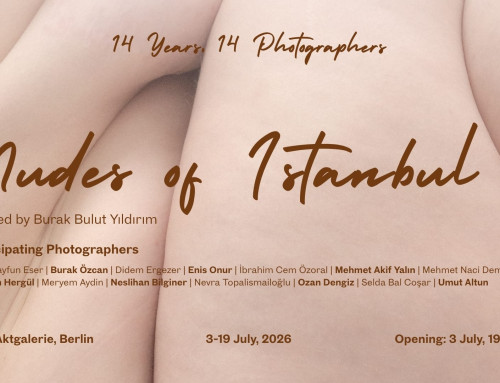
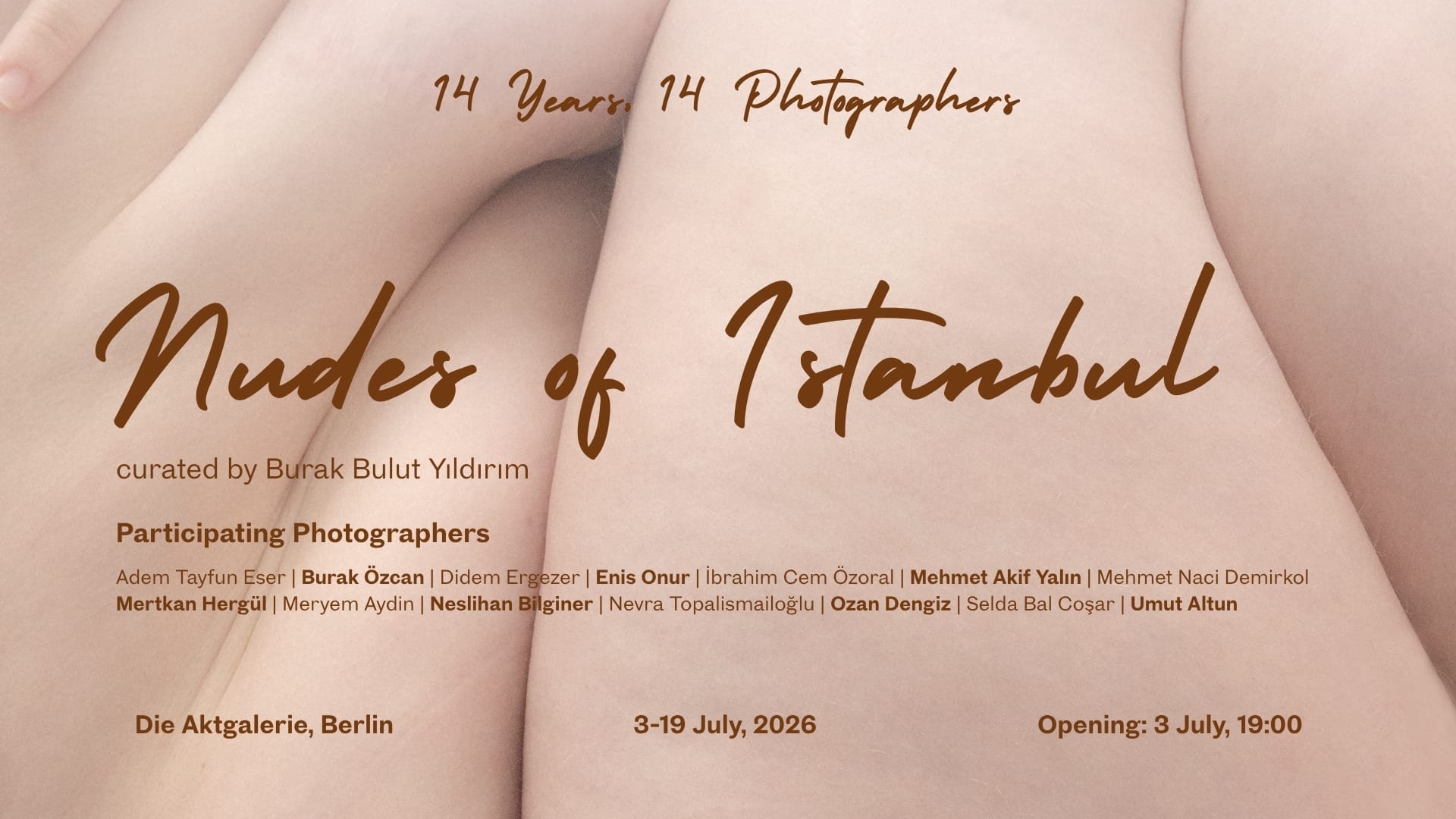
Fourteen years of our nude art workshops also became an exhibition and a hardcover book. The project is now held by the Victoria and Albert Museum’s National Art Library in London, Istanbul Modern, the German National Library, and private collectors.
Curious about the project? Discover The Nudes of Istanbul →
Maximum six photographers per session · No weekly sales emails · Instagram: @nudeartworkshops
7. Cultural Fusion
Concept: To explore the intersection of identity, culture, and the body by blending aesthetic elements from different global traditions. This approach celebrates human diversity and can be used to comment on themes of heritage, assimilation, and globalization. Chelone Wolf's powerful portrait is an excellent illustration, using projected light to simulate the appearance of scarification. This technique creates a dialogue between modern technology (projection) and ancient traditions of body modification, exploring themes of identity and heritage in a contemporary context.
Techniques:
- Incorporate traditional textiles, body paint, scarification patterns, or costumes from various cultures into a contemporary nude art context.
- Use settings, architecture, or props that reference specific cultural contexts, creating a dialogue between the universal nude form and a specific cultural identity.
- Research and explore how different cultures have historically viewed and represented the human form, and use these ideas as a conceptual starting point for a new series.
Project structure:Global Skin — A collaborative series that celebrates human diversity by photographing subjects from different backgrounds, incorporating elements of their cultural heritage.

Chelone Wolf
Advanced Techniques for Conceptual Nude Photography
1. Light Painting
This technique uses a dark environment, a long camera exposure, and a moving light source (like a flashlight, LED wand, or even a sparkler) to "paint" light onto the scene. The moving source can trace the contours of the form, create glowing shapes, write words, or generate ghostlike effects around the subject. It’s a method that transforms the photographer into a painter, using light as the brush. Eric Paré is a contemporary master of this form; his work, as seen in the photograph, uses custom-built light tubes to create stunningly fluid and precise shapes around his subjects, blending performance art with photography.

Eric Paré
2. Underwater Photography
Submerging the body in water opens up a new world of creative possibilities. The effects of buoyancy create a sense of weightlessness and graceful fluidity that is impossible to achieve on land. Light refracts beautifully through water, and fabrics can billow and flow in surreal ways. The resulting images are often dreamlike, serene, and otherworldly, challenging our normal perception of gravity and the human form. As Dmitry Laudin's work demonstrates, the underwater environment can feel like a womb or another planet, allowing for poses and compositions that are both elegant and surreal.

Dmitry Laudin
3. Body Casting and Sculpture
This approach physically blurs the line between photography and sculpture. By creating plaster or silicone casts of body parts (or the entire body) and then incorporating these three-dimensional forms into a photographic composition, you can explore themes of mortality (the cast as a death mask), identity (the cast as an empty shell), and the relationship between the real and the replica. Robert Mapplethorpe, known for his obsession with classical form, used this concept in some of his works, juxtaposing living flesh with the cold, perfect stillness of marble or plaster sculptures, creating a powerful dialogue about life and art.

Robert Mapplethorpe
4. Projection Art
Using a digital projector, you can cast any imaginable image—patterns, text, abstract colors, settings, historical paintings—directly onto the nude body. This technique transforms the skin into a living, three-dimensional canvas. It can examine identity by projecting words onto the body, or merge the subject with their environment by projecting images of nature or architecture. The "Mad Patterns" series by Burak Bulut Yıldırım is a direct exploration of this technique, where complex, fractal-like patterns are projected onto his subjects, creating a mesmerizing fusion of organic human curves and rigid geometric data.

Practitioner note: An experimental process earns its place when the method and concept share a property. Long exposure suits uncertainty because time accumulates. Projection suits conflict because two images occupy one surface. Refraction suits unstable identity because the optical system divides the body before the file exists. This decision-led approach is central to the concept-first workshop format.
5. Experimental and Historic Processes
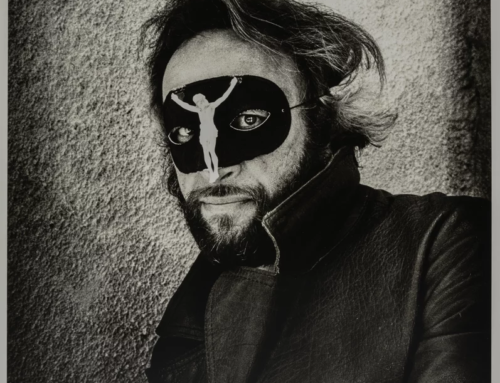
Stepping away from digital perfection can add immense depth and mood to your work. Alternative processes like cyanotype (which produces a distinct blue image), salt prints, or the complex wet plate collodion method each have unique chemical characteristics. These techniques imbue the photograph with texture, imperfections, and a sense of history, making the image feel like a tangible, one-of-a-kind object. The work of Joel-Peter Witkin, who scratches, bleaches, and collages his negatives, is an extreme example. His dark, complex images feel like artifacts from another time, a quality achieved through intense physical manipulation of the photographic materials.

Joel Peter Witkin
6. Mixed Media Integration
This approach breaks the boundaries of traditional photography entirely. A nude photograph can serve as the foundation for a more complex artwork. Artists may physically paint, draw, or collage onto the surface of the print. In the digital field, they might blend photographic elements with digital illustration or 3D models. Jerry Uelsmann was a darkroom magician and a pioneer of this concept before Photoshop existed. His surreal settings, like the one pictured, were created by combining multiple negatives in the darkroom, combining nude figures with impossible, dreamlike environments.

Jerry Uelsmann
Berlin as Material, Not Myth
Berlin carries visible historical layers, but the city should not be used as shorthand for transgression. Concrete, former industrial sites, domestic interiors and open public space each impose different conditions on the body. The relevant question is not whether a location looks “Berlin,” but what relation it creates between figure, memory and power.
The city’s varied attitudes toward nudity can reduce some forms of social anxiety, yet they do not replace consent or location responsibility. A conceptual frame must still account for the model, bystanders and the history attached to the site. The public-space photography guide addresses those practical limits.
For studio work, Berlin is useful because it supports collaboration across performance, fashion, dance and visual art. That mixture can broaden a project, provided the photographer keeps a clear authorship structure and does not confuse an abundance of references with a finished concept.
From Theme to Working Method
A concept becomes photographic when it can govern decisions. Write the premise, define the body’s action, choose one material condition and decide what the light must reveal or conceal. Then make variations without abandoning the rule. The resulting sequence may be visually diverse, but it remains one piece of thought. Related approaches appear in the emotional structure of nude photography and the representation of modified bodies.
Questions photographers ask
What makes a nude photograph conceptual?
A concept is more than an unusual effect or prop. It creates a question that controls pose, framing, material and sequence. The viewer should be able to sense a relationship between those decisions even without reading a long statement.
How do I know whether an idea is too broad?
Try to describe the image in one active sentence. “The body and identity” is a topic. “A body tries to occupy two incompatible identities at once” is narrow enough to test through action, light and composition.
Should I choose the technique or the concept first?
Begin with the concept, then choose a process that behaves in a related way. Long exposure accumulates time; refraction divides; projection overlays; a hard edge separates. Technique becomes meaningful when its physical behaviour participates in the argument.
How are concepts developed in the workshops?
The Berlin and Istanbul workshops begin with a theme and translate it into decisions about form, light, material and photographer–model collaboration. The body is not treated as a generic subject onto which effects are added.
The methods described here are used to help photographers turn a broad theme into a coherent visual proposition. The sessions are intended for photographers who want a more deliberate way to work with the body: the concept and theme come first, followed by form, light and the photographer–model collaboration. Sexuality is not treated as the default subject of the image.
Led by Burak Bulut Yıldırım, a Berlin-based photographer, contemporary artist, curator and educator practicing professionally since 2005. Nude Art Workshops have run for more than fourteen years across 50+ editions with 300+ participating photographers. Yıldırım’s work has been exhibited in Berlin, Zurich, Barcelona, Rome, Thessaloniki and Heilbronn; in 2026 he curated Nudes of Istanbul at Die Akt Galerie Berlin, accompanied by a hardcover publication from Mijuk Papers Berlin.
View workshop dates and format
Portfolio: burakbulut.org · Limited editions on Saatchi Art and Artsper · Contact: hello@nudeartworkshops.com