


The Somatic Language: A Deep Dive into Posing for Nude Art Photography
Posing is the silent, somatic language of nude art photography. In the absence of clothing, which provides immediate social and cultural cues, the body itself becomes the primary vehicle for narrative, emotion, and artistic intent. It is a form of non-verbal truth-telling, where vulnerability becomes a source of immense power. This comprehensive artistic nude posing guide explores how every line, curve, and gesture contributes to an image’s meaning. More than a mere arrangement of limbs, a pose is a statement—a proposition frozen in time. From the idealized harmony of the classical canon to the raw authenticity of the modernist break, the way a form is organized in space dictates its entire reception. This guide delves into the history, theory, and practice of posing as a sophisticated and collaborative dance between photographer, subject, and viewer.
The Grammar of Form: Foundational Posing Principles
Before exploring specific styles, an artist must understand the fundamental principles that govern all effective posing techniques for photographers. These are the grammatical rules of the body’s language, allowing for the construction of coherent and compelling visual sentences that guide the viewer’s eye and evoke a specific response.
Line and Form: Guiding the Viewer’s Eye
The human body is a collection of lines—the powerful curve of the spine, the dynamic diagonal of an outstretched leg, the sharp angle of an elbow. These lines create a visual pathway, directing the viewer’s gaze through the composition. Serene, horizontal lines often suggest tranquility, rest, and a connection to the horizon. Strong vertical lines can communicate stability, power, and monumentality, like a classical column. It is the diagonal line, however, that creates the most energy and dynamism, suggesting movement, tension, and life. Furthermore, understanding the interplay between different types of curves is crucial. A gentle **S-Curve**, often found in classical contrapposto, creates a sense of grace and natural elegance. In contrast, a more tense **C-Curve**, where the body is arched or curled, can communicate states of ecstasy, grief, or intense strain.
Balance, Rhythm, and Tension
The arrangement of the body within the frame creates balance and rhythm. Symmetrical poses, where both sides of the body mirror each other, often feel static, formal, and monumental, bestowing a god-like quality upon the subject. In contrast, asymmetrical poses, which are more common in nature, create a sense of movement, dynamism, and visual interest. A skilled artist plays with this balance to either soothe or challenge the viewer. This also involves understanding **Visual Weight**; a small, dark, or complex area of a pose (like a detailed hand gesture) can balance a much larger, simpler area (like a smooth, uncluttered back), creating a composition that feels intentionally resolved yet dynamic.
The Power of Negative Space
The negative space—the shape of the empty areas around and within the pose—is as critical as the form itself. It defines the subject’s silhouette and can be used to create its own compelling shapes that interact with the body. A bent arm creating a triangle of empty space, a hand placed on a hip carving out a sharp angle, or the space between two interacting bodies all become active compositional elements. Actively shaping the negative space helps to avoid a cluttered, flat look and adds a sense of depth and intention. Photographers like Edward Weston were masters of using negative space to amplify the sculptural quality of the human form, making the void as important as the mass.
The Classical Inheritance: Idealized and Harmonious Poses
Many foundational nude art photography poses are inherited from Greco-Roman sculpture and Renaissance painting. This classical canon is built on idealized beauty, mathematical harmony, and anatomical grace, creating a visual shorthand for concepts like divinity, heroism, and nobility. To use these poses is to consciously place your work in dialogue with centuries of art history.
Contrapposto: The Awakening of Form
Originating in ancient Greek sculpture, contrapposto was a revolutionary departure from the stiff, frontal stances of earlier art. It was the moment art discovered naturalism. By having the figure place its weight on one leg, the pose creates a gentle, natural S-curve through the torso as the hips and shoulders tilt in opposite directions. This simple shift breaks the body’s rigid symmetry, suggesting the figure’s inner life, relaxed state, and capacity for movement. In the photograph below, Robert Mapplethorpe masterfully uses contrapposto to imbue his subject with a timeless, sculptural grace. The controlled studio lighting and intense focus on pure form connect the contemporary body to this deep art-historical lineage, proving the pose’s enduring power.

Robert Mapplethorpe
The Odalisque: A History of the Reclining Nude
The reclining nude, or odalisque, is one of the most persistent and debated motifs in art history, from Titian’s *Venus of Urbino* to Ingres’ *Grande Odalisque*. It establishes a visual language of sensuality, languor, and often, availability to the viewer’s gaze. While historically complex and often tied to themes of the “male gaze” and colonialism, contemporary photographers have subverted its conventions. Helmut Newton, for example, often infused the pose with a sense of power, irony, and confrontational style, as seen in the image below, where the model’s gaze is anything but passive. The pose, with its elongated horizontal lines, remains a powerful tool for exploring themes of intimacy, vulnerability, and repose, but its meaning is now a site of active reinterpretation.
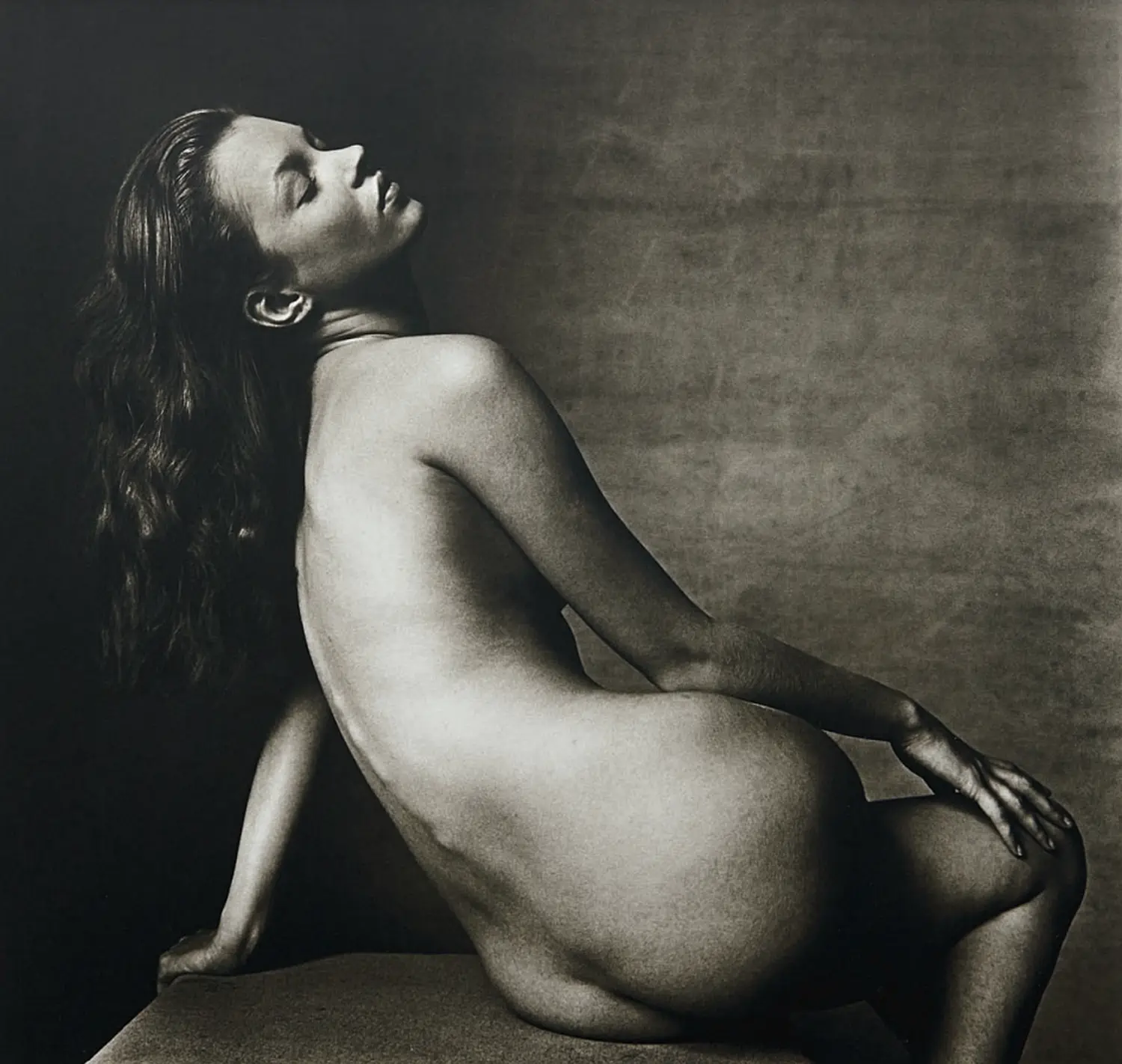
Helmut Newton
The Modernist Break: Authenticity, Abstraction, and the Inner World
Contemporary posing is often defined by its deliberate break from classical idealism. It prioritizes psychological depth, raw authenticity, and a formal exploration of the body itself, often challenging traditional standards of beauty and representation. It is less about presenting an external ideal and more about investigating an internal reality. This shift requires a different relationship with the model, one based on trust and the shared goal of revealing a truth, however imperfect.
The ‘Unposed’ Pose and the Search for Truth
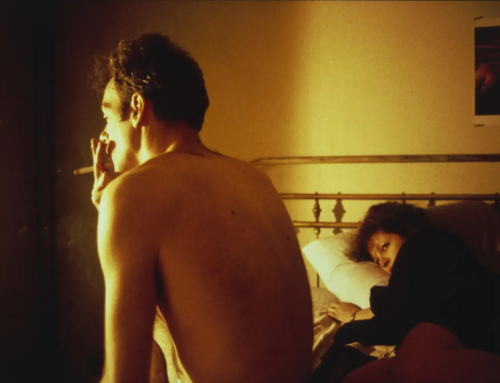
The “unposed” pose is a carefully constructed illusion of spontaneity. It seeks to capture candid, natural-looking moments that feel unstaged, intimate, and emotionally resonant. This approach is central to the diaristic work of photographers like Nan Goldin. The key to achieving this is not to direct the model into a pose, but to create the conditions for an authentic moment to arise. In the image below, the snapshot aesthetic, casual environment, and the subject’s unguarded expression create a sense of raw, unfiltered reality. It challenges the very idea of photographic artifice and invites the viewer into a personal, vulnerable space, making them a witness rather than a mere spectator.
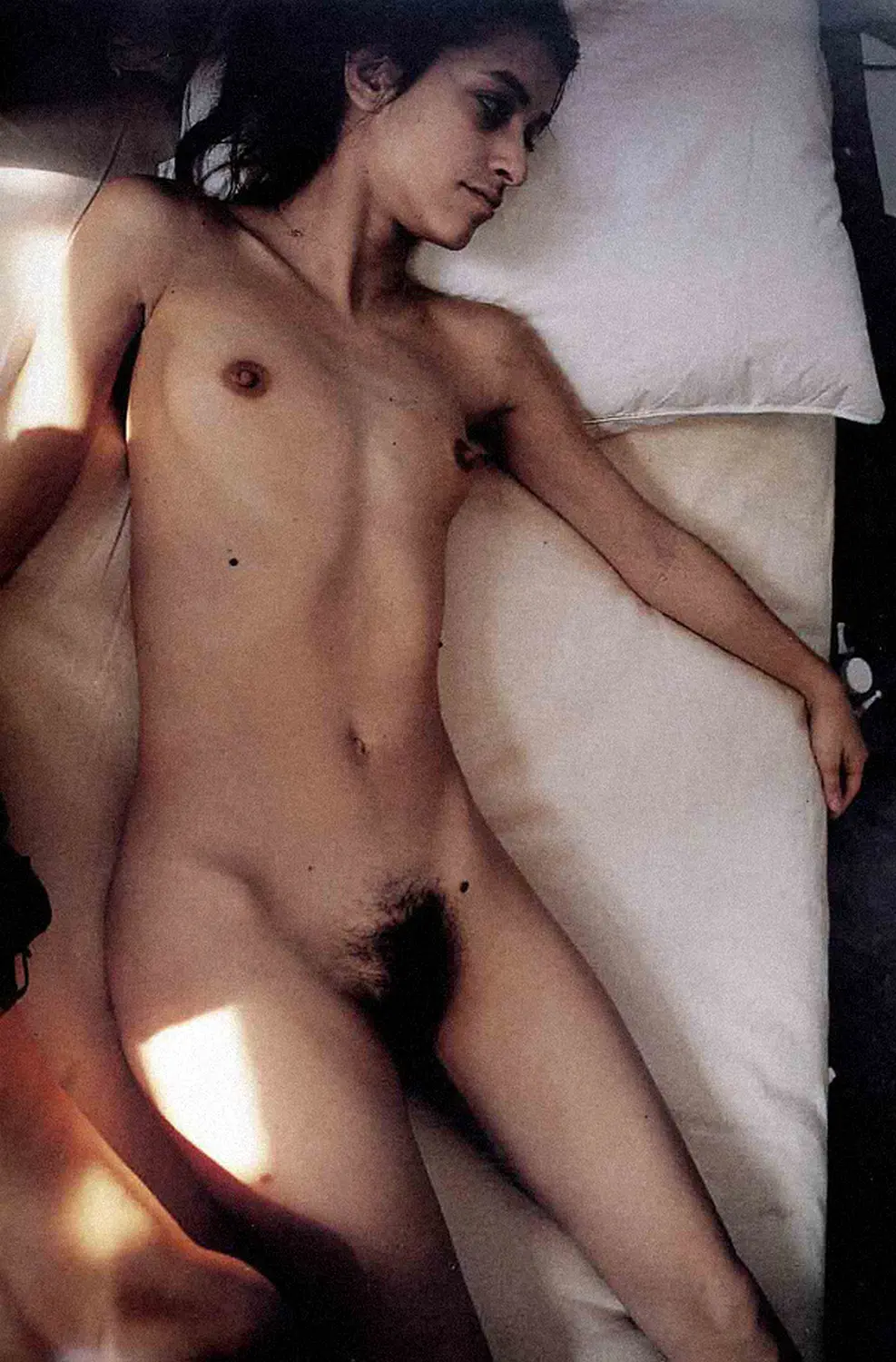
Nan Goldin
Abstracting the Form: The Body as Raw Material
A key modernist impulse was to privilege form over literal representation. This led to poses that deconstruct the body, transforming it into a series of abstract shapes, lines, and textures. André Kertész, in his groundbreaking “Distortions” series, used funhouse mirrors to fragment and reshape the human form into surreal, alien landscapes, as seen in the photograph. This approach is also central to the work of photographers like Bill Brandt, who used wide-angle lenses to turn the body into strange, pebbled forms. Through extreme close-ups, unconventional camera angles, and experimental techniques, the goal is not to represent a person, but to use the body as a starting point for a purely visual investigation into form itself.

André Kertész
The Empowered Gaze: Returning the Look
In direct response to a long history of passive representation, many contemporary artists utilize poses that convey strength, confidence, and agency. These empowered stances often involve wide, stable postures, strong geometric shapes, and, most importantly, direct eye contact with the camera. Rooted in feminist art theory, this approach seeks to “return the gaze,” disrupting the traditional power dynamic where the subject is a passive object to be consumed. The work of Cindy Sherman masterfully explores this theme. In her self-portraits, such as the one below, she uses costume, makeup, and a confrontational pose to deconstruct and critique the roles and stereotypes imposed upon women, reclaiming control over her own representation.

Cindy Sherman
The Somatic Lexicon: A Guide to Emotional Posing
The body is a direct conduit for emotion. Through kinesics—the study of body motion communication—we understand that certain physical states are universally read as emotional expressions. A photographer can use this somatic lexicon to build psychological depth and narrative in their emotional posing techniques.
Posing for Vulnerability and Grief
A curled, contracted, or fetal position communicates vulnerability, sorrow, or introspection, as the body instinctively protects its vital core. Tucking the chin, wrapping arms around the legs, and creating a closed-off shape are all non-verbal signals of a need for safety or a state of grief. In Burak Bulut Yıldırım’s photograph “Tulle,” the model’s curled form, combined with the soft, concealing fabric, powerfully evokes a sense of introspection and tender fragility, shielding the subject from the viewer’s full gaze.

Tulle by Burak Bulut Yıldırım
Posing for Ecstasy and Confidence
In direct contrast, an open, expansive pose—back arched, arms outstretched, chest open, head thrown back—signals ecstasy, confidence, freedom, or release. These poses take up space and expose the body’s most vulnerable areas, which is in itself a sign of power and a lack of fear. Herb Ritts was a master of this form. In the image below, the subject’s dynamic, reaching pose, combined with Ritts’ characteristic use of strong, sculptural light, creates an iconic representation of freedom and uninhibited joy.

Herb Ritts
Posing in Context: Interaction with the Environment
A pose does not exist in a vacuum. The environment can become an active partner, creating a dialogue between the body and its surroundings. This is a key technique for creating context, narrative, and deeper conceptual meaning.
In Burak Bulut Yıldırım’s “Into the Wild,” the model’s body is not just placed in nature, but physically integrated with the gnarled roots of a tree. The pose itself—the way the spine curves and the limbs entwine with the wood—echoes the organic lines of the environment. This deliberate interaction suggests a primal, symbiotic connection between the human and natural worlds. This deepens the image’s conceptual meaning far beyond a simple nude in a landscape, transforming it into a statement about belonging and our place in the ecosystem.

Into the Wild by Burak Bulut Yıldırım
Posing in Berlin: A City of Somatic Freedom
The city of Berlin offers a unique cultural backdrop for the art of posing, particularly for nude photography. It is a city whose identity is deeply rooted in physical expression and the celebration of the body in all its forms. Berlin’s famous club culture and its vibrant performance art scene are living laboratories of uninhibited movement and somatic expression. This cultural ethos, combined with Germany’s tradition of **FKK (Freikörperkultur – Free Body Culture)**, creates an environment where there is a more relaxed, less-sexualized, and more natural approach to nudity. This allows for a deeper and more authentic exploration of posing, free from many of the constraints found elsewhere. The city’s very architecture, from its historical scars to its brutalist monuments, provides a powerful stage for creating a dialogue between the vulnerable human form and a complex, resilient environment, making it an ideal place to master the somatic language.
Directing the Dance: The Art of Guiding the Pose
A photographer’s role is akin to that of a choreographer or director. Effective guidance is built on clear communication, empathy, and mutual trust. It is crucial to use simple, precise language (“elongate your spine,” “shift your weight to your left hip,” “soften your fingers”), and often demonstrating a pose (while clothed) is more effective than words alone. The concept of Flow Posing is an advanced technique where the director guides the model through a seamless sequence of connected poses, often set to music. This maintains a fluid, kinetic energy and allows the photographer to capture beautiful, authentic moments of transition, preventing the session from feeling stiff or static.
A crucial element of directing is guiding the model’s **breathing**. A deep inhale naturally expands the chest and elongates the spine, perfect for a powerful pose, while a slow, full exhale can relax the muscles and create a sense of serene release. Making micro-adjustments—to the tilt of a head, the placement of fingers, the angle of a foot—is what refines a good pose into a great one. This process must always be a respectful photographer-model collaboration. The foundation of this collaboration is consent and ethical practice. The photographer must create a safe, warm, and professional environment where the model feels empowered to express boundaries, suggest modifications, and be an active, enthusiastic participant in the creative process. The goal is to find positions that are not only visually compelling but also feel authentic and comfortable for the individual embodying them.
Conclusion: From Position to Proposition
Mastering the art of posing requires moving beyond a memorized set of positions to a deep understanding of the body as a medium of expression. It is a journey that requires technical skill, historical knowledge, empathy, and immense creativity. Each model brings their own unique physicality, history, and presence, and the most powerful images arise from a genuine collaboration that honors this individuality. A pose should not be seen as a final, rigid state, but as a moment of potential—a breath held, a muscle tensed, a weight shifted. Ultimately, a great pose is not just a position; it is a proposition—an offering of form, feeling, and idea to the viewer. The continuous exploration of this silent, powerful language is one of the most challenging and rewarding aspects of nude art photography.
The Artist’s Perspective & Workshops in Berlin
In the nude art photography workshops led by award-winning photographer Burak Bulut Yıldırım, these diverse posing techniques are explored in depth and with hands-on practice. With nearly two decades of experience and exhibitions across Europe, Yıldırım offers insights into both classical and contemporary posing. The workshops move beyond static positions, dedicating sessions to the principles of **Flow Posing**, the psychology of emotional expression, and the art of respectful, collaborative direction. Set in the creatively charged atmosphere of Berlin, participants learn to master the grammar of form and develop their own unique somatic language.
Limited edition works by Burak Bulut Yıldırım are available for collectors on respected platforms such as Saatchi Art and Artsper. You can also explore his portfolio of contemporary nude art projects at burakbulut.org.
To learn more about mastering the art of posing or to join a workshop that offers this hands-on experience, connect with us on Instagram or email hello@nudeartworkshops.com.