
From Workshop to Gallery: The Nudes of Istanbul Opens in Berlin
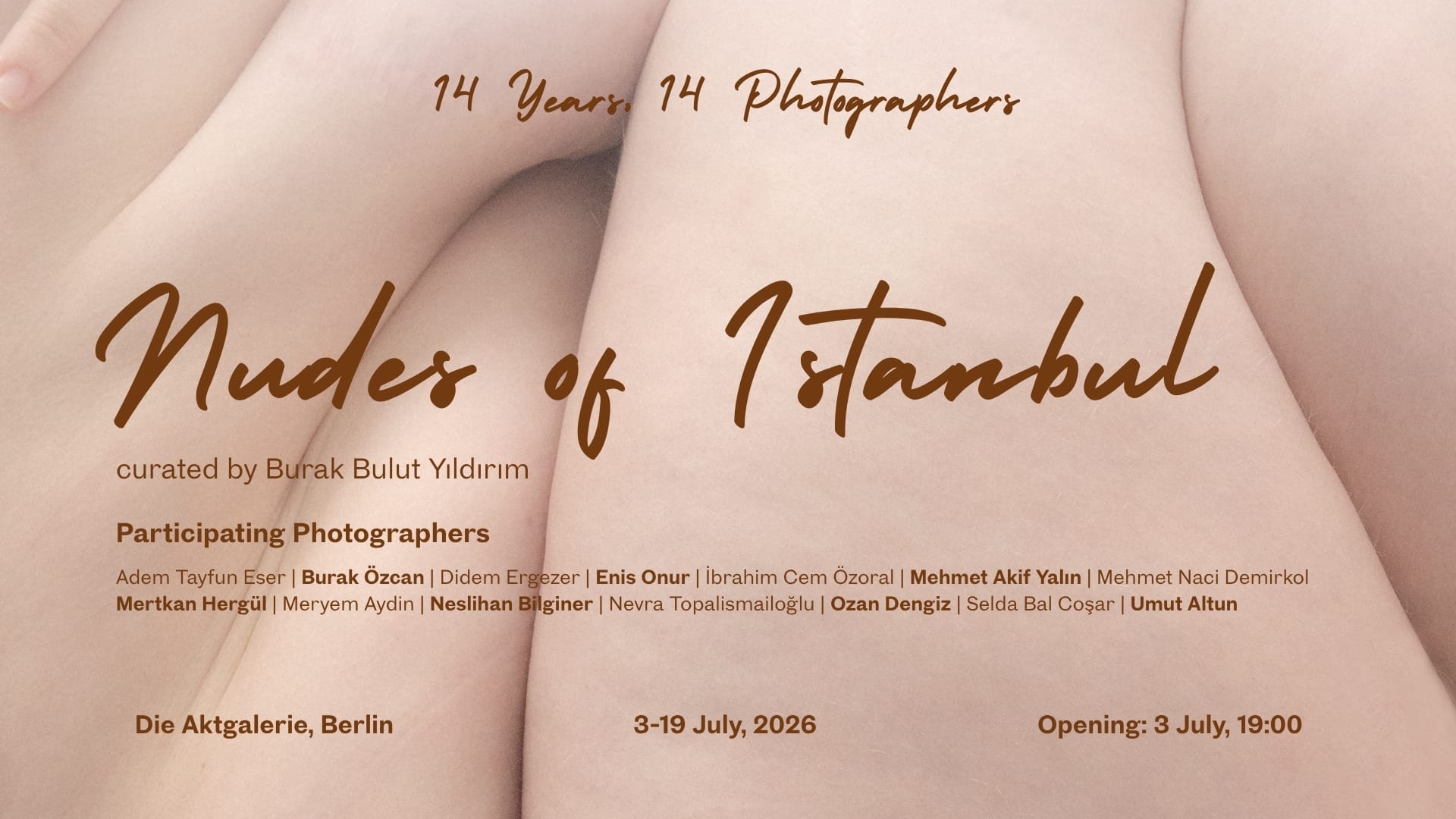
On 3 July 2026, a studio practice that had lived mostly behind closed doors in Istanbul entered a Berlin gallery. Fourteen photographers, selected from fourteen years of concept-led nude art workshops, brought twenty-eight photographs to Die Akt Galerie. The distance between those rooms is greater than the flight between Istanbul and Berlin. It runs through repeated sessions, constructed sets, hundreds of participating photographers, model trust, hard edits, a 133-image book and the decision that work made collectively can still carry fourteen distinct authors.
I write this as the curator of The Nudes of Istanbul and as the photographer-educator who built the studio conditions from which it emerged. The project is also the clearest public account yet of what we have been doing through Nude Art Workshops in Istanbul and Berlin: treating the nude as a field of ideas, physical materials and collaboration, with sexuality deliberately placed behind concept, form and the relationship between model and photographer.
The Nudes of Istanbul · Berlin Exhibition
Venue: Die Akt Galerie, Krossener Str. 34, 10245 Berlin
Dates: 3–19 July 2026
Opening hours: Friday–Sunday, 15:00–19:00
Admission: Free
Project: The Nudes of Istanbul
It Did Not Begin as an Exhibition
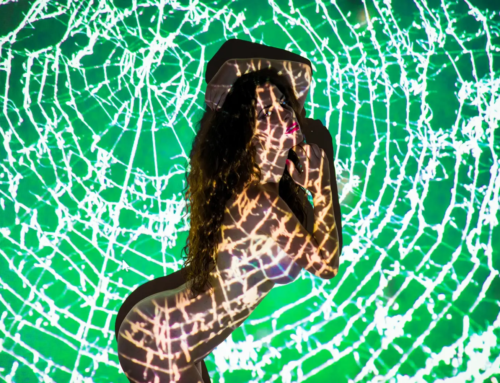
The project began in 2012 with a simpler question: what happens when a nude photography workshop is designed around a new visual problem every time? I was not interested in repeating the familiar arrangement of one model, several photographers and a neutral studio light. Each edition needed a premise of its own: ultraviolet pigment, broken mirrors, suspended tulle, water, reflective mylar, long exposure, projected pattern, painted surfaces, an interior built from scratch or a single beam of light that had to carry the whole session.
That distinction matters. In many photographic workshops, the nude itself is treated as the event. In ours, nudity is one material among others. The subject might be opacity, balance, duration, fragmentation, self-protection or the pressure of a room on a body. The model does not arrive to decorate a lighting demonstration. The light, set and camera are organised around an idea that the model can understand, question and interpret.
More than three hundred photographers have taken part across fifty-plus editions. Some attended once. Others returned for years, and repetition changed the character of the room. Technical instruction gradually became a shared visual language. Participants learned how a hard source travels across skin, how tulle interrupts visibility, how long exposure records intention as well as movement, and how a body changes the moment direction becomes pressure rather than invitation.
The Room Before the Photograph
A finished image hides almost everything required to make it. It does not show the concept board completed at three in the morning, the test frames, painted backgrounds or metres of fabric waiting above the set. It does not show the inflatable pool installed on a white cyclorama, or the reflective cave built from mylar. Much of that physical world was constructed with art director and set designer Meryem Aydın, who is also one of the fourteen photographers in the exhibition.
Water sessions reveal another invisible decision. We have often heated the studio above 30°C so that the model would not become cold during hours of work. The photographers perspired; the model did not shiver. That detail may sound domestic rather than artistic, but it belongs to the image. Comfort changes posture, breathing, patience and the ability to remain psychologically present. A body can only appear at ease for hours when the room has earned that ease.
Before the first frame, we discuss the concept, image use, physical boundaries and the day’s working rhythm. Consent is not reduced to a model release signed at the door. It continues through direction, image review and publication. The full psychology of that exchange is examined in our guide to trust, power and collaboration in nude photography, but its practical result is visible here: the model is working with the image, not being used by it.
The strongest predictor of a good session is rarely the photographer’s equipment or the model’s experience. It is how clearly the room was built before the camera began.
One Set, Fourteen Different Decisions
My favourite moment in a workshop is still the same. I build the concept and shape the light, then step aside. Two photographers stand less than a metre apart. One moves close until skin becomes an abstract surface; the other stays back and photographs the silence of the room. At the end of the day, the only obvious fact connecting the two images is that they were made on the same date.
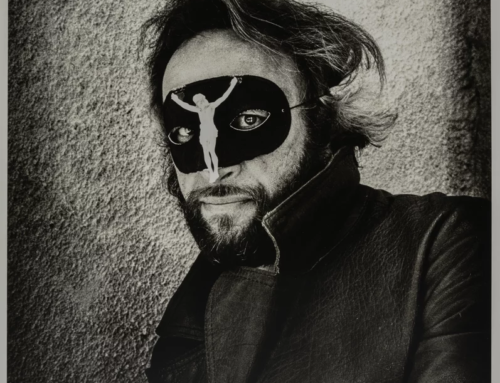
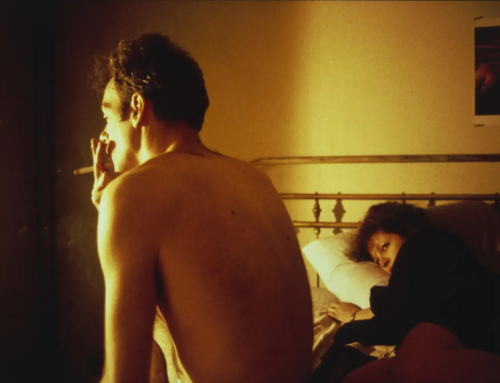
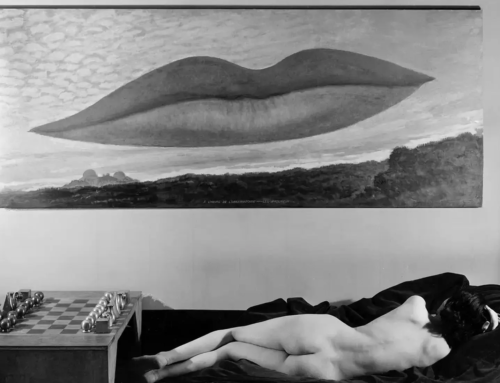
That is the authorship model behind The Nudes of Istanbul. Concept, casting, lighting environment, set structure and physical materials were shared. Frame, distance, timing, tonal decision and the moment of release belonged to each photographer. Shared conditions did not flatten authorship. They made the differences more legible.
The participating photographers are Adem Tayfun Eser, Burak Özcan, İbrahim Cem Özoral, Didem Ergezer, Enis Onur, Mehmet Akif Yalın, Mehmet Naci Demirkol, Mertkan Hergül, Meryem Aydın, Neslihan Bilginer, Nevra Topalismailoğlu, Ozan Dengiz, Selda Bal Coşar and Umut Altun. Five of the fourteen are women. That is not a decorative statistic in a field whose recorded exhibition history has been overwhelmingly male. It changes how bodies are framed, protected, confronted and allowed to look back. The wider history of that change is traced in our article on women who rewrote the nude from object to authorship.
The photographers were not assembled through an open call after the fact. They were selected from the sustained field created by the workshops. Continuity mattered. So did technical coherence, individual decision-making and the ability of a photograph to contribute to the group without disappearing inside it. This is why the exhibition reads as a collective body rather than a mixed portfolio.
Why the Work Had to Leave the Workshop
A workshop can produce serious work and still remain invisible. The images circulate among participants, appear briefly online and return to hard drives. After fourteen years, that private circuit was no longer enough. If a collective practice had developed its own discipline, ethics and visual range, it had to face a public wall, an editor’s sequence, a printed page and viewers who knew nothing about the room in which it began.
Turkey has a real history of fine-art nude photography, but its publication record is thin and its institutional memory is intermittent. Photographs survived in private archives, association bulletins, short-lived exhibitions and isolated catalogues. Alberto Modiano’s Türk Fotoğrafında Çıplak gathered 101 photographers in 2004. The next collective book in the field that I have been able to trace is The Nudes of Istanbul, twenty-two years later. A photographic tradition cannot build a public memory if its books never reach shelves.
The project therefore needed more than a website. It needed a gallery and a book: one temporary encounter and one object built to remain. Berlin became the opening chapter because it offered a public context in which the body, migration, sexuality, consent and photographic authorship are already under active discussion. Die Akt Galerie was a precise choice because its programme is dedicated to photographic work on the nude.
This exhibition is not about Turkey. It is from Turkey. Istanbul is not a theme applied to the pictures, and Berlin is not a seal of European approval. The work was made in Istanbul, under Istanbul’s social conditions, with a long-term community that existed before the invitation and will continue after the closing date. Berlin is where that practice first entered international public circulation as a complete curatorial statement.
Fine-Art Nude Photography Workshops · Since 2012
Join the Workshop List
Nude Art Workshops is a small-group programme founded by photographer and educator Burak Bulut Yıldırım. We run concept-led sessions with professional model collaborators and a maximum of six photographers.
Join the list for new workshop dates, visiting models, new cities, and programme updates. Subscribers usually hear about new sessions before public announcement.
Fourteen years of our nude art workshops also became an exhibition and a hardcover book. The project is now held by the Victoria and Albert Museum’s National Art Library in London, Istanbul Modern, the German National Library, and private collectors.
Curious about the project? Discover The Nudes of Istanbul →
Maximum six photographers per session · No weekly sales emails · Instagram: @nudeartworkshops
Six Ways a Body Can Hold a Frame
The exhibition and book reject a simple chronology. Instead, the work is organised through six registers of the photographed body. They are not genres or decorative labels. Each names the primary force operating inside the image.
- Surface follows contour, curvature, volume, skin and the tactile fact of the photographic plane.
- Matter places the body in contact with paint, water, fabric, pigment, reflection and physical material.
- Opacity gathers interrupted visibility: tulle, haze, glass, shadow, water and partial covering.
- Rooms considers the pressure exerted by beds, doors, walls, windows and interior space.
- Duration holds movement, falling, balance, muscle tension, dance and long exposure.
- Self-Possession brings together images in which the body protects its boundary, gaze, inwardness or right to remain partly inaccessible.
The final category is crucial. Nude photography has spent much of its history assuming that visibility is the same as availability. It is not. A person can be fully visible and still withhold access. Self-possession is the point at which the body no longer waits for the viewer to define what its exposure means.
The Book Is Not a Souvenir Catalogue
The accompanying English-language hardcover, published in Berlin by Mijuk Papers with ISBN 978-3-00-087439-0, contains 133 photographs. It was designed as an autonomous art book rather than a reduced record of twenty-eight framed works. Each photographer receives a dedicated selection; the six-part curatorial structure unfolds at book length; historical writing places the project inside the incomplete publication history of nude photography in Turkey.
The book had to do something a gallery wall could not. It had to preserve sequence, contradiction and voice. Exhibition visitors move according to architecture and attention. A reader moves page by page, and the edit can slow a body down, make two photographs argue or hold a silence across a spread.
It also creates a durable record. Exhibitions close. Installation photographs become evidence that they happened. A book can enter libraries, artist archives, academic reading lists and collections far from its point of origin. That is why publication was never secondary to the exhibition. The book is the project’s longest memory.
The Models Enter as Authors
Most histories of nude photography are written by photographers, critics and historians. The person who stood in the light appears in the caption, if at all. I did not want to repeat that structure. The book includes commissioned texts by three Turkish fine-art nude models: Zeynep Renda, Su Yeşil and Marmelat.
Renda writes from a decade of modelling: contracts, boundaries, unsafe and professional rooms, the need to see the image while posing and her movement toward self-portraiture. Yeşil writes about the body as lived experience: family reaction, shame, gendered rules, body dysphoria, performance and the refusal to let nudity collapse into sexuality. Marmelat writes under a chosen pseudonym and brings a rarely documented position: three years of nude modelling inside a Turkish fine arts faculty.
Their texts are not testimonials attached to a photographer’s achievement. They alter the book’s authorship. The model enters as witness, critic and writer. Once that happens, the reader can no longer pretend that the photograph contains only the intention of the person behind the camera.
Real Bodies, Real Light, Explicit Permission
The project enters public view at a moment when synthetic sexualised bodies are generated and circulated at industrial scale, often without consent and with a disproportionate effect on women. Against that image economy, The Nudes of Istanbul takes a direct position: every exhibited body was physically present, every lighting condition was built in a real room, and every included photograph is covered by written permission.
No exhibition image is AI-generated. AI training, dataset inclusion, synthetic derivatives and generative processing are explicitly excluded from the project’s standard release. This is not nostalgia for an untouched camera. The works use reflection, UV-reactive pigment, long exposure, projection, fabric, water and optical distortion. Intervention is central. The difference is that the intervention happened with the model present and inside an agreed artistic process.
Photographers retain authorship of their individual images. I hold the exhibition concept, session lighting and set-design rights, and the publication as a compiled curatorial work. Models retain the rights established in their releases; the model-authors retain their texts. Where these layers meet, the answer is written agreement, not presumed ownership.
What Comes After Berlin: London as the Next Priority
Berlin is an opening chapter, not the project’s final destination. After the exhibition, the book and curatorial structure will continue through presentations, institutional discussions, public conversations and proposals for further exhibitions. The next priority is London.
London makes sense for more than visibility. It has a dense network of photography institutions, art-book publishers, libraries, universities, curators and critics working on body politics, migration, gender, consent and photographic history. The Nudes of Istanbul can enter those conversations without being reduced to a national curiosity. The project carries a specific production history from Istanbul, but its questions are international: who authors the nude, how collective conditions affect individual vision, what consent means after publication, and how a real photographed body differs from a synthetic one.
No London venue or date is being announced here. The current work is to build the right context for an exhibition, book presentation, institutional dialogue and press programme. Galleries, photography organisations, publishers, libraries, academic departments and curators interested in that next chapter can contact info@burakbulut.info.
What the Gallery Returns to the Workshop
The usual story runs in one direction: students attend a workshop, make pictures and eventually reach a gallery. I no longer think the line is that simple. A gallery also sends something back. It forces the workshop to account for its decisions. Which frames survive enlargement? Which repeated visual habits become obvious when fourteen photographers share a wall? Which images still hold attention when the model, set and excitement of the day are gone?
That public test changes the next session. It sharpens editing, titles, sequencing, model communication and the responsibility attached to publication. A participant who understands that an image may one day enter a book approaches the shutter differently. The workshop stops being an isolated educational event and becomes one part of a longer photographic practice.
This is the real movement from workshop to gallery. It is not a promotion from amateur space to professional space. It is a circuit: practice produces work, public viewing exposes its strengths and weaknesses, and that knowledge returns to the room where the next photograph will be made.
Questions Photographers and Visitors Ask
What is The Nudes of Istanbul?
It is a group exhibition and English-language hardcover photobook presenting fourteen years of curator-directed fine-art nude photography practice developed in Istanbul. The Berlin exhibition includes twenty-eight works by fourteen photographers; the book contains 133 photographs and writing by the curator and three model-authors.
Is this simply an exhibition of workshop photographs?
No. The workshop structure is the production field from which the work emerged, but the exhibition is a separate curatorial act. Photographers were selected for sustained participation, visual coherence and distinct authorship. The final sequence was organised across six conceptual registers rather than by workshop date.
Can beginners attend the workshops?
Participants need working control of their camera, but they do not need prior nude-photography experience. Our Berlin and Istanbul workshop editions teach light, direction, posing and consent as connected skills. The concept comes first; the model is a collaborator in making it visible. For practical direction principles, see our guide to posing from classical form to contemporary movement.
Will the project be exhibited in London?
London is the priority next context for exhibition proposals, book presentations, institutional meetings and press outreach. A venue and dates have not yet been announced. Curatorial and hosting enquiries should be sent to info@burakbulut.info.
The practice behind The Nudes of Istanbul continues in Berlin and Istanbul through concept-first workshop editions where light, material and model collaboration determine the image, and sexuality is deliberately placed behind the work’s actual subject. Led by Burak Bulut Yıldırım, photographer, curator and educator working professionally since 2005: fourteen-plus years of nude art workshops, 50+ editions, 300+ participating photographers, and the 2026 exhibition and hardcover publication The Nudes of Istanbul.
See upcoming workshop editions
Project: The Nudes of Istanbul · Portfolio: burakbulut.org · Project and press enquiries: info@burakbulut.info · Workshop contact: hello@nudeartworkshops.com