

The Body Reimagined: Nude Photography in the Modernist Era (1920s–1960s)
Modernism was not a new chapter in art; it was a break in the binding. Fueled by Freud's map of the subconscious, the trauma of two world wars and an open revolt against Victorian morality, artists went looking for a human image that matched the new human condition. For photographers, the nude stopped being a classical form to perfect and became raw material for experiment: dismantled, distorted, solarized, cropped into landscape, documented without apology. The vocabulary those experiments produced between the 1920s and the 1960s is still the one working photographers speak today.
I photograph and teach the nude in Berlin, and I keep returning to this era for a specific reason: it is where the genre learned that transformation, not depiction, is the job.
Breaking Conventions: Surrealism and Abstraction
The early twentieth century's stylistic explosion moved photography past documentation. The camera became a device for constructing reality rather than certifying it, and two Americans, working an ocean apart, defined the poles of that construction.
Man Ray (1890–1976): The Dream Logic of the Body
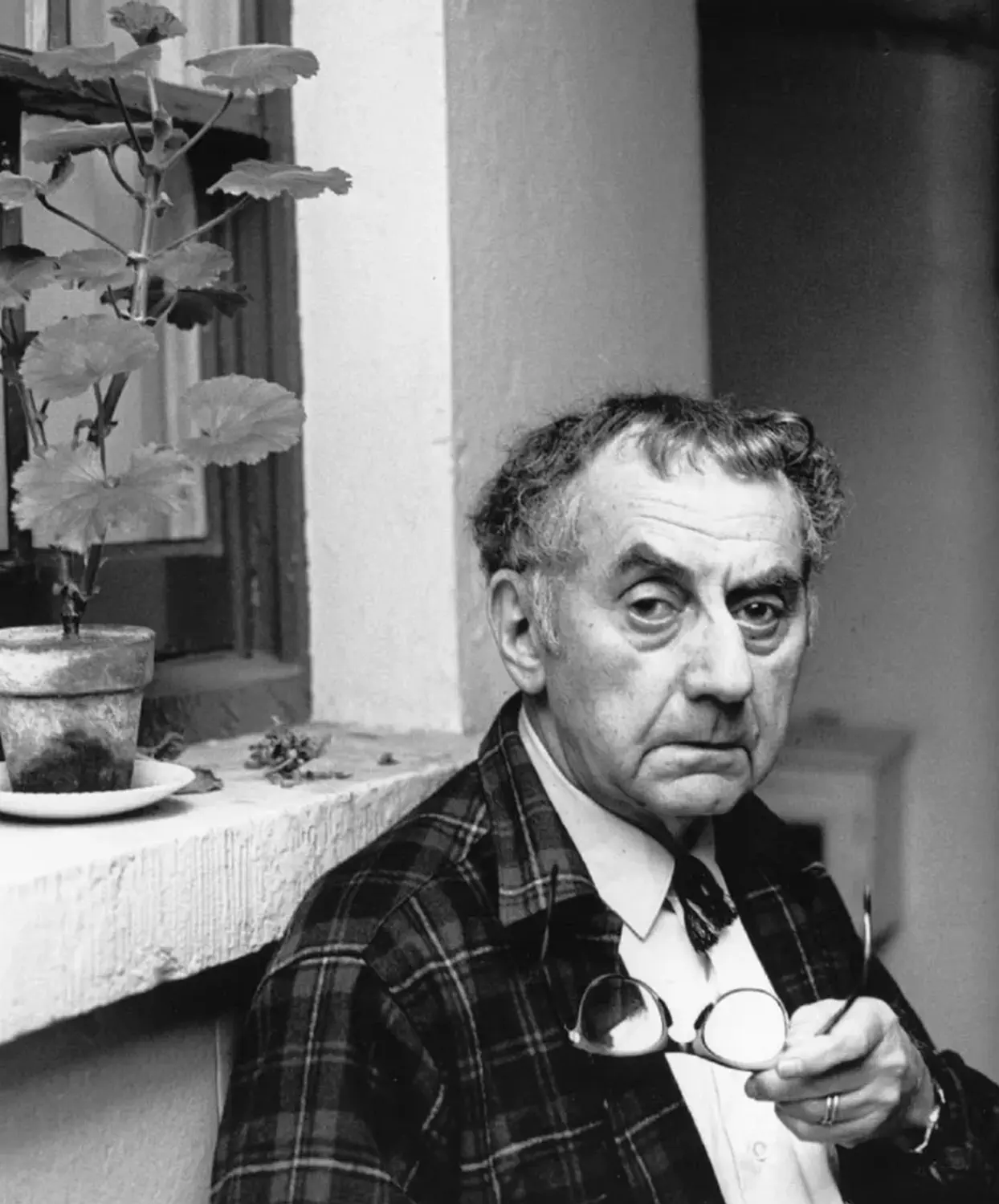
Man Ray
A central figure of both Dada and Surrealism, Man Ray treated photography as a fluid, disobedient medium whose purpose was access to the dream, not fidelity to the room. "Le Violon d'Ingres" (1924) is the era's most quoted joke and one of its most serious images: by painting a violin's f-holes onto the back of his model and muse Kiki de Montparnasse, he fused woman and instrument in a single visual pun that has been argued over, celebrated and criticized for a century.
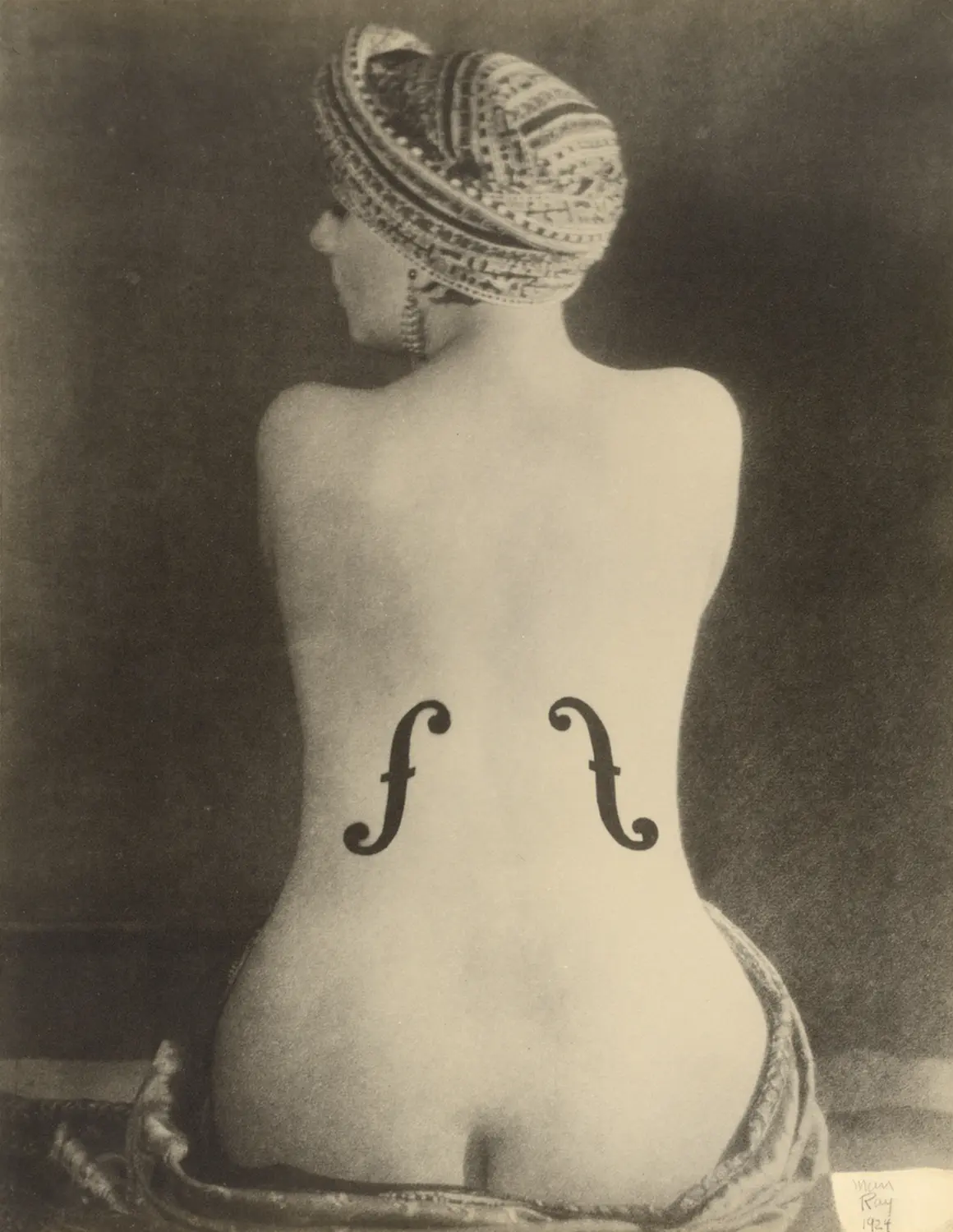
"Le Violon d'Ingres" (1924) by Man Ray
His technical signature, solarization, re-exposing the print to light mid-development so tones partially invert, was rediscovered by accident in his darkroom around 1929, working alongside Lee Miller, his collaborator and a formidable photographer in her own right. Applied to the nude, as in "Primat de la matière sur la pensée" (1929), it renders the body metallic, sculptural, faintly alien: flesh with the physics adjusted. The lesson his whole output teaches is blunt: a photograph is a made thing, and the maker's imagination outranks the subject's appearance.

"Primat de la matière sur la pensée" (1929) by Man Ray
Edward Weston (1886–1958): The Body as Pure Form
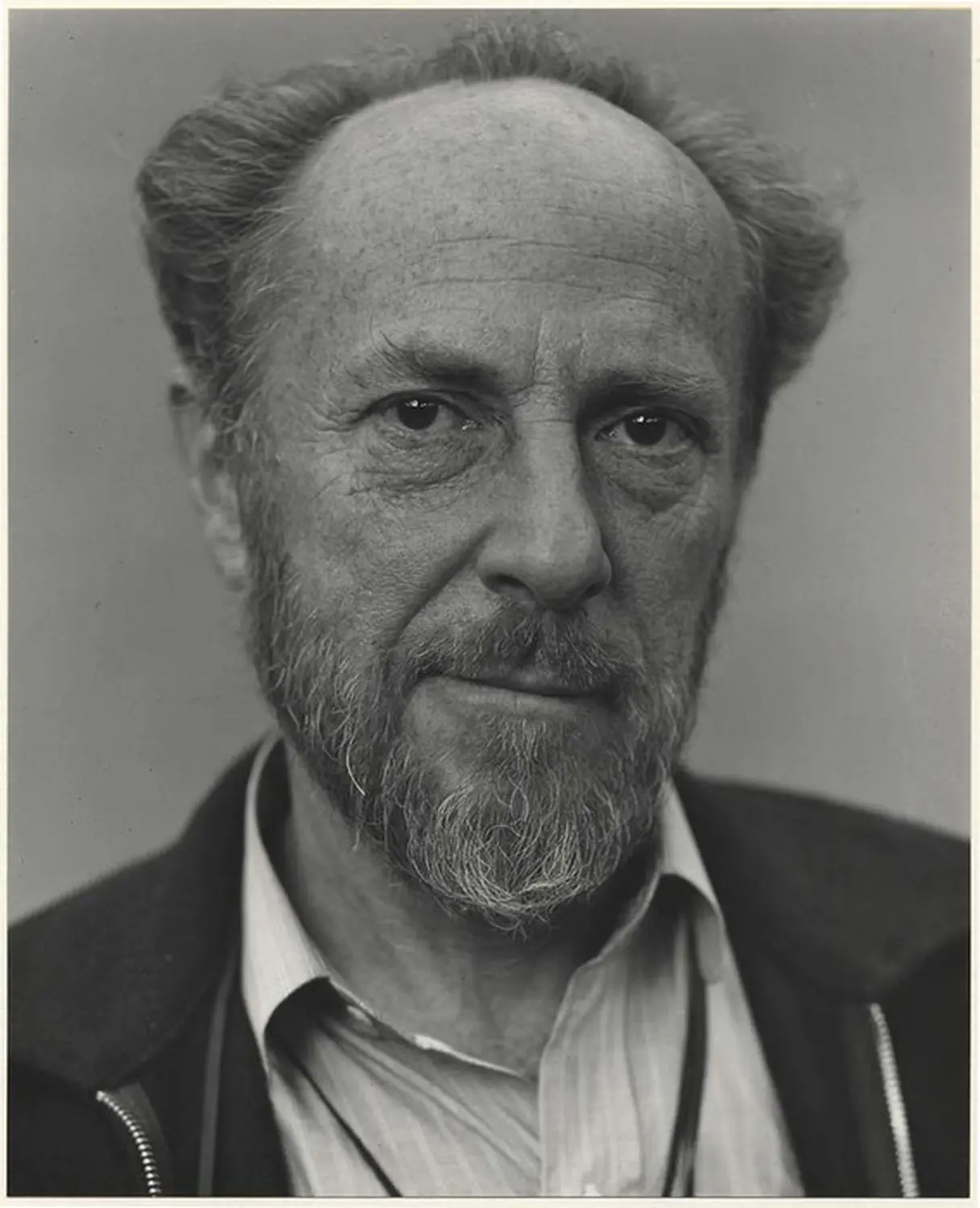
Edward Weston
Weston took the opposite road to the same destination. A central figure of Group f/64, founded in 1932 around sharp focus and unmanipulated "straight photography," he found the marvelous not in the darkroom but in the looking. His "Nude" (1936), made with Charis Wilson on the Oceano dunes, crops the body until torso and thighs read as wind-built sand forms; naming the model matters, because Wilson was a genuine collaborator in the work, not an anonymous prop. "Pepper No. 30" (1930), though a vegetable, is the philosophy stated openly: form is form, and a pepper photographed with total attention carries the same muscular, contorted grandeur as a torso.
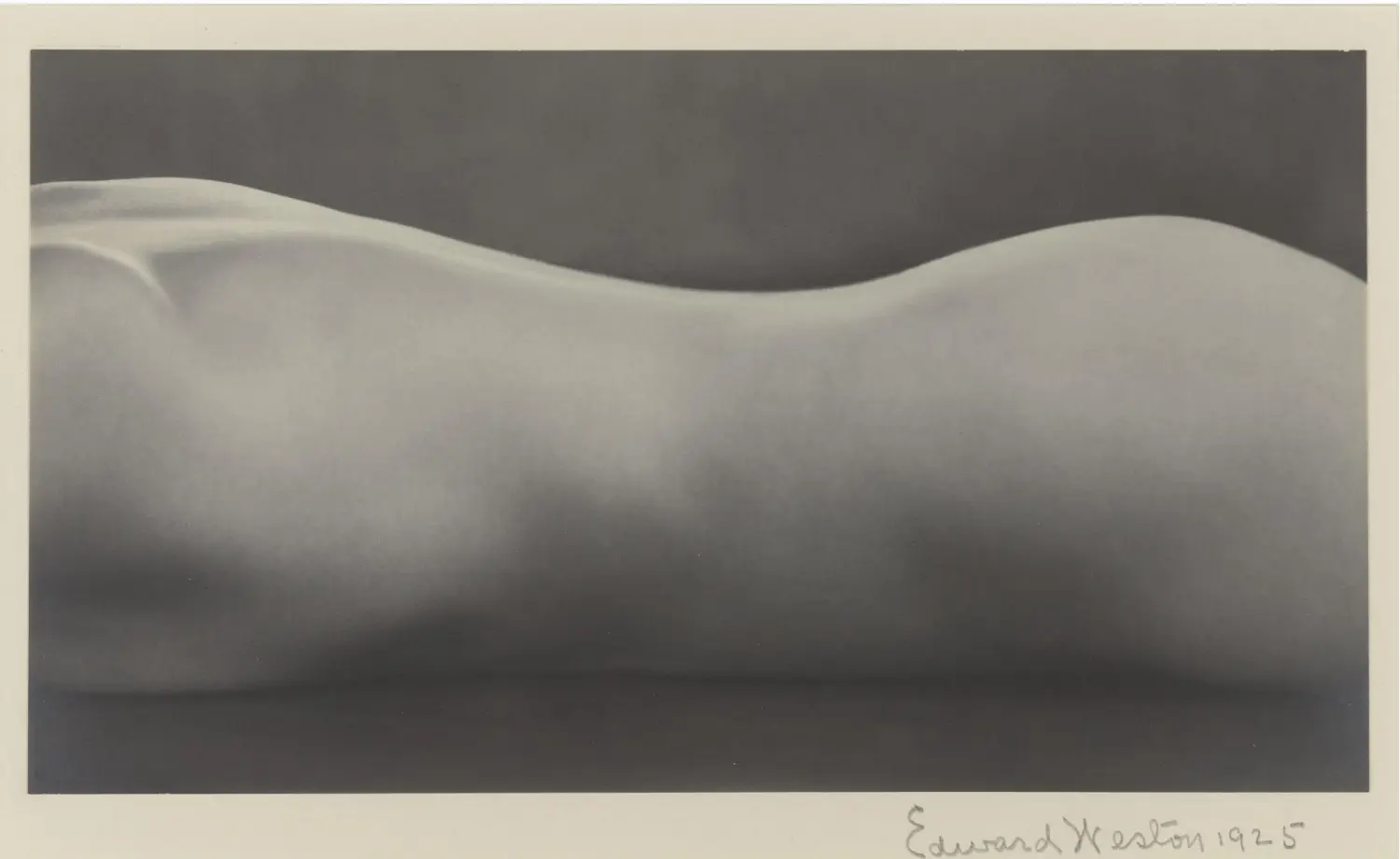
"Nude" (1936) by Edward Weston
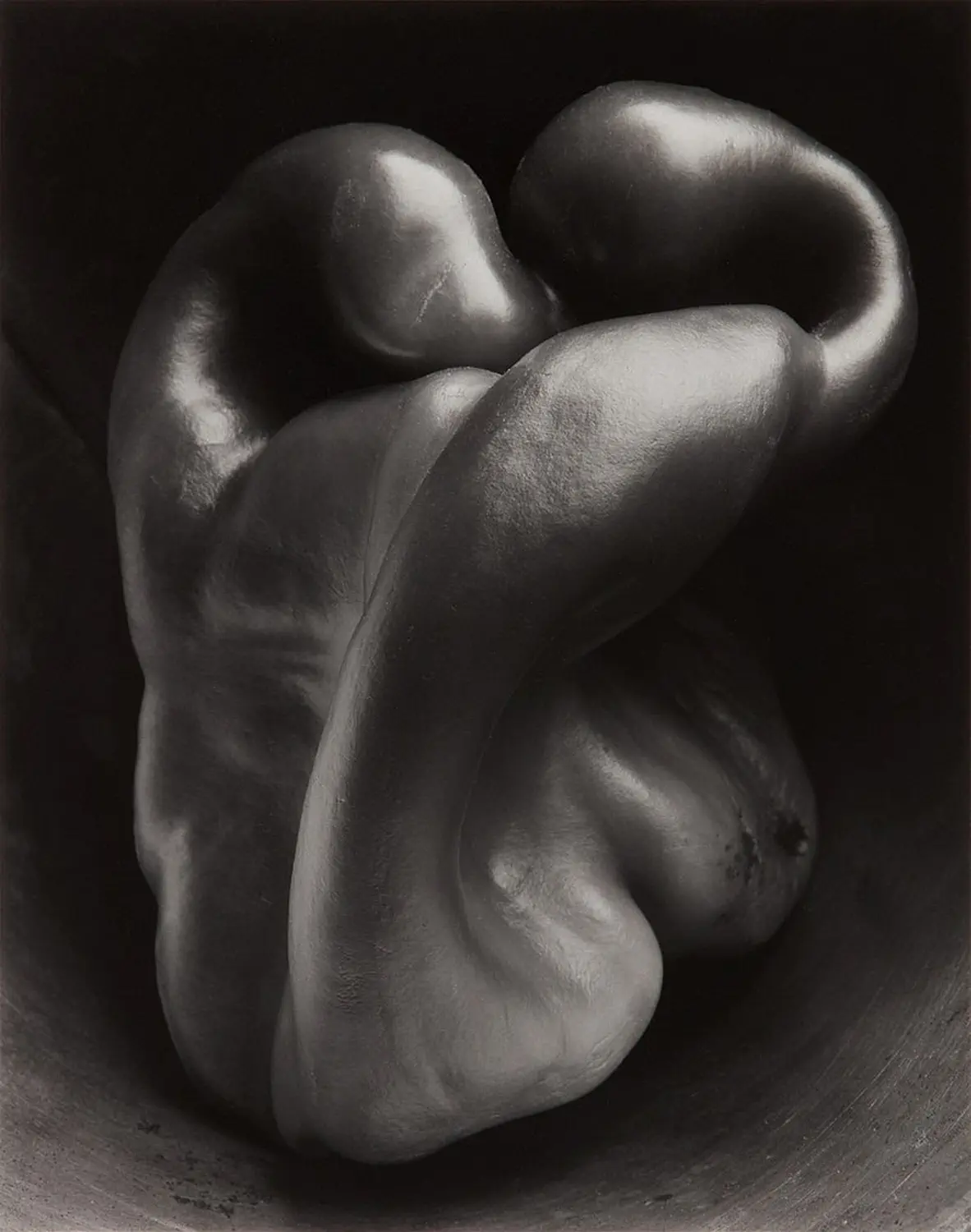
"Pepper No. 30" (1930) by Edward Weston
The Female Gaze Emerges
The era also opened the genre's authorship. Women photographers entered the modernist experiment and bent it away from the objectifying default, a shift whose full arc is traced in our article on the women who redefined the nude.
Imogen Cunningham (1883–1976)
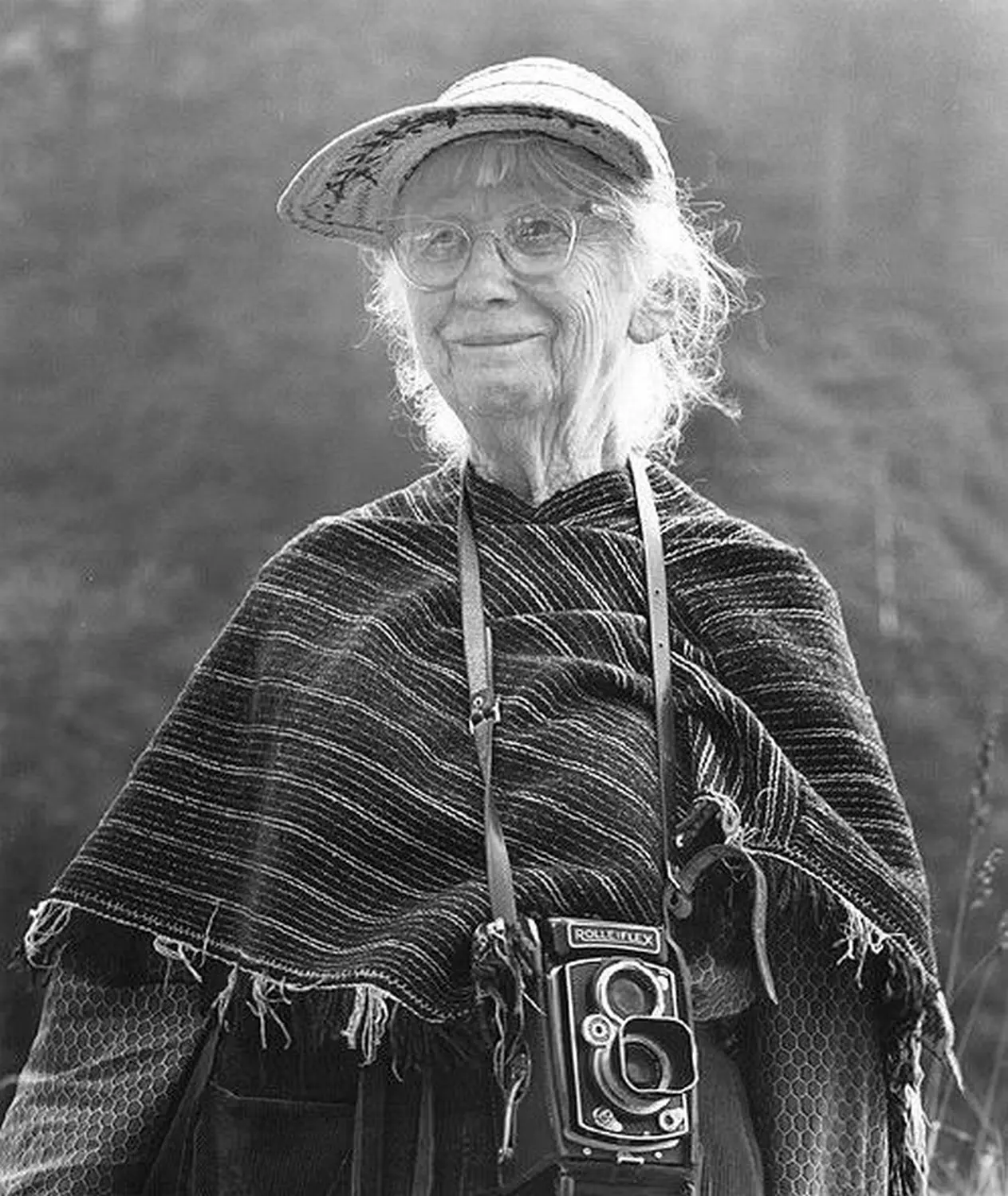
Imogen Cunningham
A fellow member of Group f/64, Cunningham brought its sharp discipline to an intimacy her male colleagues rarely reached. "Triangles" (1928) abstracts a torso into intersecting geometry without ever turning clinical, and "Two Sisters" (1928) rests two women together in a soft closeness that feels collaborative rather than observed. Her nudes read as agreements between people, which was itself a modernist innovation.
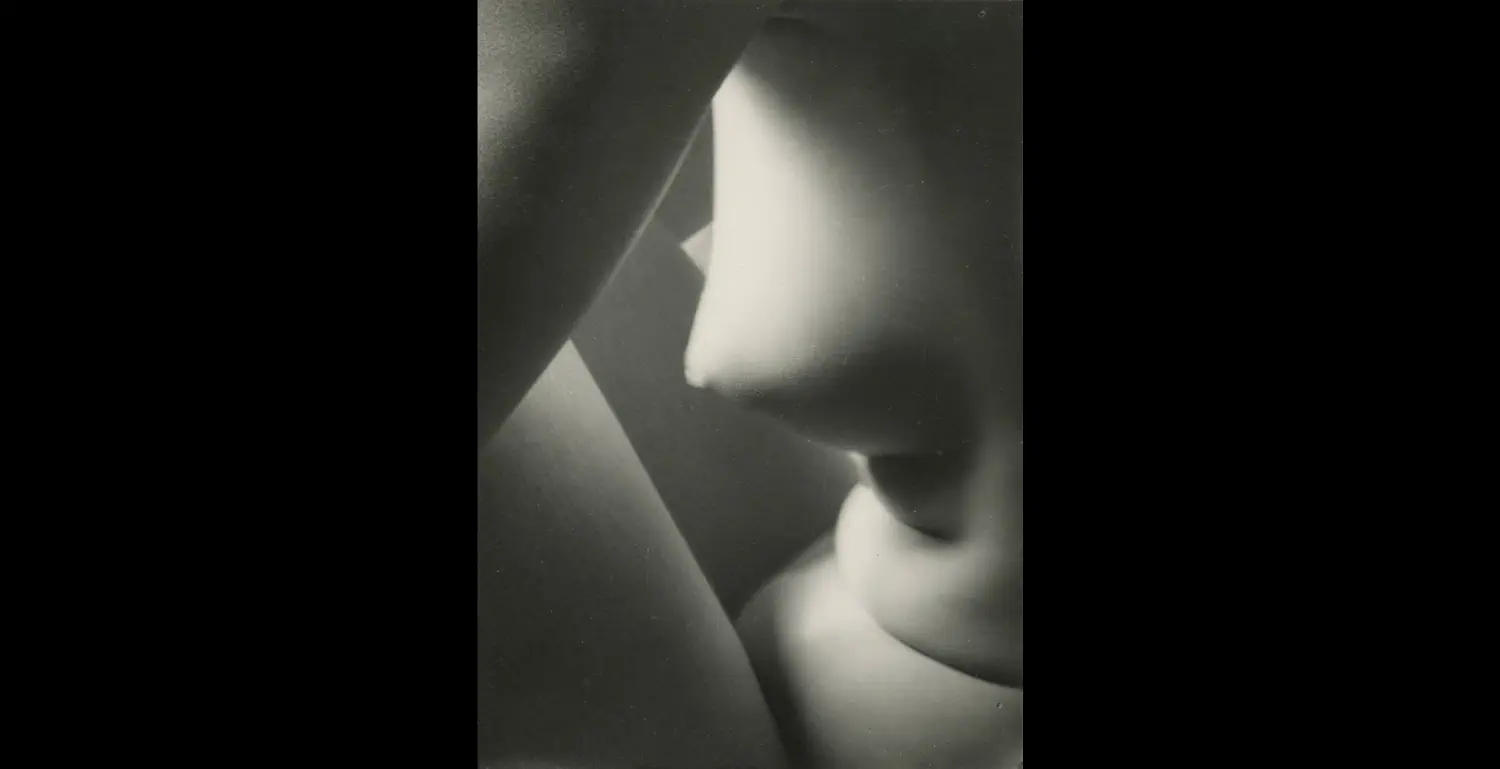
"Triangles" (1928) by Imogen Cunningham

"Two Sisters" (1928) by Imogen Cunningham
Diane Arbus (1923–1971)

Diane Arbus
At the era's far edge, Arbus pushed the documentary impulse to its honest conclusion. Her nudes belong to her larger project of photographing people the mainstream refused to see, and "Retired man and his wife at home in a nudist camp one morning, N.J." (1963) treats nudity as a plain fact of two particular lives. No idealization, no eroticism, no apology: the modern nude as testimony.
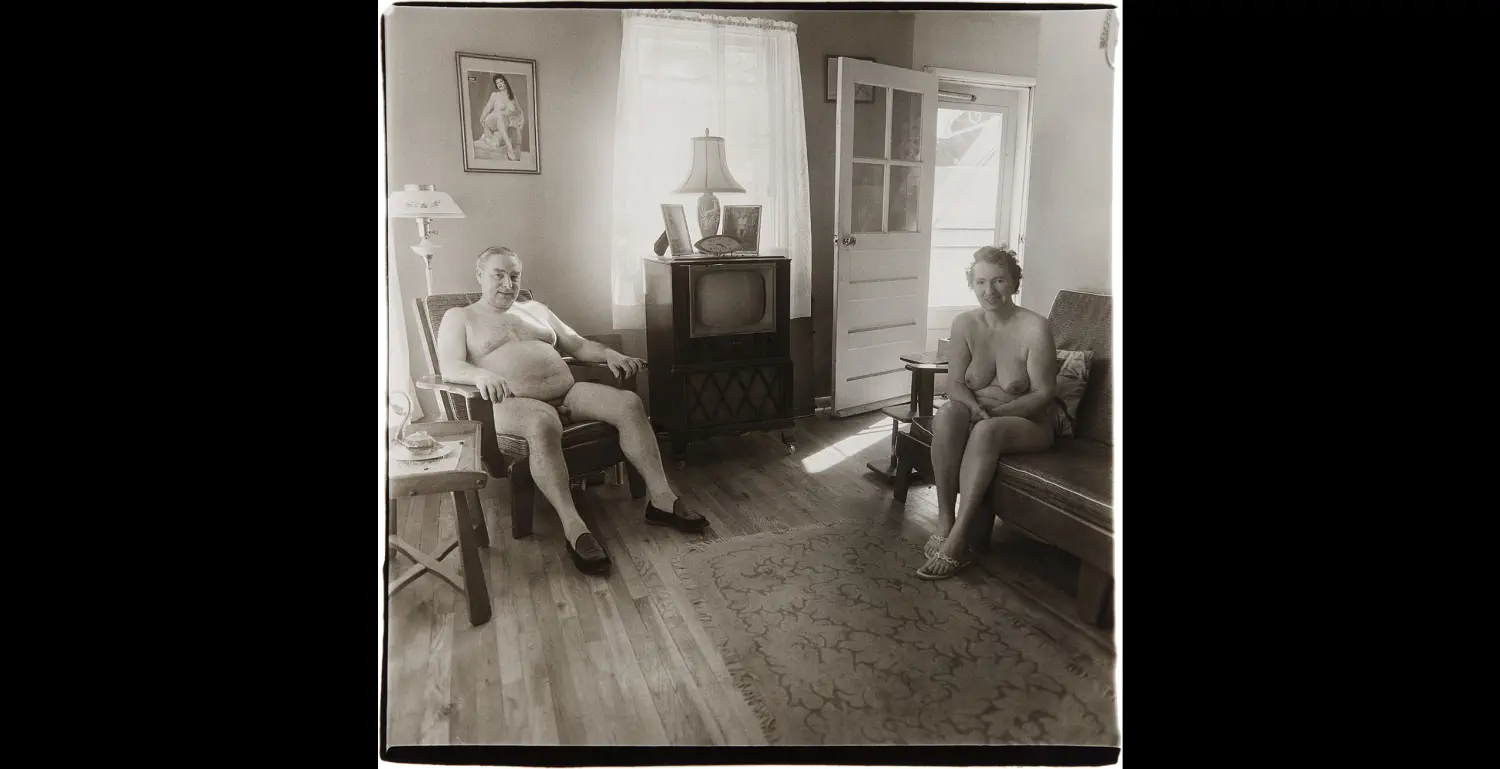
"Retired man and his wife..." (1963) by Diane Arbus
Fine-Art Nude Photography Workshops · Since 2012
Join the Workshop List
Nude Art Workshops is a small-group programme founded by photographer and educator Burak Bulut Yıldırım. We run concept-led sessions with professional model collaborators and a maximum of six photographers.
Join the list for new workshop dates, visiting models, new cities, and programme updates. Subscribers usually hear first.
Fourteen years of workshops grew into an exhibition and a hardcover book. The book is now held by the V&A National Art Library in London, Istanbul Modern, the German National Library, and private collectors.
Curious about the project? Discover The Nudes of Istanbul →
Maximum six photographers per session · No weekly sales emails · Instagram: @nudeartworkshops
The Body as Landscape and Document
Bill Brandt (1904–1983)

Bill Brandt
Brandt made his distortions in front of the lens rather than behind it. Working with an antique wide-angle Kodak camera of the kind once used for police records, its extreme lens and tiny aperture never meant for art, he stretched rooms and bodies into charged, dreamlike geometry. In "Nude, East Sussex Coast" (1953), from the project published as "Perspectives of Nudes," an elongated arm and ear on a pebble beach become a landscape that never existed, flesh reading as weathered stone. He proved that optics alone, no darkroom tricks, could carry the full surrealist payload.
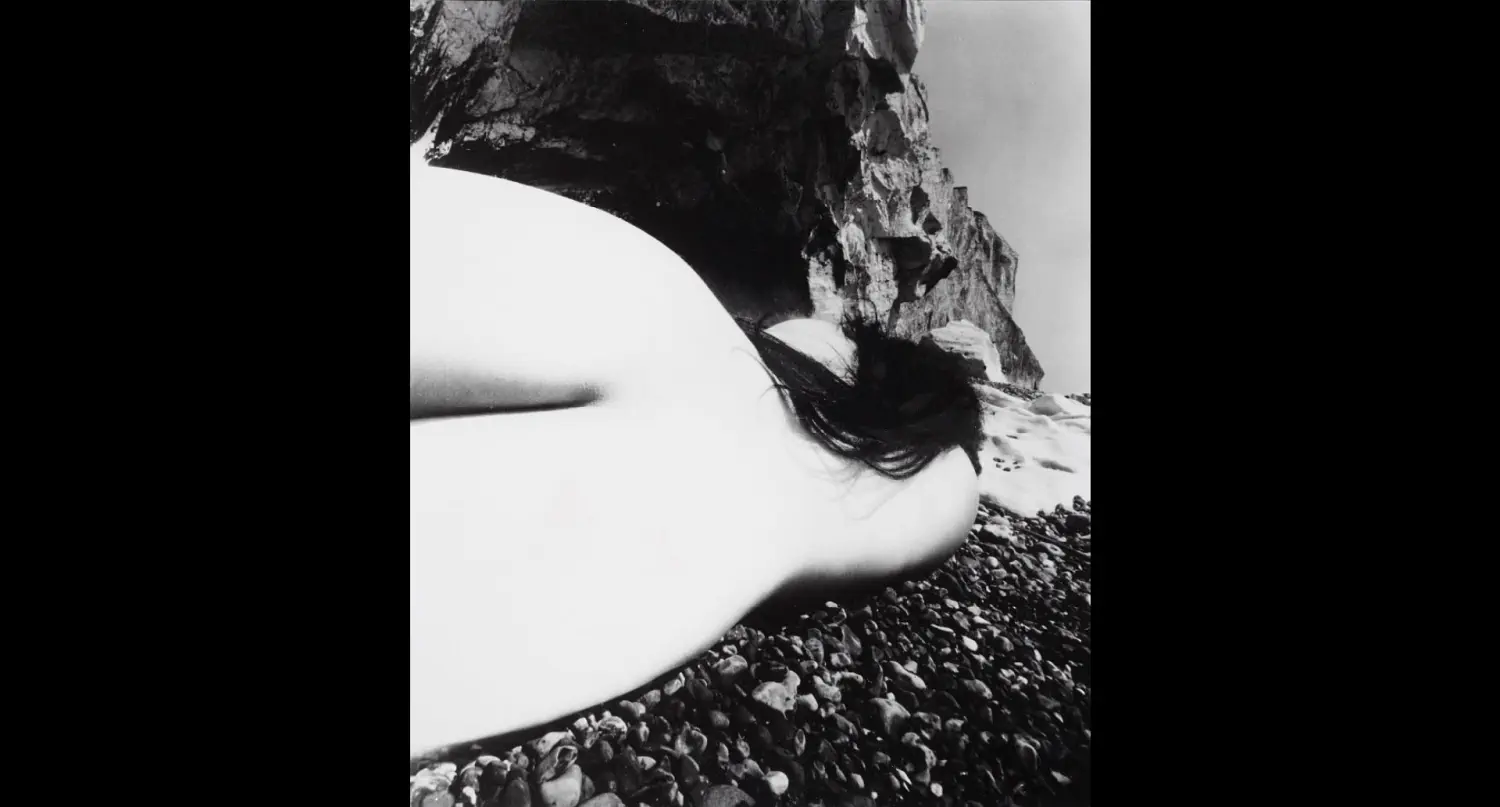
"Nude, East Sussex Coast" (1953) by Bill Brandt
Brassaï (1899–1984)
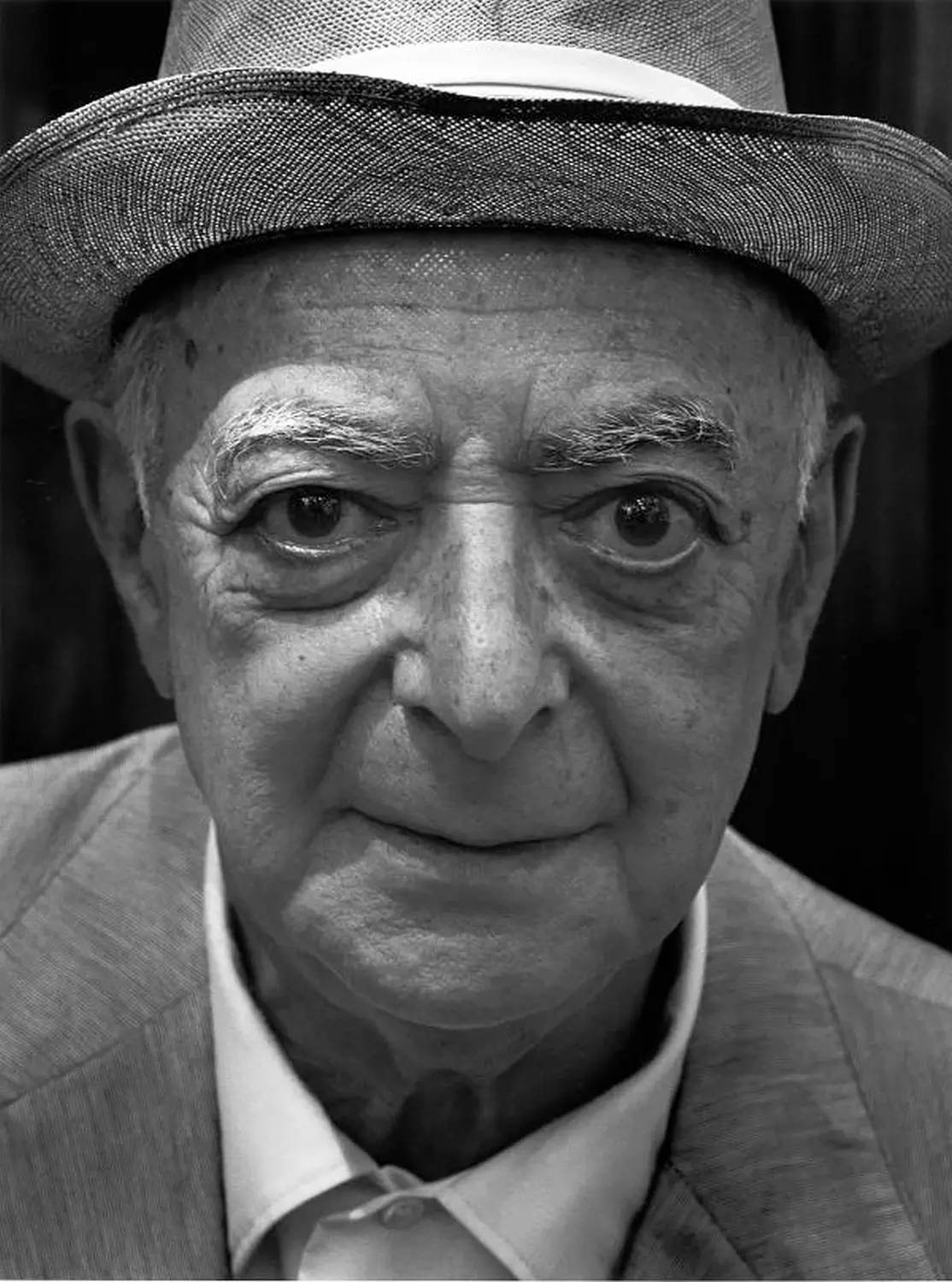
Brassaï
Born Gyula Halász in Transylvania, Brassaï became the definitive chronicler of Parisian nightlife after his 1932 book "Paris de nuit." His nudes from the 1930s belong to that world of lovers, dancers and brothel rooms: unidealized bodies in real, atmospheric interiors, halfway between document and fine art and refusing to choose. He gave the genre permission to smell of the actual city.
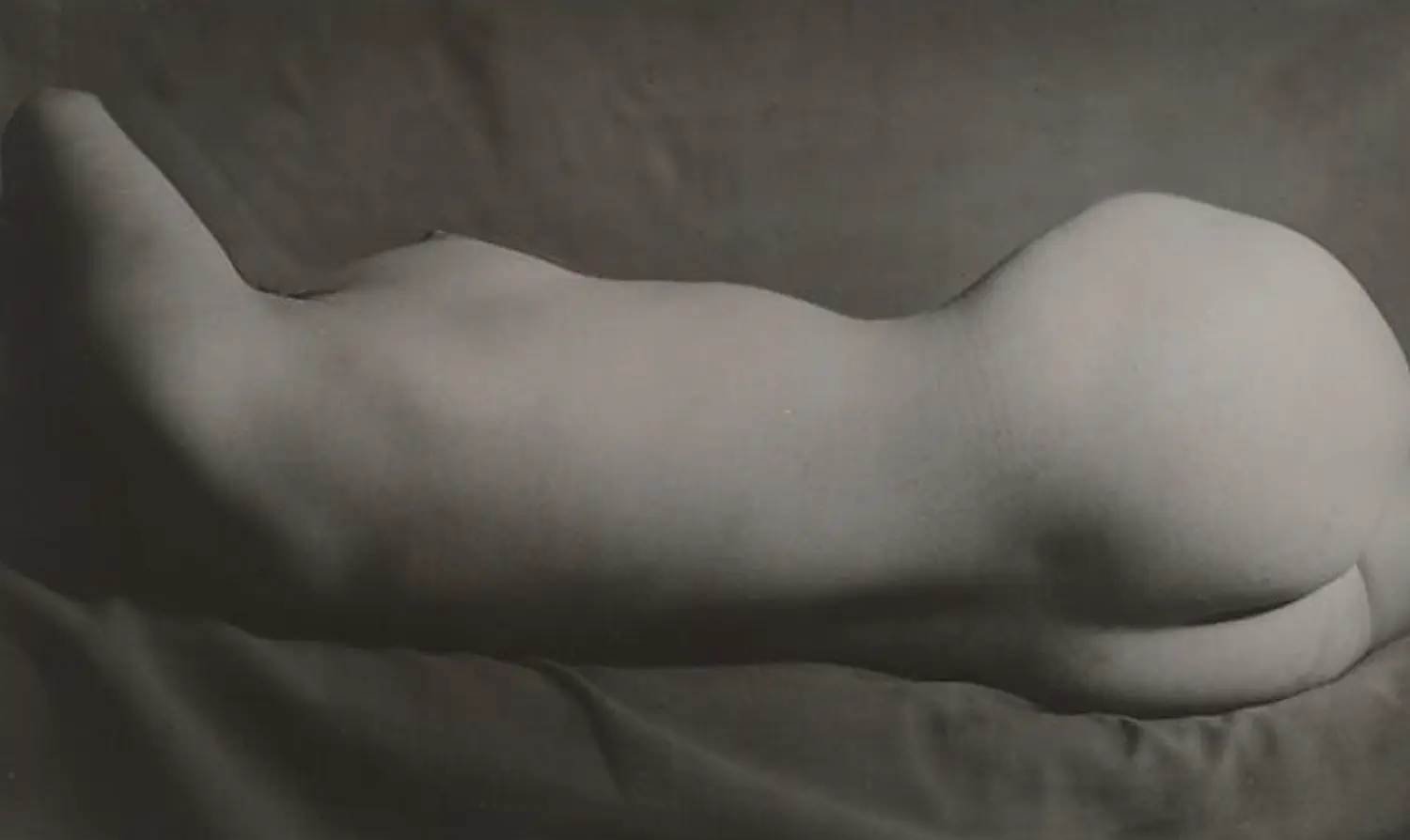
Brassaï, 1930s
George Platt Lynes (1907–1955)
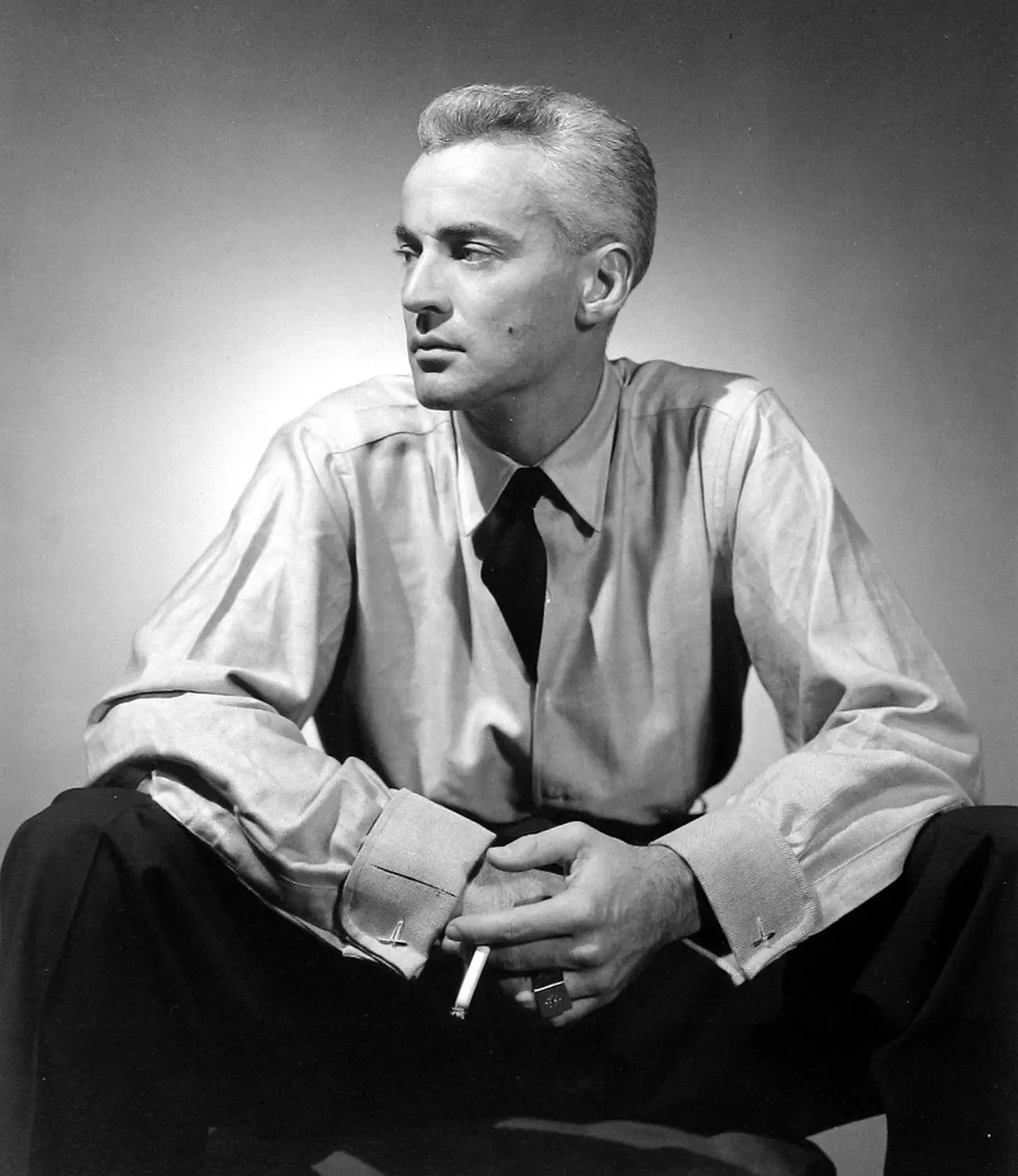
George Platt Lynes
Platt Lynes photographed male dancers and athletes with classical composition and thoroughly modern studio light, at a time when such images could end a career. Much of his male nude work circulated only privately during his lifetime; he entrusted a large body of it to Alfred Kinsey's institute in his final years, and its full publication and recognition came after his death. Today he stands as a foundation of the male nude in photography, decades ahead of the culture that eventually caught up with him.
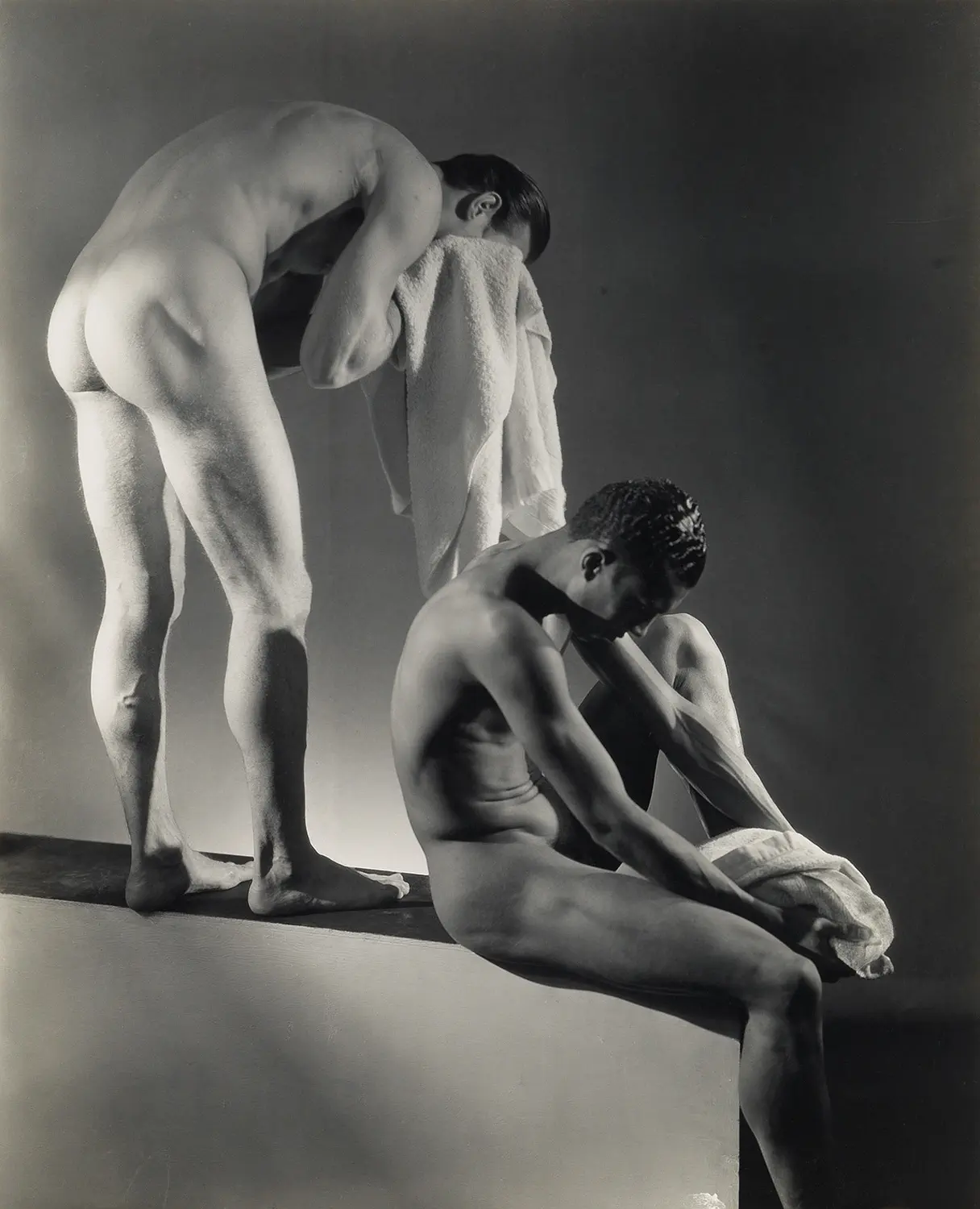
George Platt Lynes
Other Masters of Form and Light
André Kertész (1894–1985)
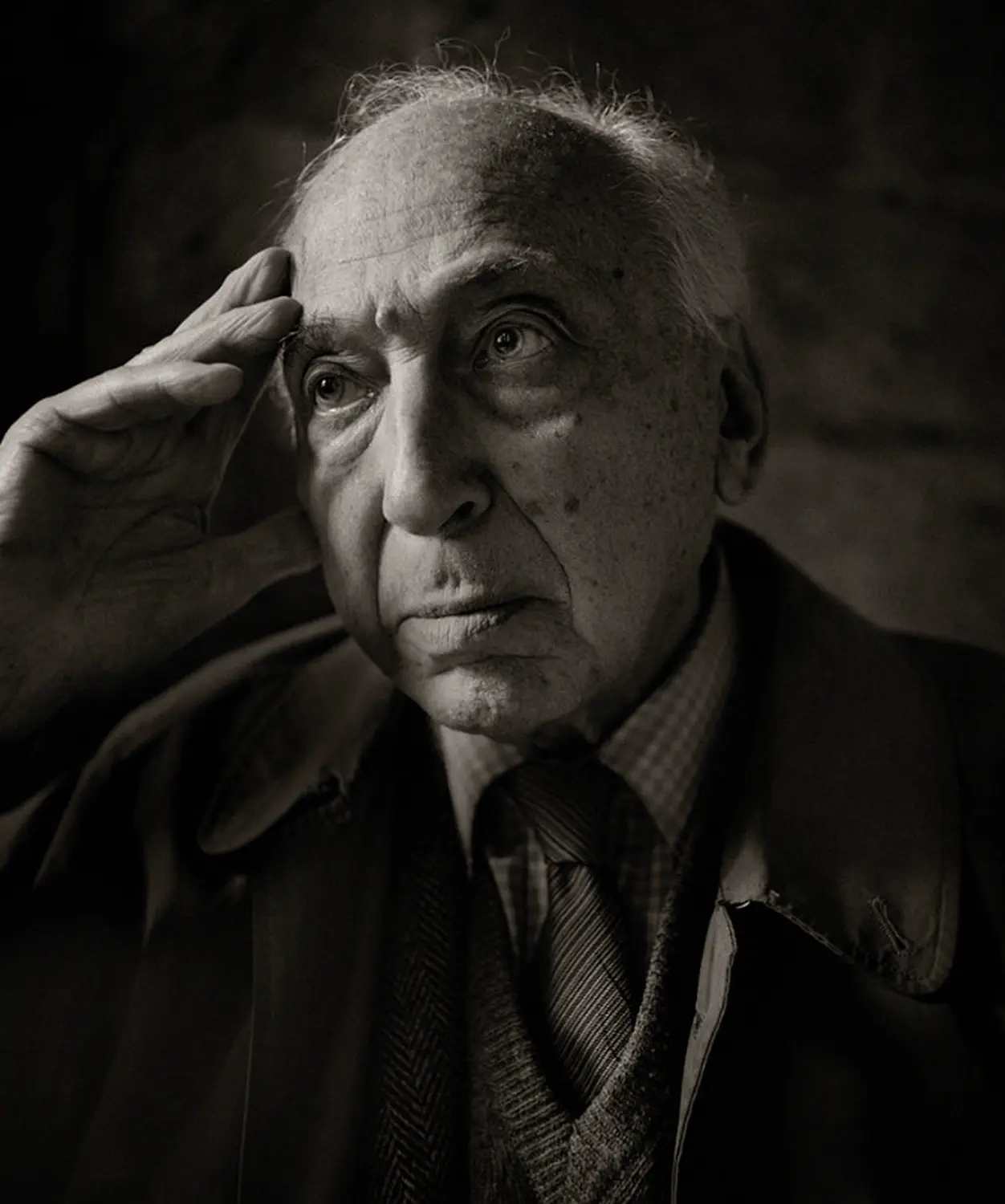
André Kertész
In 1933 the Hungarian-born Kertész accepted a commission from the Parisian magazine Le Sourire and produced roughly two hundred plates of nudes reflected in funhouse mirrors: the "Distortions." Elongated, compressed, folded into impossible topologies, the bodies become pure abstraction while remaining unmistakably alive, and the series stands as one of photography's wittiest interrogations of its own claim to truth. A magazine job became a landmark, which is its own quiet lesson about taking every assignment seriously.
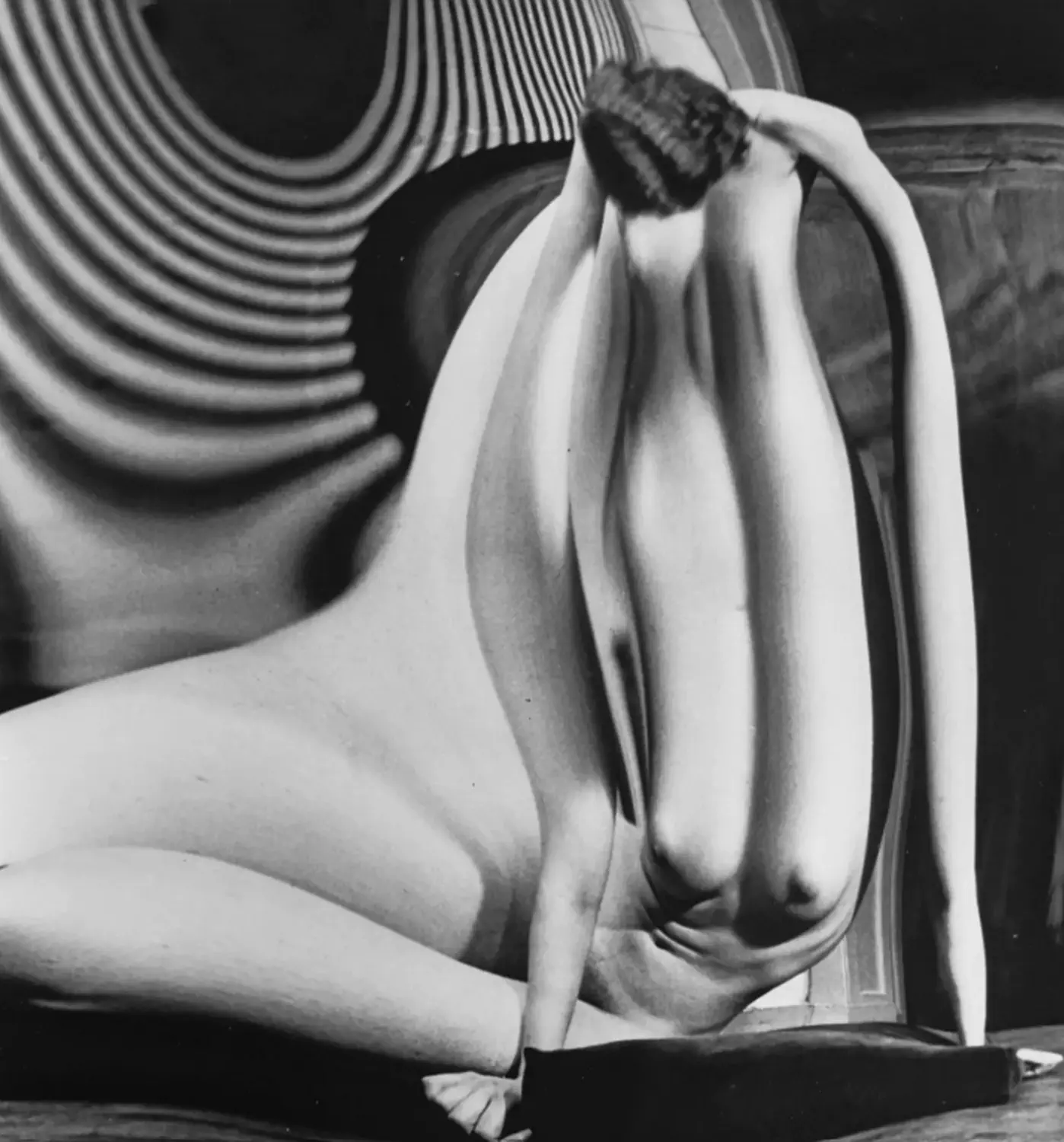
From "Distortions" (1933) by André Kertész
Horst P. Horst (1906–1999)
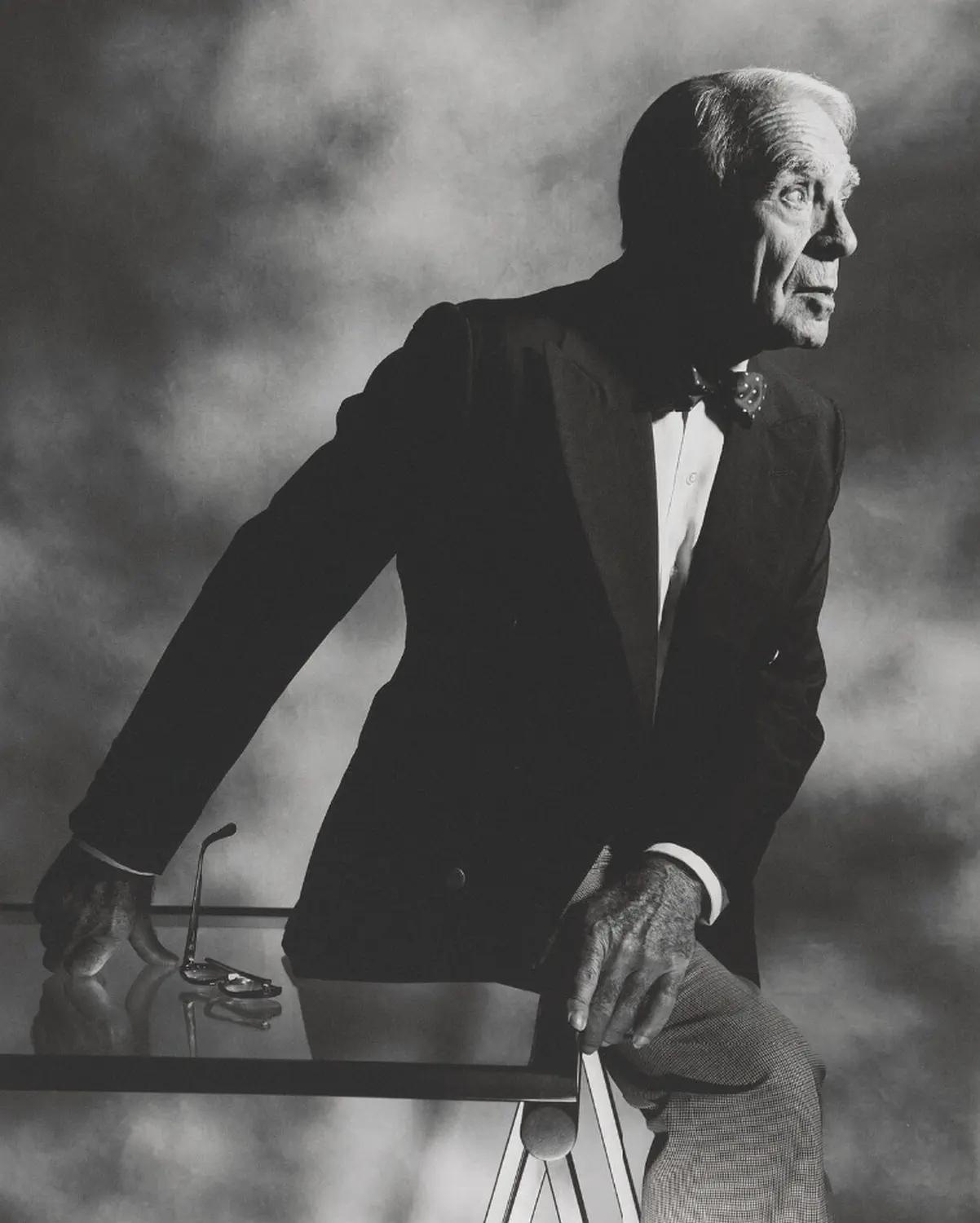
Horst P. Horst
Horst's "Mainbocher Corset" (1939) shows how far classical aesthetics and modernist lighting could carry a partially bared back. Made in Vogue's Paris studio on his last working night in the city before he fled the coming war, the image's loosened laces and sculpted light have been read ever since as elegance at the edge of catastrophe. It remains one of the most imitated photographs ever made, and its power is entirely a lighting decision, a subject explored further in our guide to lighting the nude.
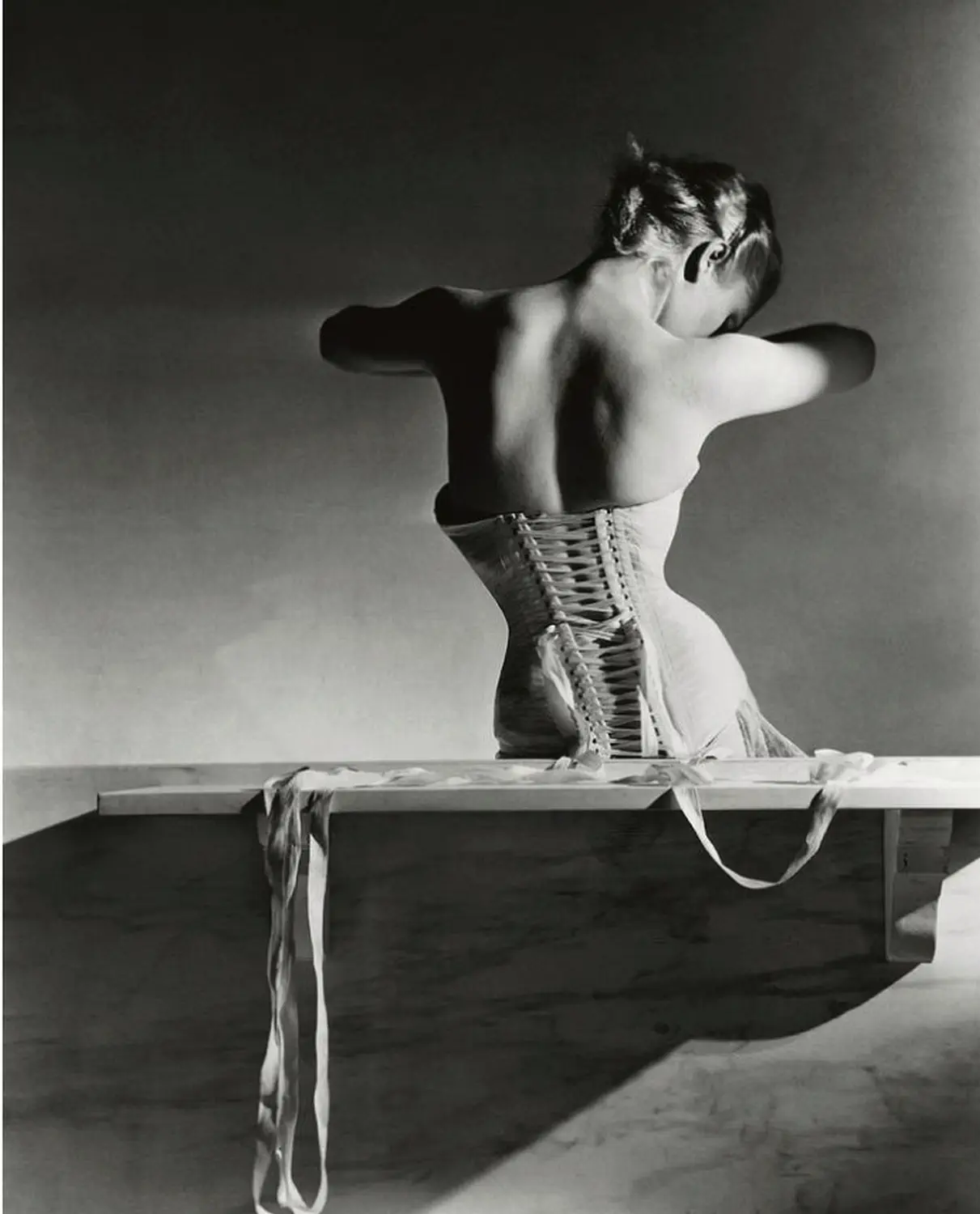
"Mainbocher Corset" (1939) by Horst P. Horst
Erwin Blumenfeld (1897–1969)
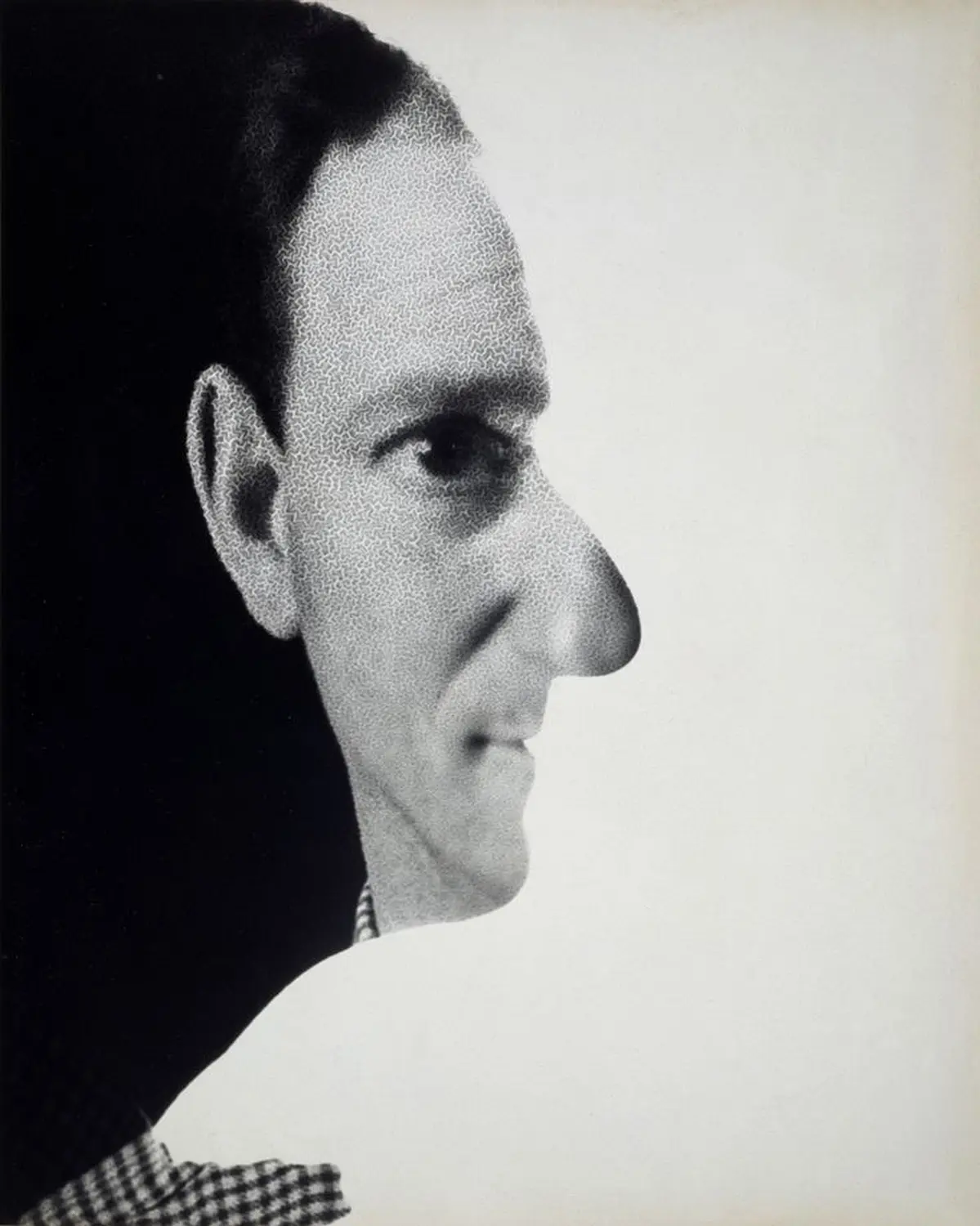
Erwin Blumenfeld
Blumenfeld was the era's darkroom alchemist, layering solarization, montage and multiple exposure into images that treat the negative as a beginning rather than a result. Yet his most sensual experiment needed no chemistry at all: "Nude under Wet Silk" (Paris, 1937) obscures and reveals the figure through clinging translucent fabric, turning the body into a shape that the eye completes. Concealment as revelation, stated once and never bettered.
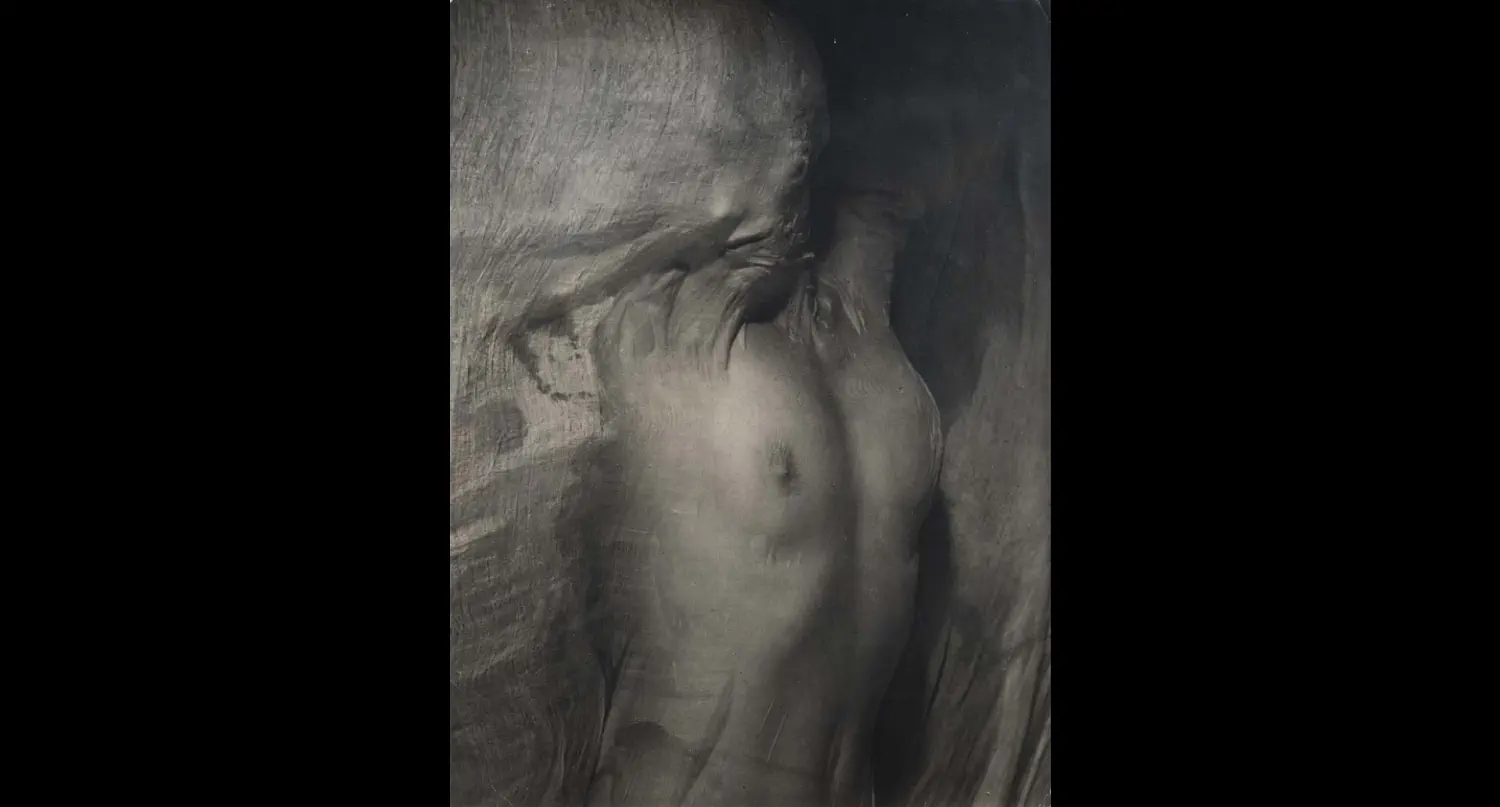
"Nude under Wet Silk" (1937) by Erwin Blumenfeld
The Enduring Influence of Modernism
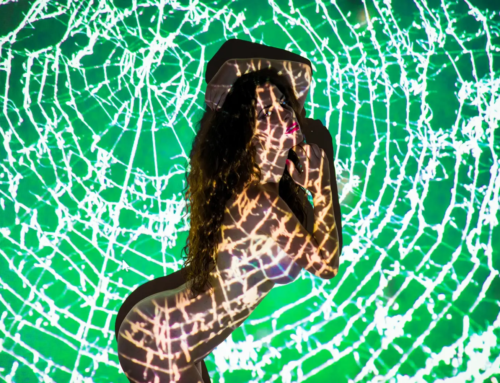
Modernism moved the nude from the painter's study to the experimental darkroom and the psychologist's couch, and every strategy in this article is still in daily use: Weston's form-worship, Brandt's optical distortion, Blumenfeld's fabric, Kertész's mirrors, Arbus's testimony. My own fine art practice descends from this era with one deliberate inversion: where the modernists transformed the body in the darkroom, I keep every transformation in front of the lens, fabric, glass, water and reflection, physical and in-camera, with nothing generated afterward. "Tulle" below is a direct descendant of Blumenfeld's wet silk, made ninety years later on the same principle: what the material withholds, the viewer supplies. The experiments continued into open political territory, traced in the contemporary era, and their prehistory is in the genre's pioneer decades.

Tulle — Burak Bulut Yıldırım
Questions readers ask
What was Group f/64?
A 1932 circle of West Coast photographers, including Edward Weston and Imogen Cunningham, committed to sharp focus, maximum depth of field and unmanipulated "straight photography," in deliberate opposition to painterly Pictorialism.
What is solarization?
Re-exposing a print or negative to light during development, partially inverting its tones. Man Ray and Lee Miller rediscovered the effect by accident around 1929 and turned it into a surrealist signature that renders skin metallic and sculptural.
Why do modernist nudes still matter to working photographers?
Because they established the genre's core verbs: abstract, distort, document, conceal, reveal. Nearly every contemporary approach to the body is a refinement of a move first made between 1920 and 1960.
Can I learn these transformation techniques in practice?
Yes, physically and in camera. Our Berlin and Istanbul workshops work with fabric, reflection, optics and light inside a concept-first structure, so the modernist toolkit serves an idea rather than decorating a body.
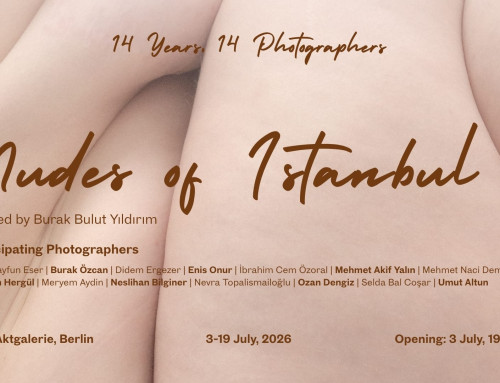
If the modernists taught the nude to transform, our ateliers teach the same lesson hands-on: concept-first editions where sexuality is deliberately placed third or fourth behind theme, form and the model–photographer collaboration, and where transformations are built physically, in camera. Led by Burak Bulut Yıldırım, Berlin-based photographer and curator practicing since 2005: fourteen-plus years of nude art workshops, 50+ editions, 300+ photographers, exhibitions in Berlin, Zurich, Barcelona, Rome, Thessaloniki and Heilbronn, curator of Nudes of Istanbul (Die Akt Galerie Berlin, 2026).
Portfolio: burakbulut.org · Limited editions on Saatchi Art and Artsper · Contact: hello@nudeartworkshops.com