


The Body Reimagined: Nude Photography in the Modernist Era (1920s-1960s)
The Modernist era was not just a new chapter in art; it was a radical break from the past. Fueled by the psychological theories of Freud and Jung, the trauma of world wars, and a rejection of rigid Victorian morality, artists sought to capture a new, more complex human experience. For photographers, the nude was no longer just a classical form to be perfected but a subject for intense psychological and formal experimentation. They dismantled, distorted, and reimagined the human body, using it to explore the subconscious, the nature of perception, and the shifting landscape of modern life.
Breaking Conventions: Surrealism and Abstraction
The early 20th century saw an explosion of artistic styles. Photographers began to move beyond documentation, using the camera not just to capture reality but to create it. Artists like Man Ray and Edward Weston were at the forefront, using surrealist and abstract approaches to transform the nude.
Man Ray (1890-1976)
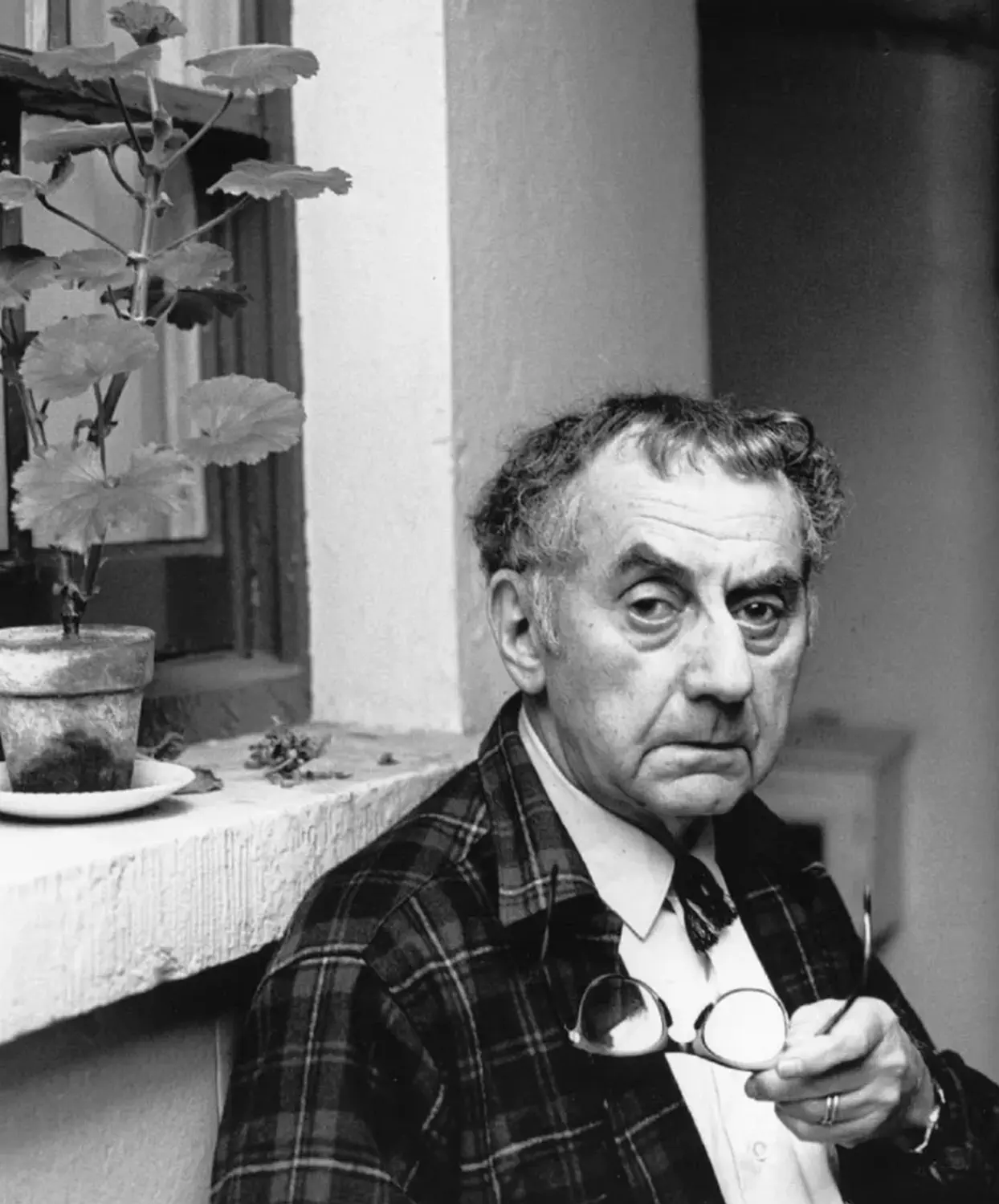
A key figure in both the Dada and Surrealist movements, Man Ray treated photography as a fluid, experimental medium. His goal was not to represent the body but to use it as a raw material for accessing the dreamlike logic of the subconscious. His techniques, like solarization (re-exposing the print to light) and rayographs (placing objects on photographic paper), turned the human form into otherworldly shapes.
- “Le Violon d’Ingres” (1924): By painting f-holes onto the model’s back, he merges the female form with a musical instrument, creating a witty and iconic surrealist object.
- “Primat de la matière sur la pensée” (1929): A solarized nude that inverts tones, giving the body a metallic, sculptural, and almost alien appearance.
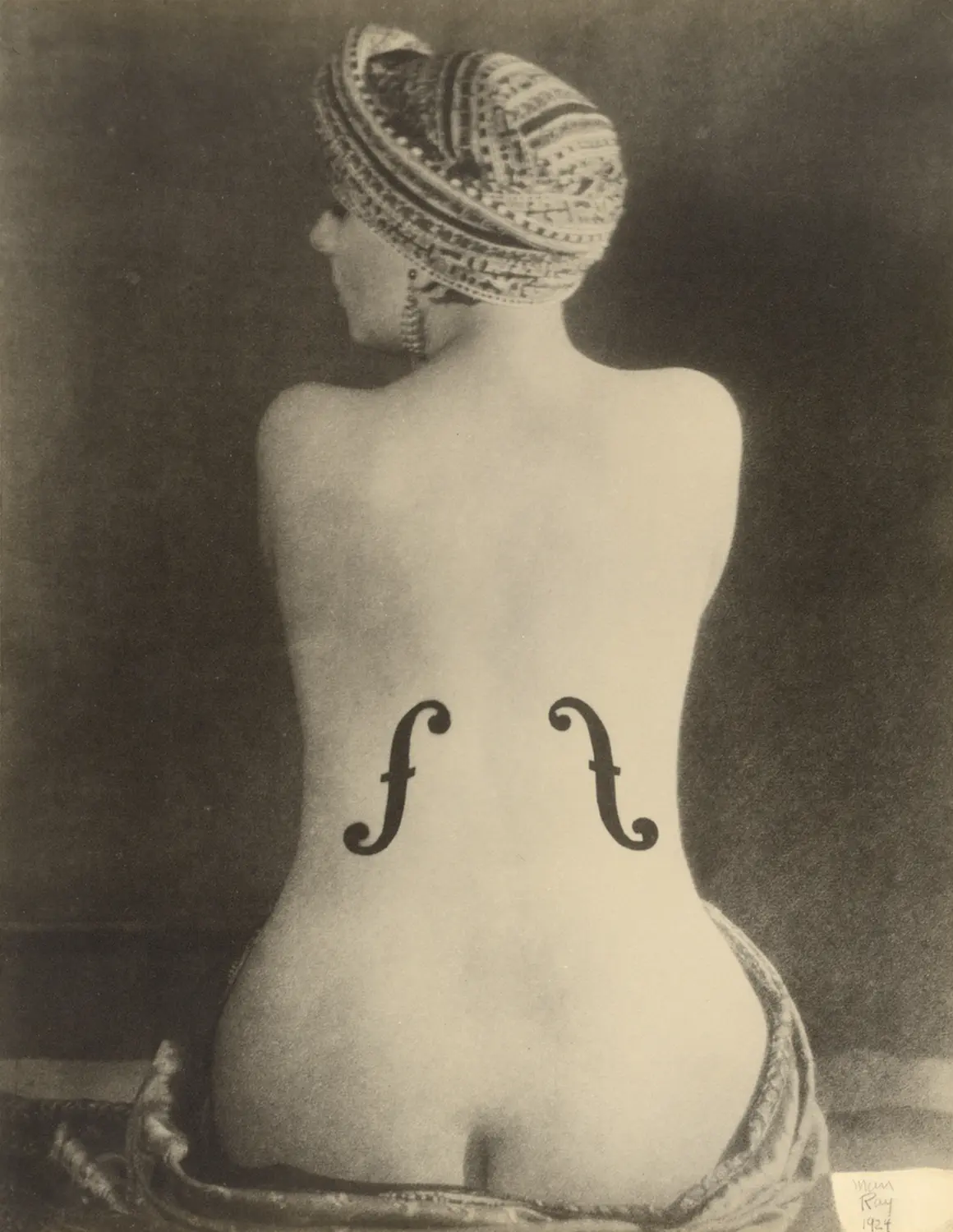

Man Ray’s work fundamentally challenged the idea of a photograph as a document of reality, presenting it instead as a product of the artist’s imagination.
Edward Weston (1886-1958)
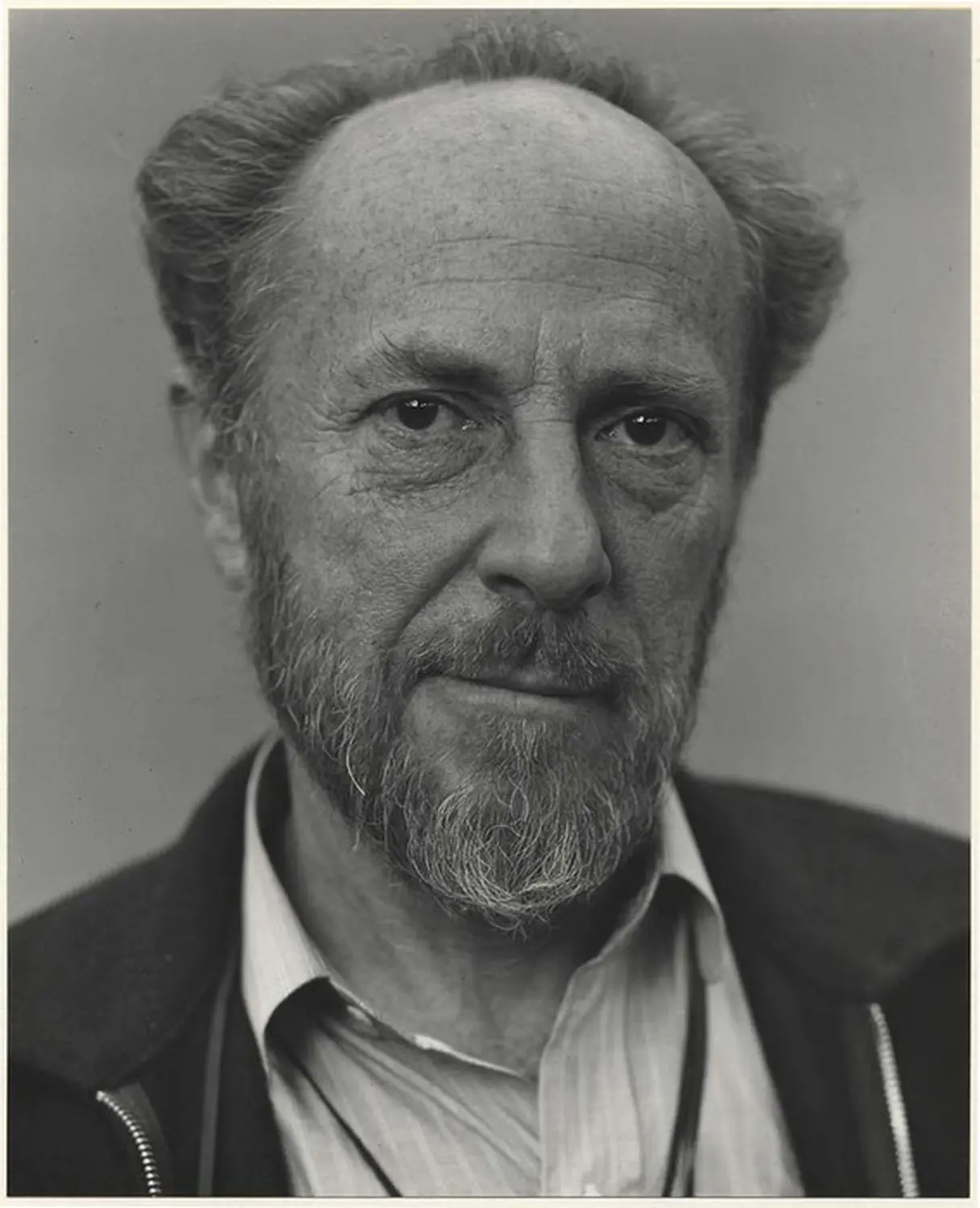
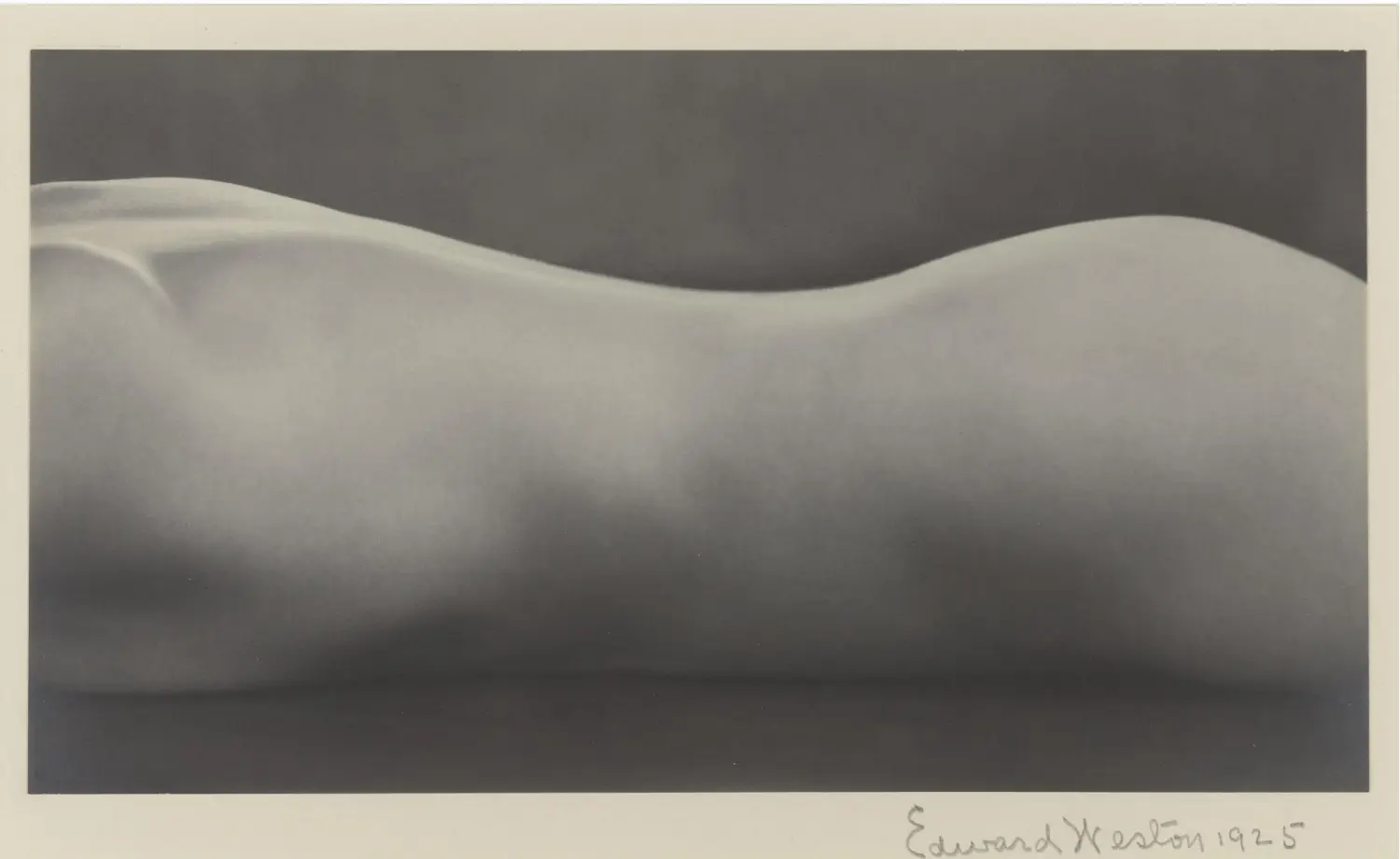
A central figure in the **Group f/64**, which advocated for sharp, unmanipulated “straight photography,” Edward Weston found beauty in pure form. His close-up, intensely focused nudes treat the body as a natural landscape, emphasizing its sculptural qualities and drawing visual parallels between human curves and the shapes of shells, stones, and vegetables.
- “Nude” (1936): A famous close-up of a woman’s torso and thighs on the sand, cropped to resemble rolling sand dunes and abstract forms.
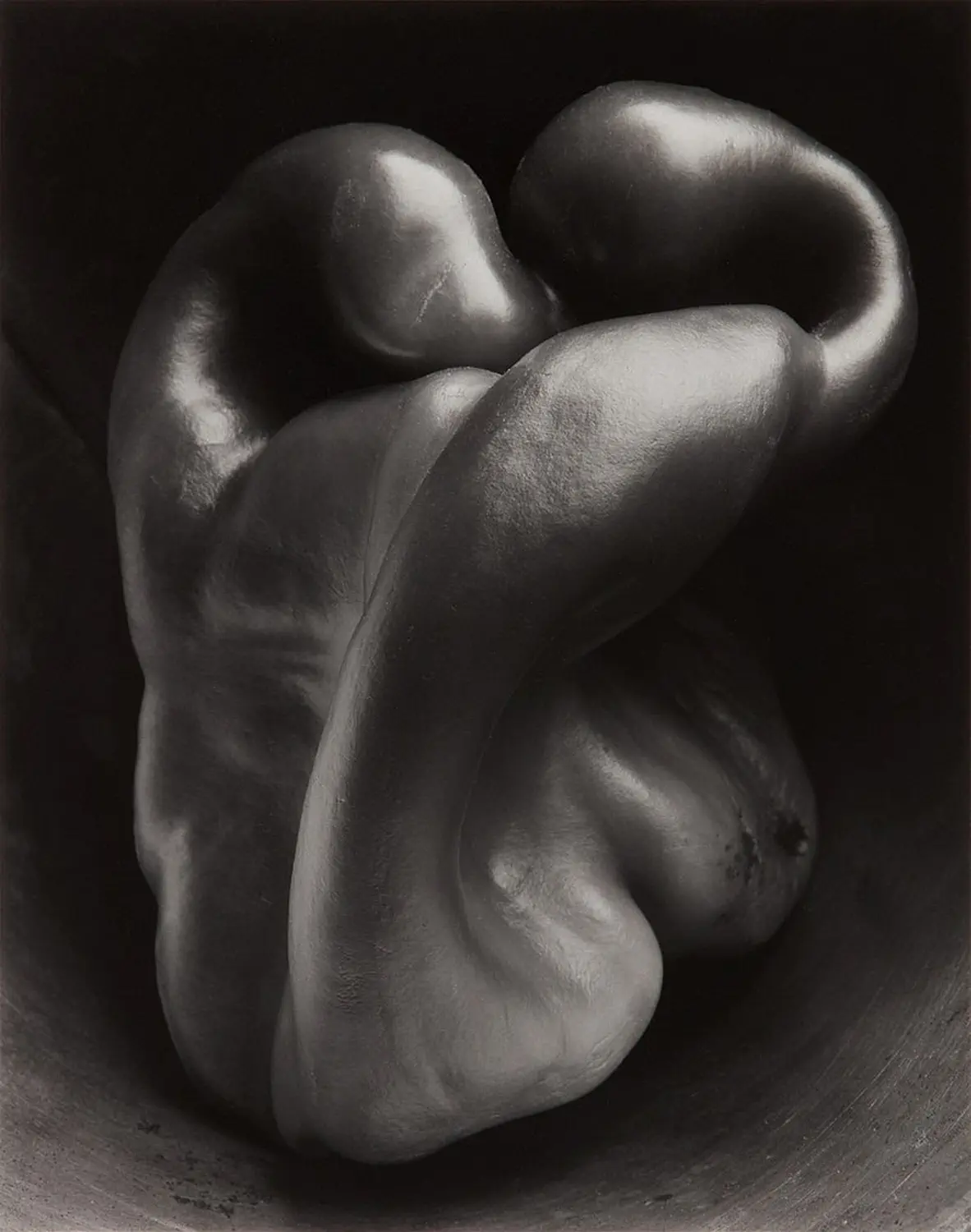
- “Pepper No. 30” (1930): While not a nude, this iconic photograph of a bell pepper, with its muscular, contorted form, perfectly illustrates the artistic philosophy he applied to his nudes.
The Female Gaze Emerges
The Modernist era also saw the rise of important women photographers who offered a distinct perspective on the nude, often challenging the objectifying lens that had dominated the genre.
Imogen Cunningham (1883-1976)
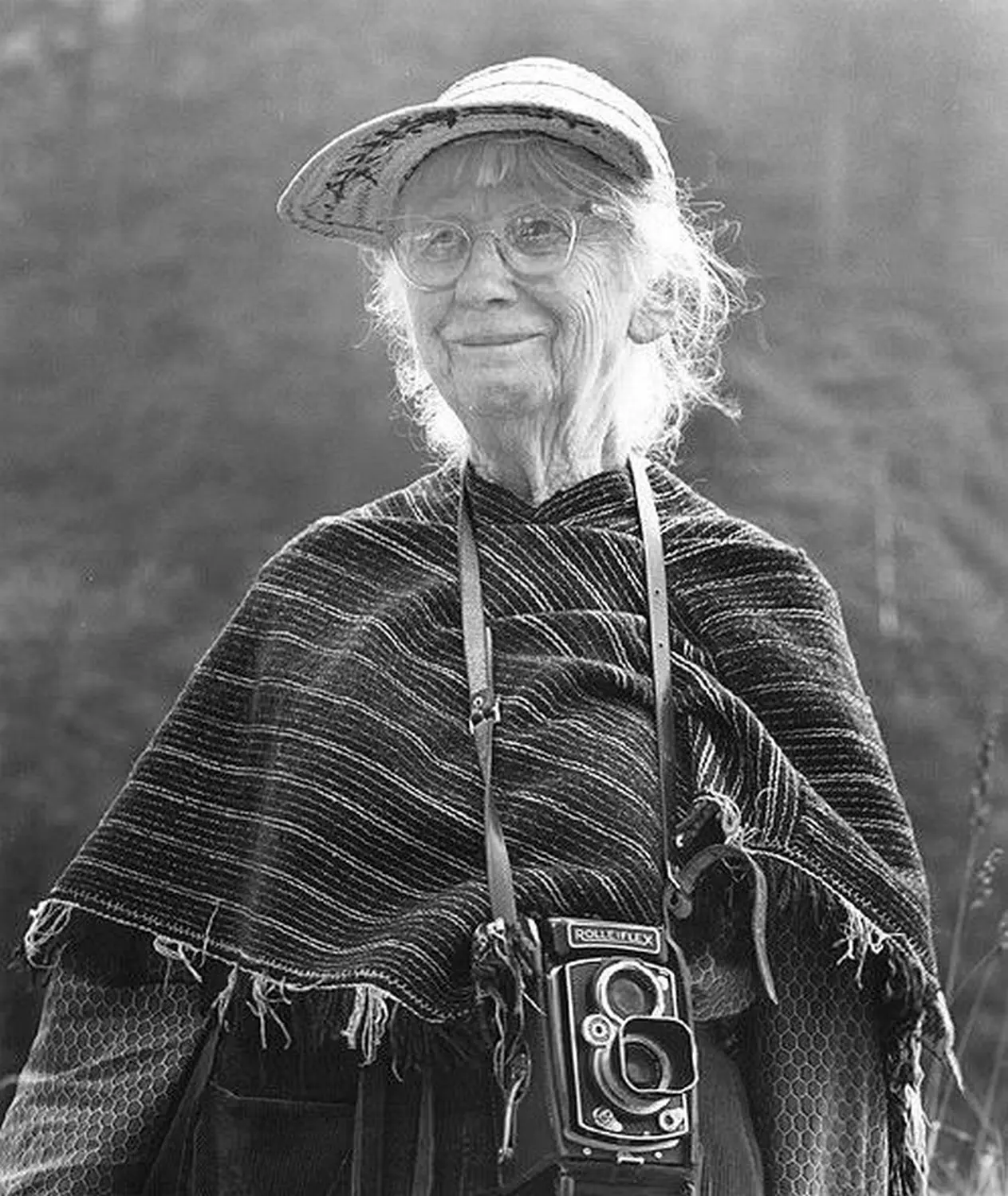
Another member of Group f/64, Imogen Cunningham created intimate nudes that emphasized form and vulnerability. Her work, often featuring close-ups of torsos and limbs, abstracts the body into geometric shapes and gentle curves, presenting a perspective that feels collaborative rather than voyeuristic.
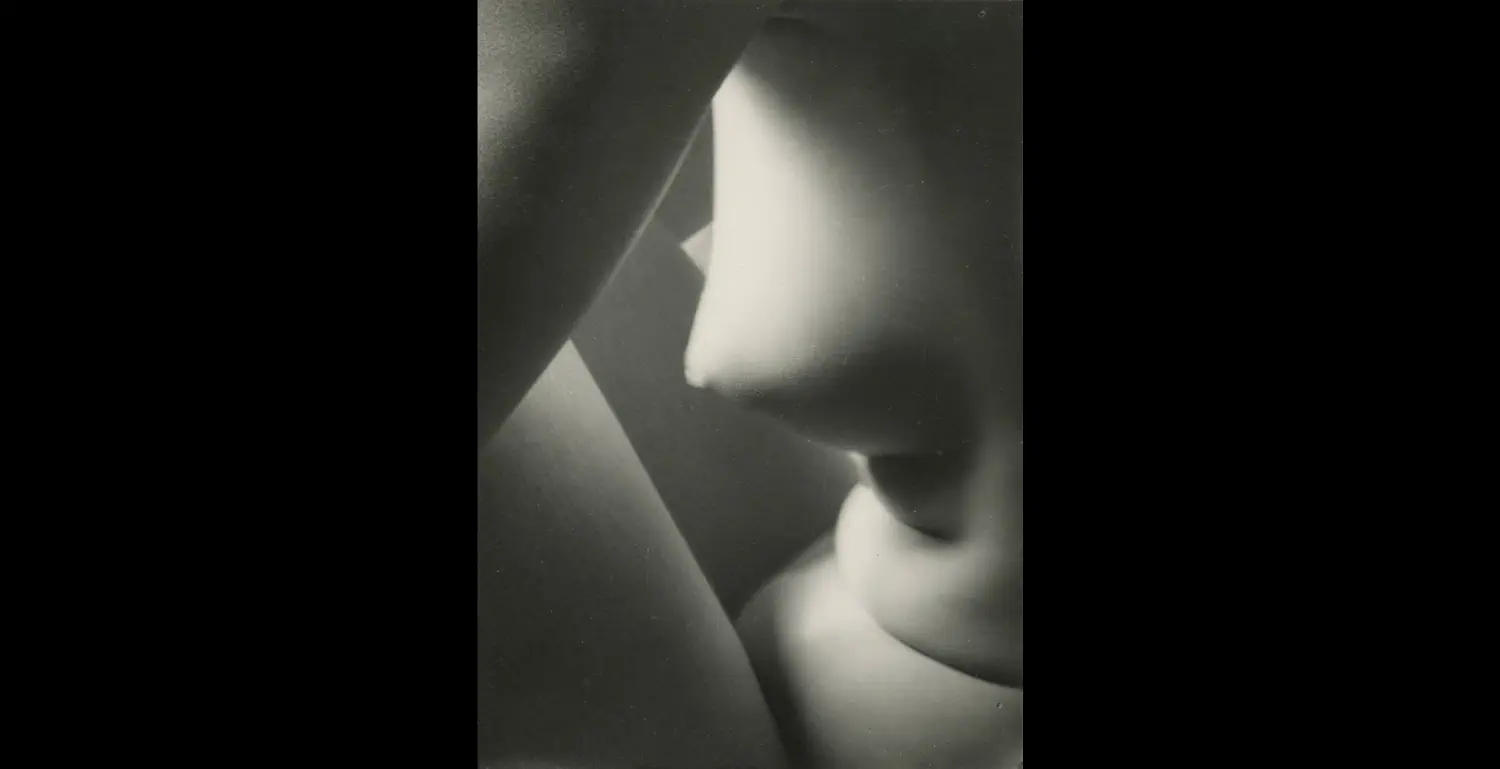
- “Triangles” (1928): A study of a nude torso where the arms and body create a series of intersecting geometric forms.
- “Two Sisters” (1928): A tender, soft-focus portrayal of two nude women, focused on intimacy and connection.

Diane Arbus (1923-1971)

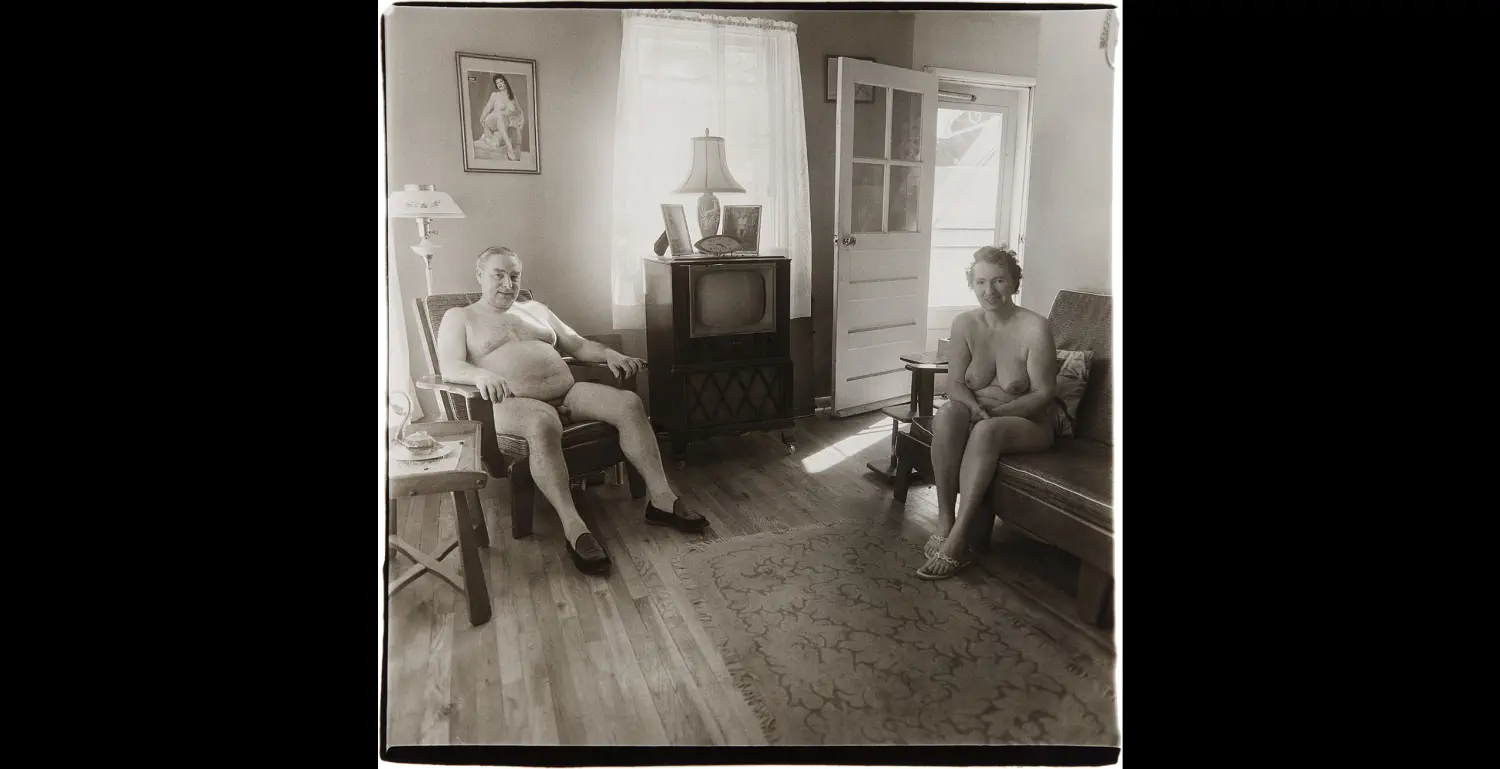
While not exclusively a nude photographer, Diane Arbus’s unflinching portraits were revolutionary. Her nudes were part of her broader project to document people on the fringes of society and question conventional ideas of beauty and normality. Her work is not about idealization but about the raw, direct, and sometimes uncomfortable reality of her subjects’ lives.
- “Retired man and his wife at home in a nudist camp one morning, N.J.” (1963): A stark, honest portrayal of an elderly couple in their environment, challenging viewers to see them as individuals rather than just bodies.
The Body as Landscape and Document
Other photographers in this era used distortion and documentary approaches to explore the body in new ways.
Bill Brandt (1904-1983)

Bill Brandt’s high-contrast, wide-angle nudes dramatically distorted the human form. Often photographed indoors against stark backdrops or on pebbled beaches, his work transforms body parts into surreal, monumental landscapes, playing with perspective to make flesh resemble stone or hills.
- “Nude, East Sussex Coast” (1953): A famous photograph where an elongated, distorted arm and ear on a beach create an uncanny, almost alien landscape.
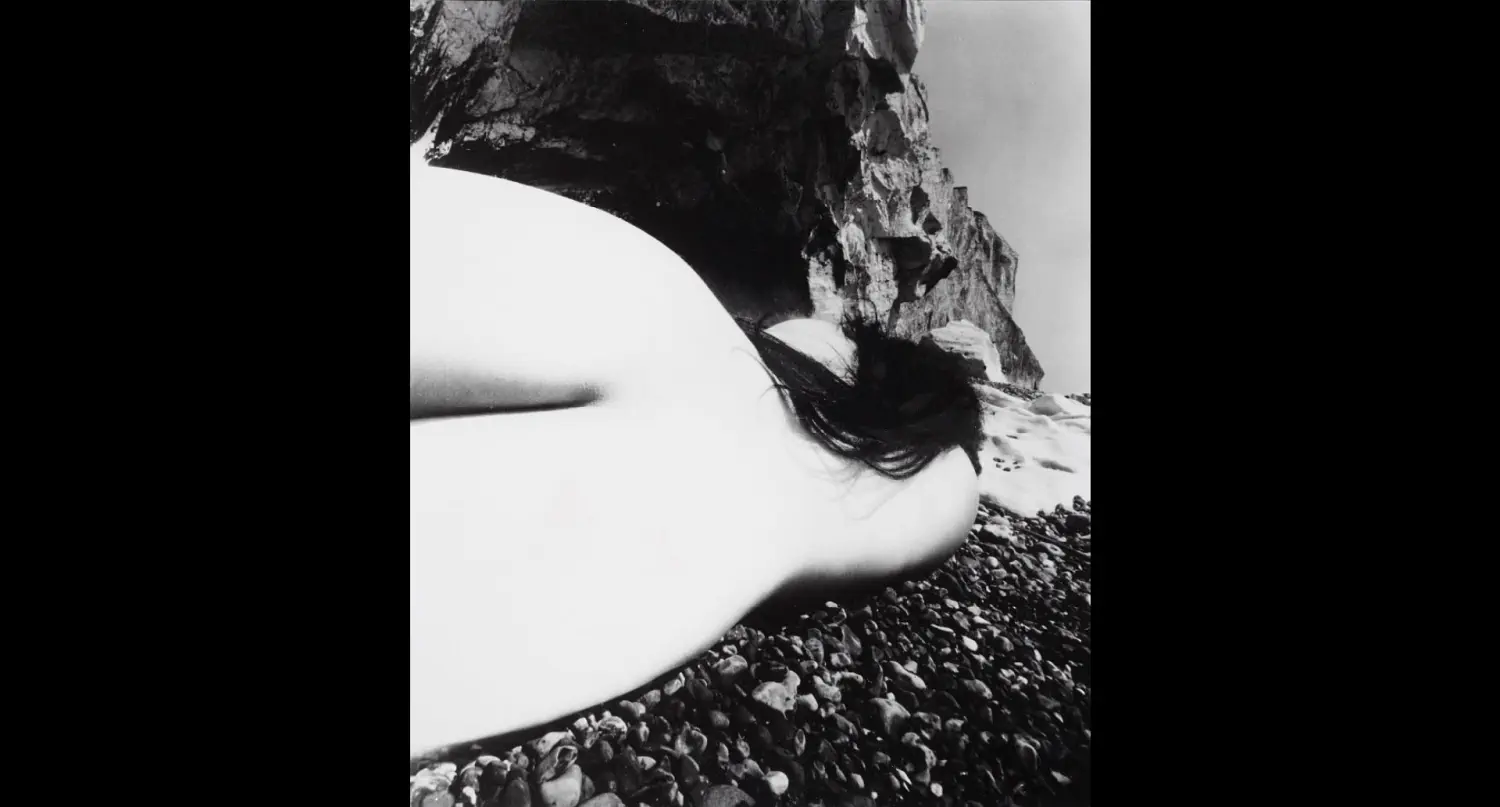
Brassaï (1899-1984)
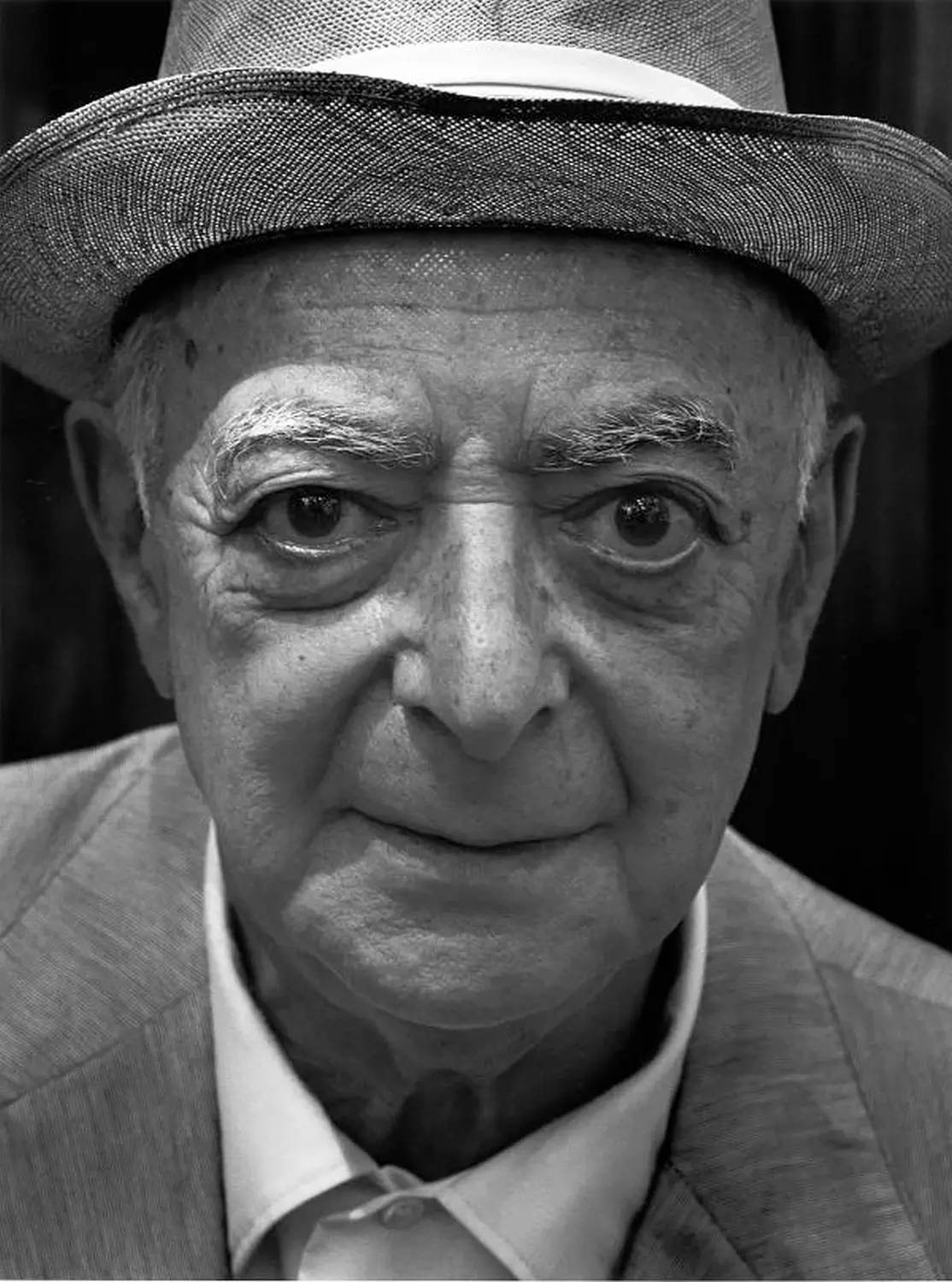
Born Gyula Halász, Brassaï was the chronicler of Parisian nightlife. His photographs of prostitutes, lovers, and performers included raw, honest depictions of the nude body that bridged the gap between documentary and fine art.
- “Nude” (1931-1935): From his “Paris by Night” series, these images show the unidealized human form in real, atmospheric settings.
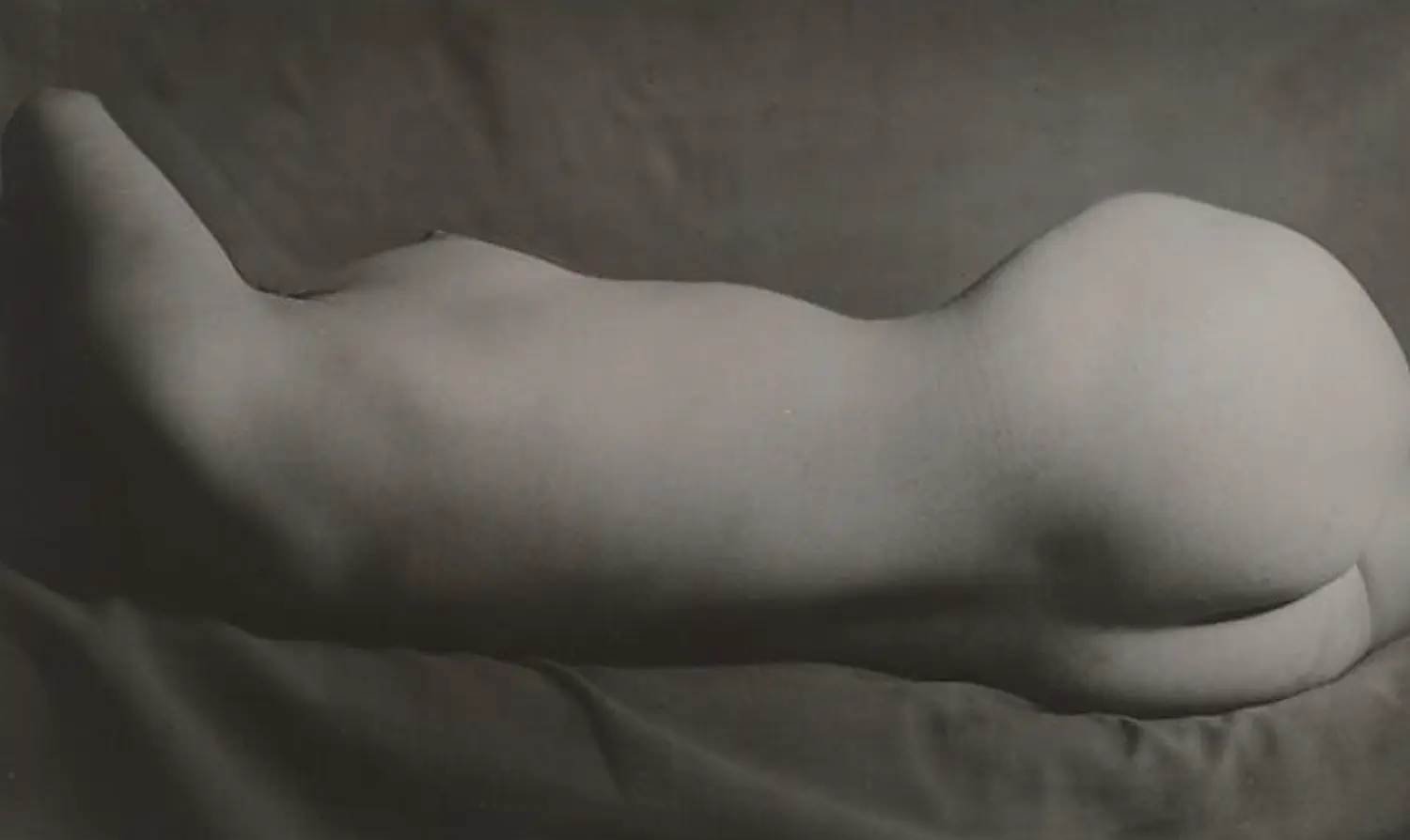
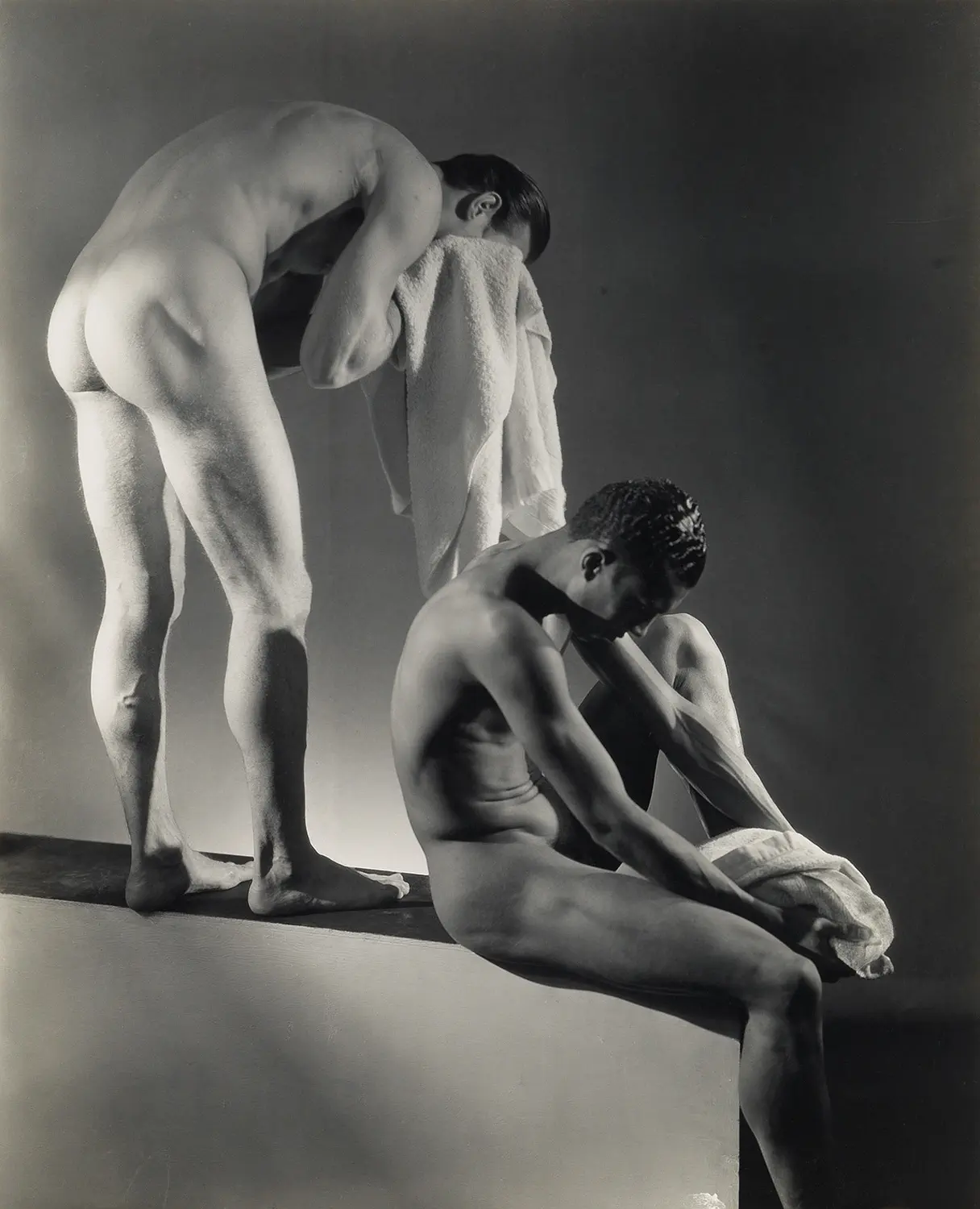
George Platt Lynes (1907-1955)
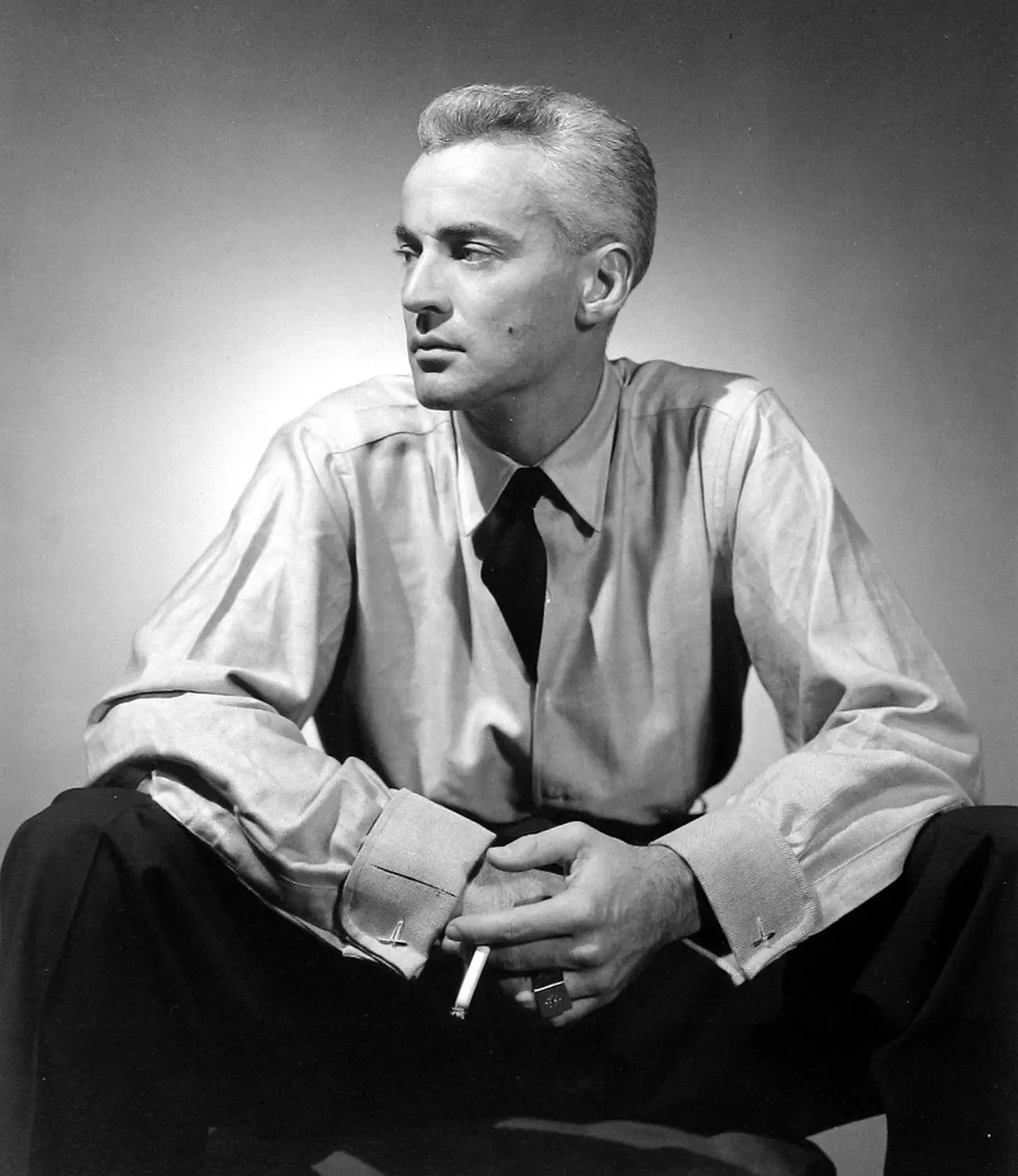
George Platt Lynes was a key figure in homoerotic photography. His classically inspired but modernly lit studies of male dancers and athletes were daring for their time, challenging societal taboos and expanding the subject matter of nude art photography.
Other Masters of Form and Light
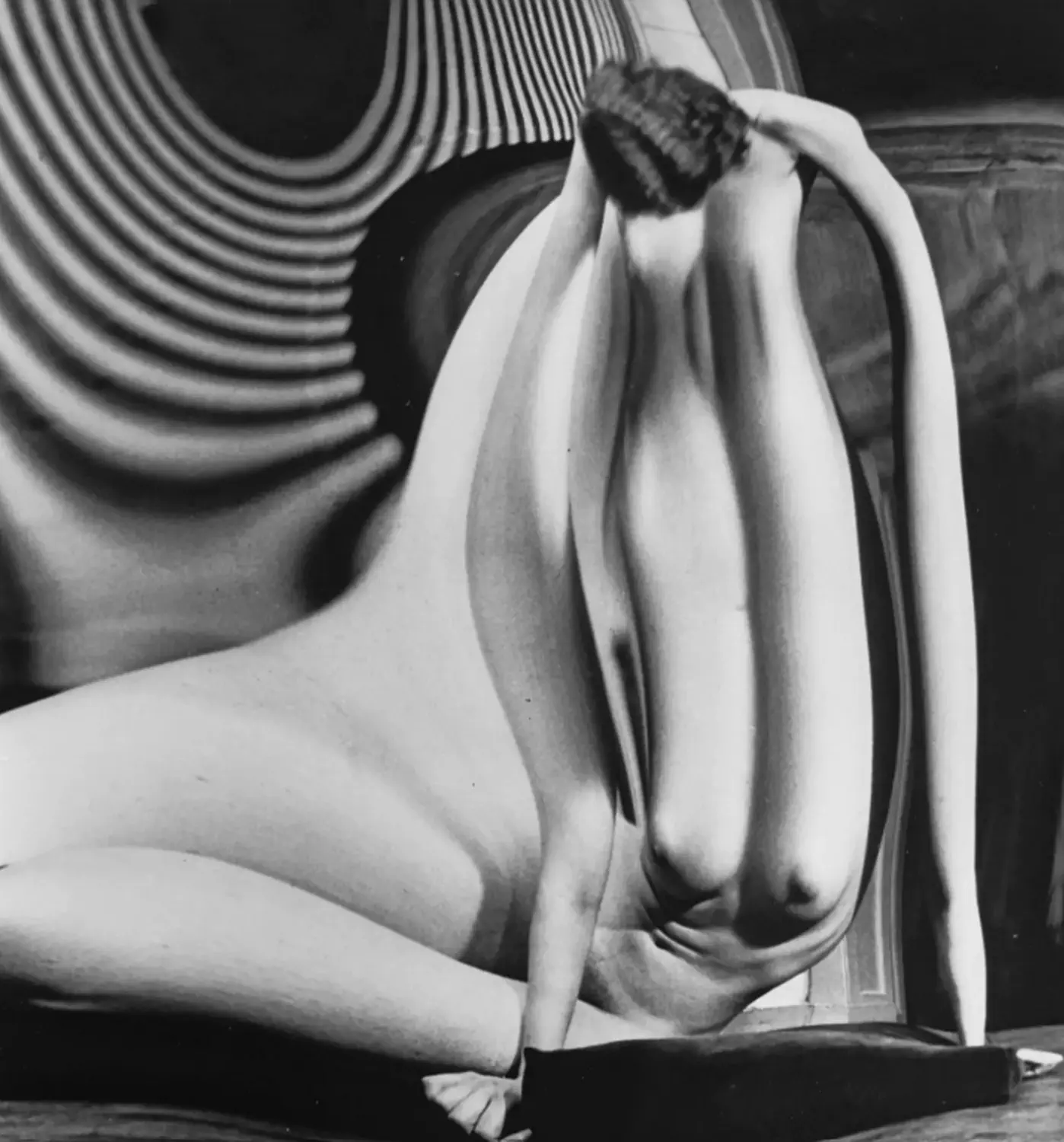
André Kertész (1894-1985)
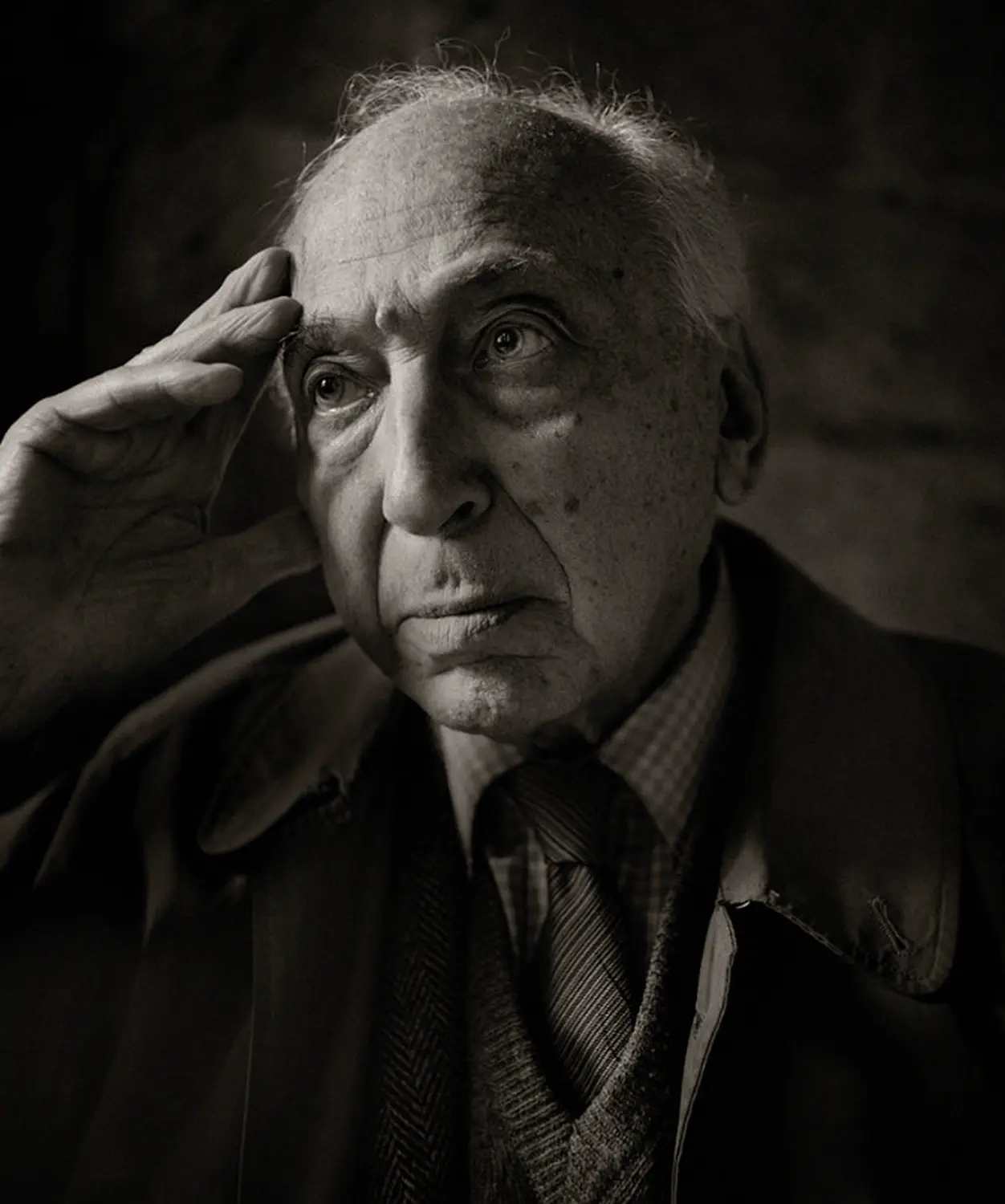
Hungarian-born photographer André Kertész used his “Distortions” series (1933) to playfully question photographic truth. By photographing nude models reflected in funhouse mirrors, he created bizarre, elongated, and compressed forms that turned the body into pure abstraction.
Horst P. Horst (1906-1999)
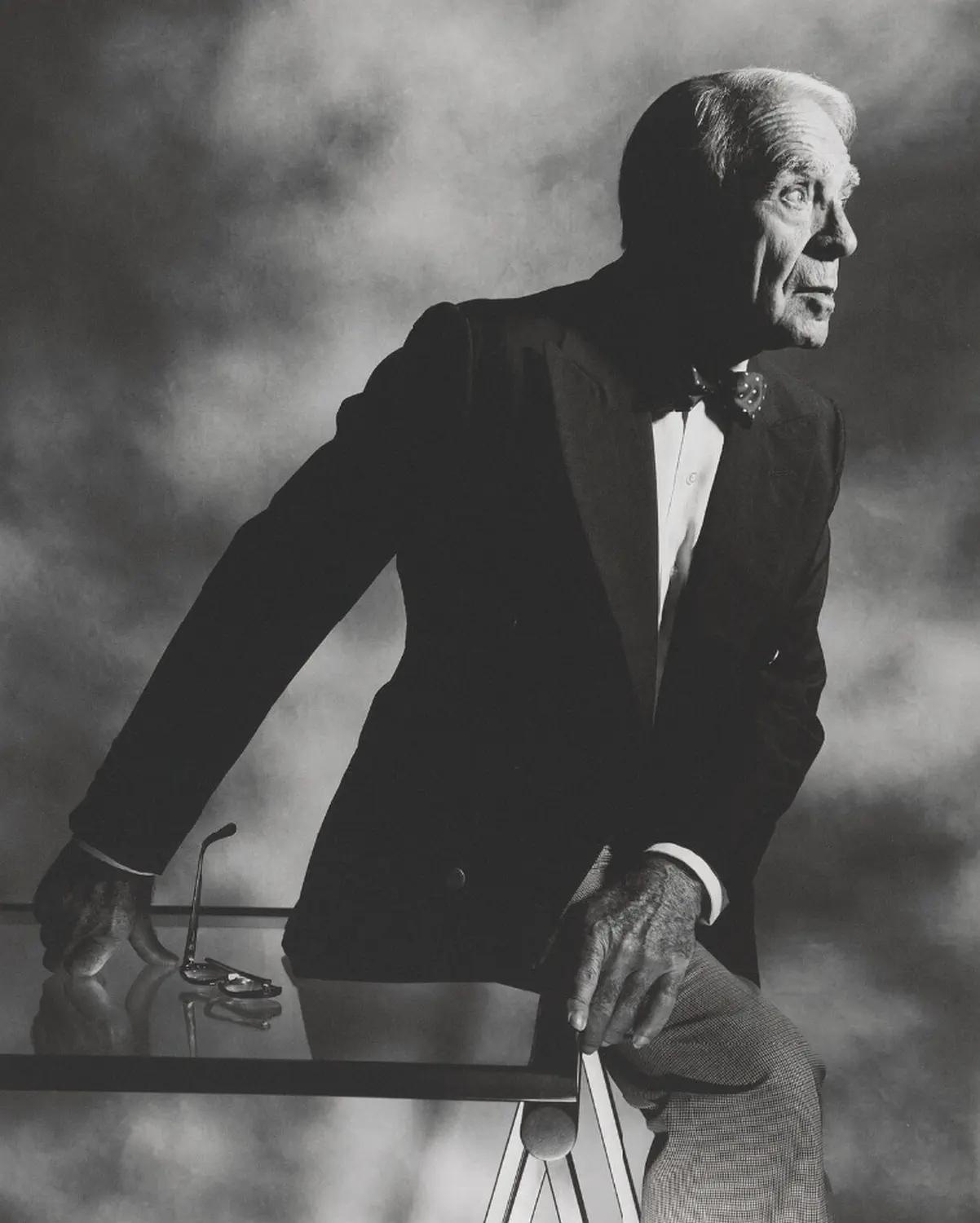
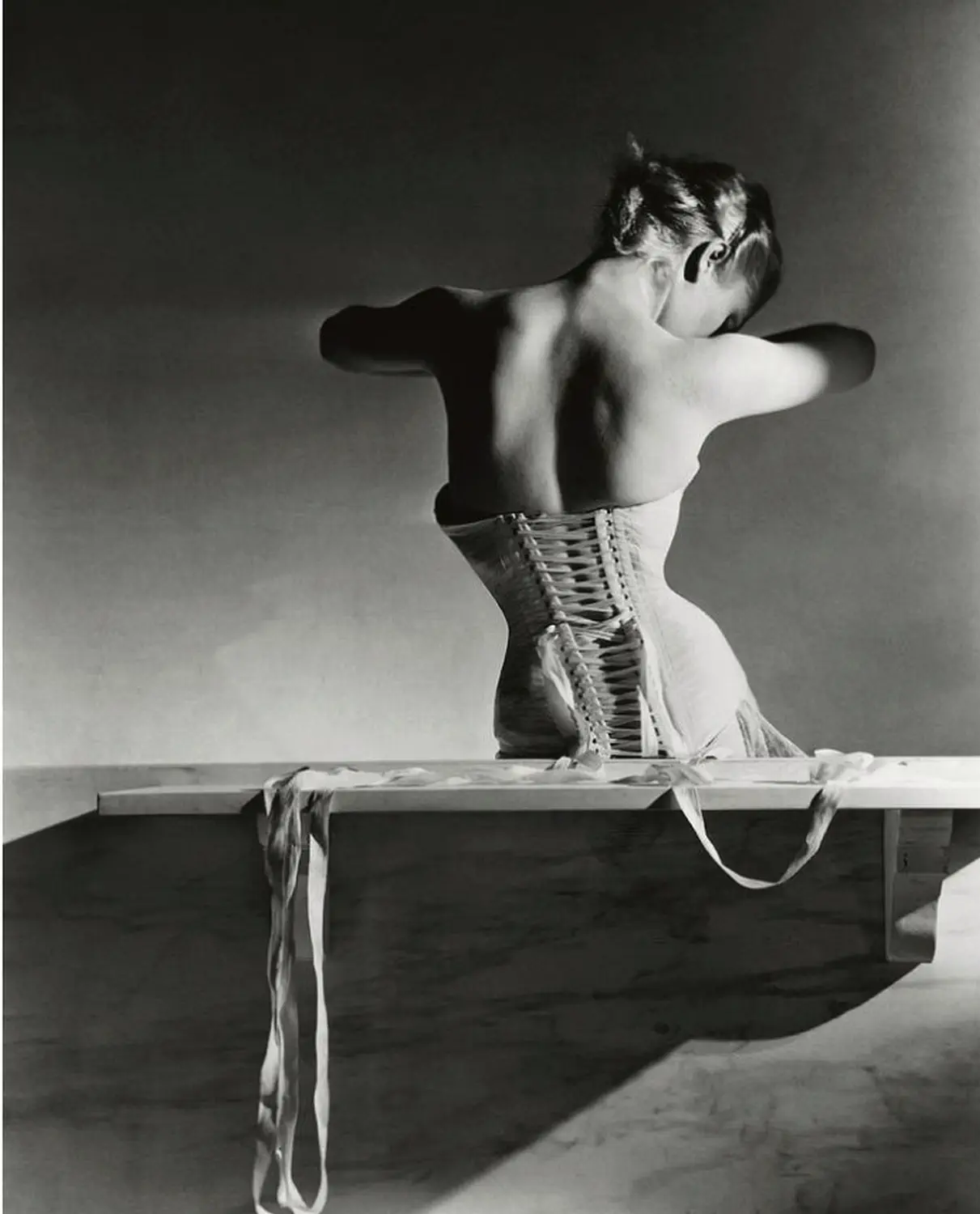
Though known for fashion, Horst P. Horst created iconic images that blended classical aesthetics with modernist lighting and composition.
- “Mainbocher Corset” (1939): While only showing a partially nude back, this photograph’s dramatic lighting and focus on pure form made it a symbol of modernist elegance.
Erwin Blumenfeld (1897-1969)
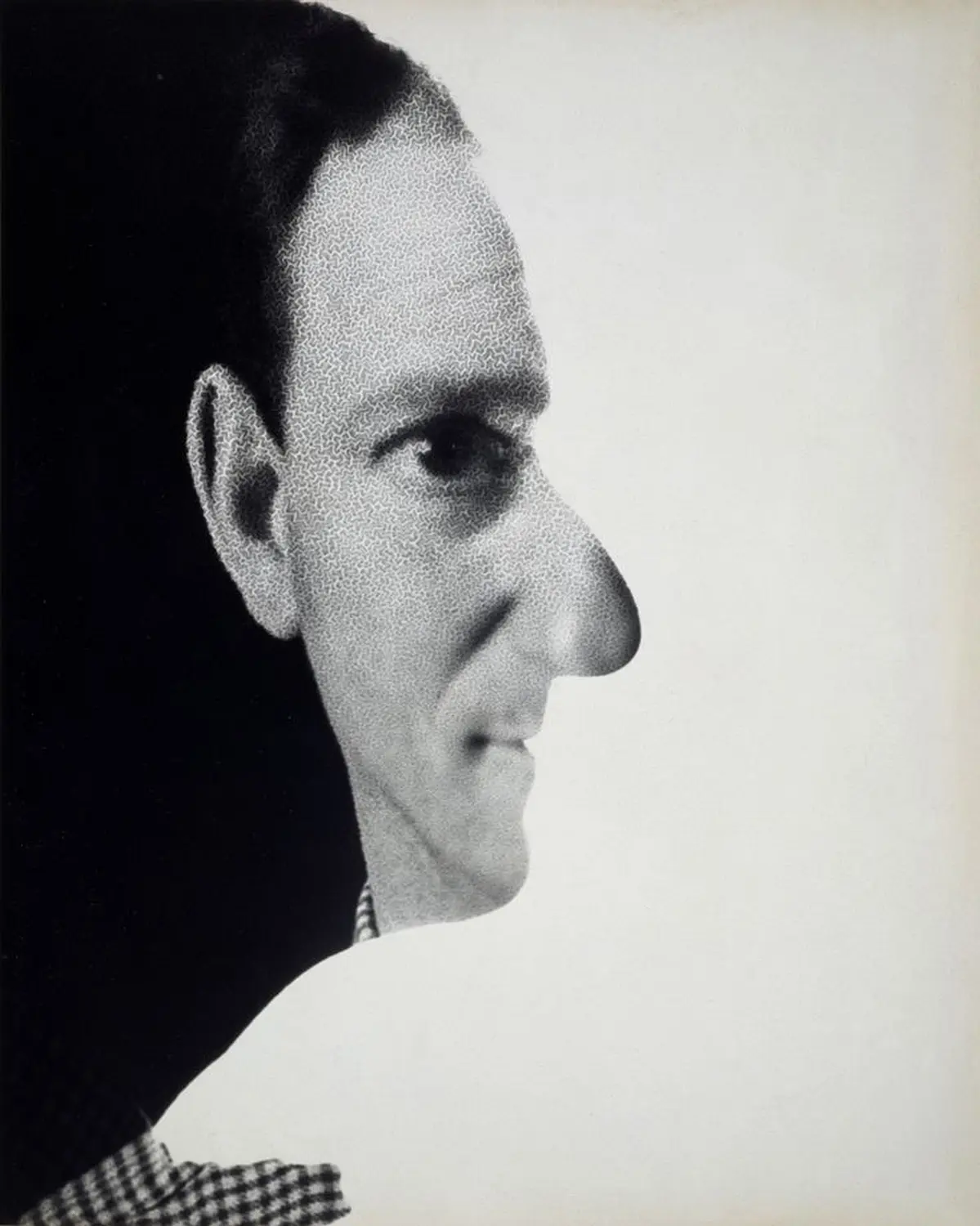
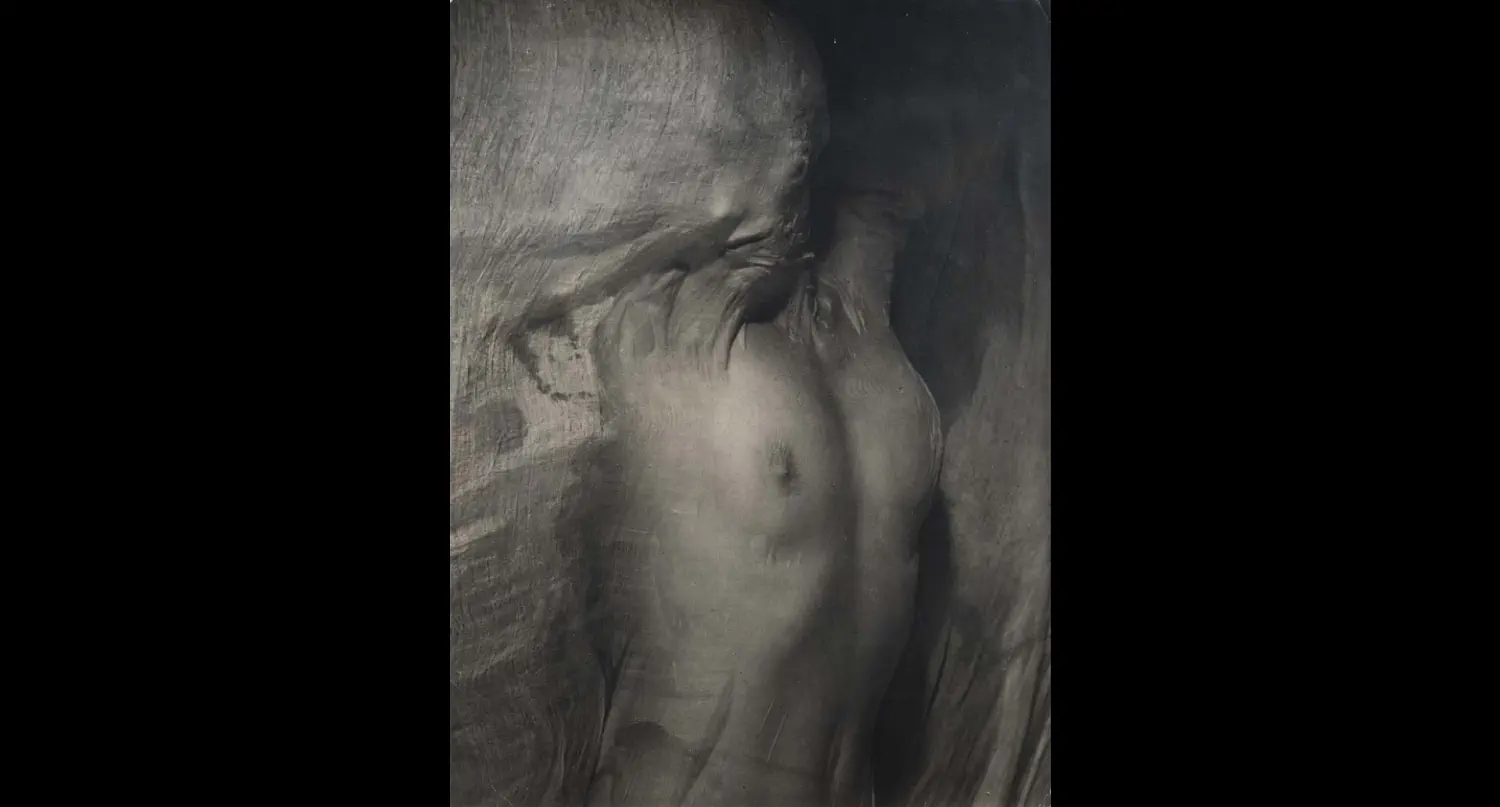
Erwin Blumenfeld used experimental darkroom techniques like solarization, multi-layered images, and photomontage to bring a new level of abstraction to the nude.
- “Nude under Wet Silk” (1937): A photograph that plays with texture and form by obscuring and revealing the nude figure, turning it into a mysterious and sensual shape.
Conclusion: The Enduring Influence of Modernism
The Modernist era fundamentally changed nude art photography. It moved the genre from the painter’s study to the experimental darkroom and the psychologist’s couch. These artists proved that the nude body could be a vehicle for abstraction, a surrealist dreamscape, a sharp-focused study of form, or a raw document of human existence. Their work established a new vocabulary for seeing the human form that continues to inform and inspire photographers today.
From Modernism to Contemporary Practice
The spirit of artistic exploration from these modern masters continues today. For collectors and art enthusiasts, limited edition works by award-winning nude art photographer Burak Bulut Yıldırım are available on respected platforms like Saatchi Art and Artsper. You can explore his full portfolio of contemporary projects at burakbulut.org.
For over a decade, Yıldırım has also been sharing his expertise through nude art photography workshops in Berlin, helping to nurture the next generation of artists. These workshops offer a space for photographers and models to explore the artistry of nude photography in a supportive and professional environment. To learn more about upcoming workshops or to discuss collaborations, you can reach out via Instagram or email at hello@nudeartworkshops.com.