

The Body as a Battleground: Nude Photography in the Contemporary Era (1970s-Present)
The Contemporary Era, from the 1970s to today, marks a radical turning point in the history of nude photography. The nude body, once primarily a subject of aesthetic beauty or formal experimentation, became a contested site—a battleground for political, social, and personal struggle. Fueled by the rise of second-wave feminism, the LGBTQ+ rights movement, the AIDS crisis, and the explosion of identity politics, photographers began to use the human form as a canvas to explore the most urgent issues of their time. This period is defined by a radical diversification of voices and bodies, directly confronting issues of identity, gender, race, and power in ways that were often provocative, deeply personal, and profoundly influential.
Robert Mapplethorpe (1946-1989): The Provocateur of the Culture Wars

Robert Mapplethorpe
Few photographers have ignited as much controversy and debate as Robert Mapplethorpe. His stark, classically composed black-and-white photographs became a flashpoint in the American “culture wars” of the late 1980s, forcing a national conversation about censorship, public funding for the arts, and what constitutes “art” versus “obscenity.”
The Classical Body, The Queer Gaze
What made Mapplethorpe’s work so explosive was his fusion of exquisite, formal beauty—reminiscent of Renaissance sculpture—with subject matter that was, at the time, considered taboo, particularly his documentation of the BDSM subculture in New York. He used the legitimizing language of high art to validate queer desire. His photograph “Man in Polyester Suit” (1980) is a prime example of his confrontational style. By tightly cropping the image, he raised challenging questions about race, sexuality, and the politics of the gaze.
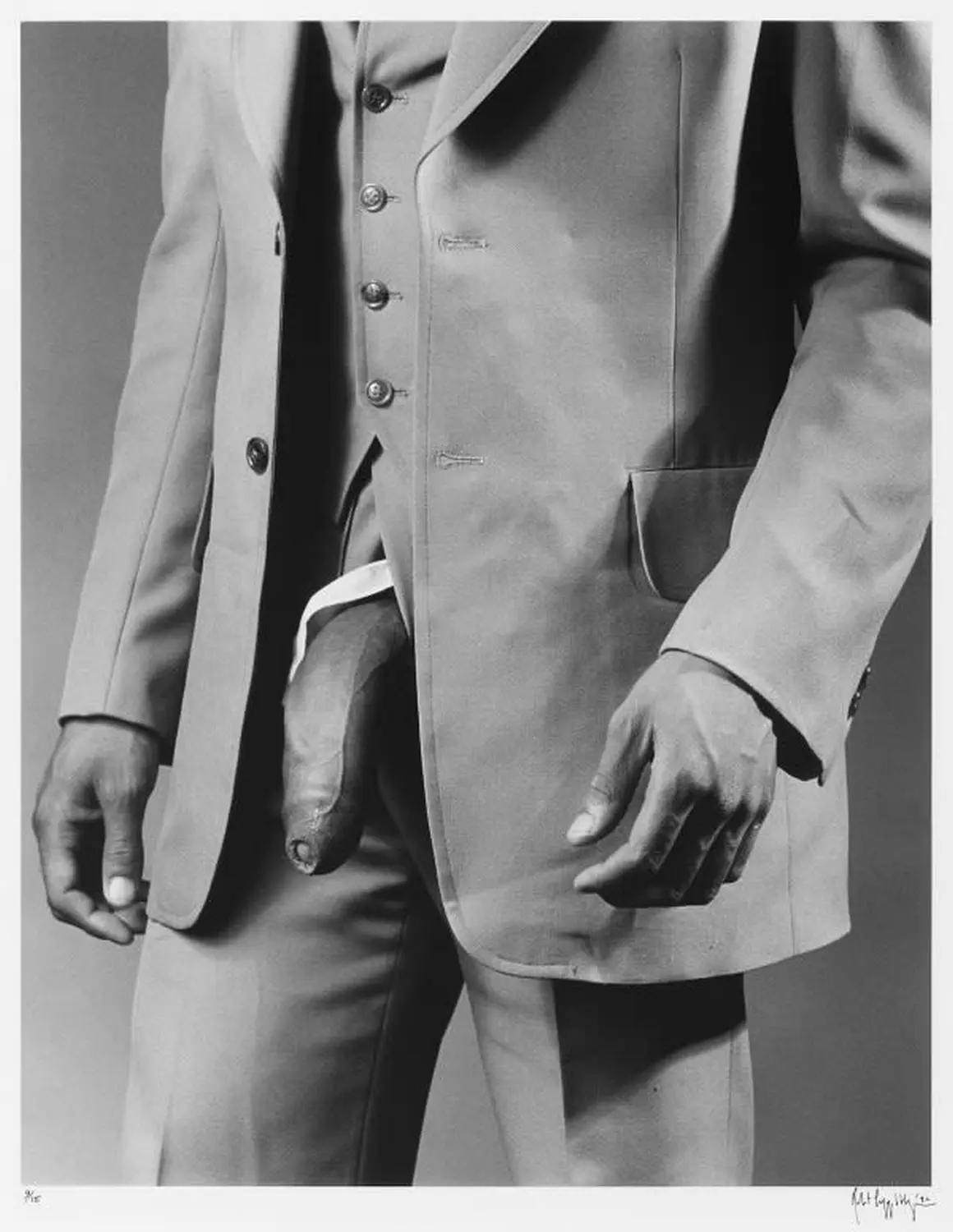
“Man in Polyester Suit” (1980)
Challenging Femininity: The Lisa Lyon Series
In his collaboration with the first female bodybuilding champion, Lisa Lyon, Mapplethorpe radically challenged traditional ideals of femininity. He photographed her powerful, muscular physique with the same classical reverence he applied to his male nudes. The resulting images, like the one below, were groundbreaking, presenting a vision of female strength and form that was a world away from the soft, passive nudes of art history, and sparked important feminist discussions about strength versus beauty.
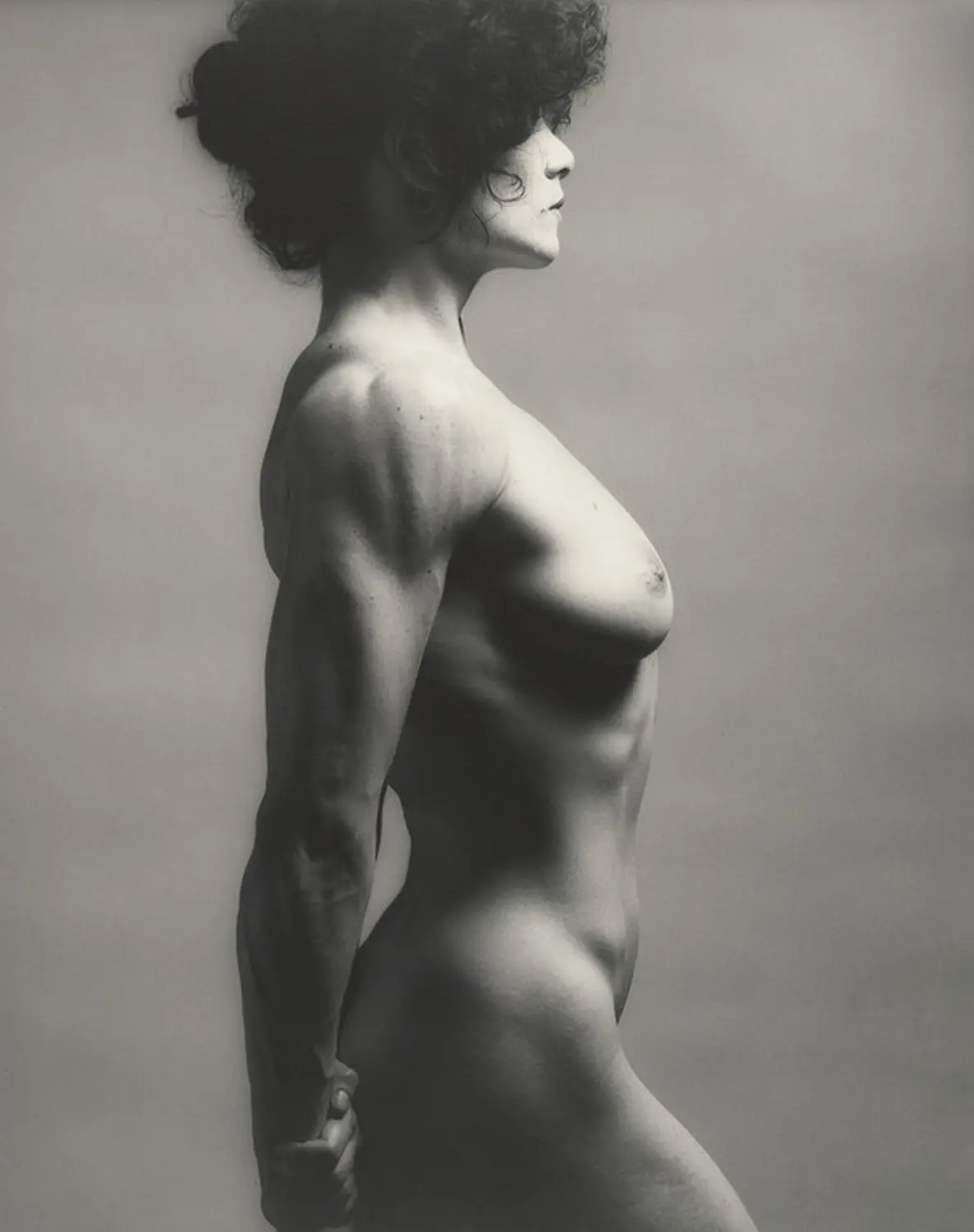
Lisa Lyon (1982)
Nan Goldin (1953-present): The Personal is Political

Nan Goldin
While Mapplethorpe fought his battles in the formal language of the gallery, Nan Goldin brought the political into the deeply personal. Her intimate, snapshot-style aesthetic brought a raw, diaristic honesty to the nude, proving the feminist mantra that “the personal is political.”
“The Ballad of Sexual Dependency”: An Archive of a Generation
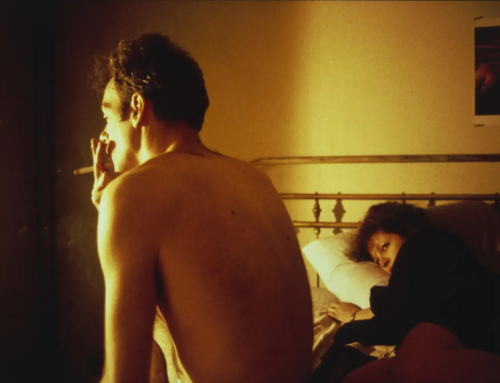
Goldin’s seminal work, “The Ballad of Sexual Dependency” (1986), is an ongoing visual diary documenting her “tribe”—her friends and lovers in the bohemian subcultures of Boston, New York, and Berlin. The images, like the tender portrait of a couple in bed, are deeply personal, capturing moments of love, drug use, intimacy, and loss with unflinching sincerity. The work became a poignant archive of a community that would soon be devastated by the AIDS crisis, making her personal project a vital and heartbreaking historical document. The nudity in her work is never performative; it is simply a state of being, a testament to the raw vulnerability of human connection.

From “The Ballad of Sexual Dependency”
Sally Mann (1951-present): The Controversial Matriarch
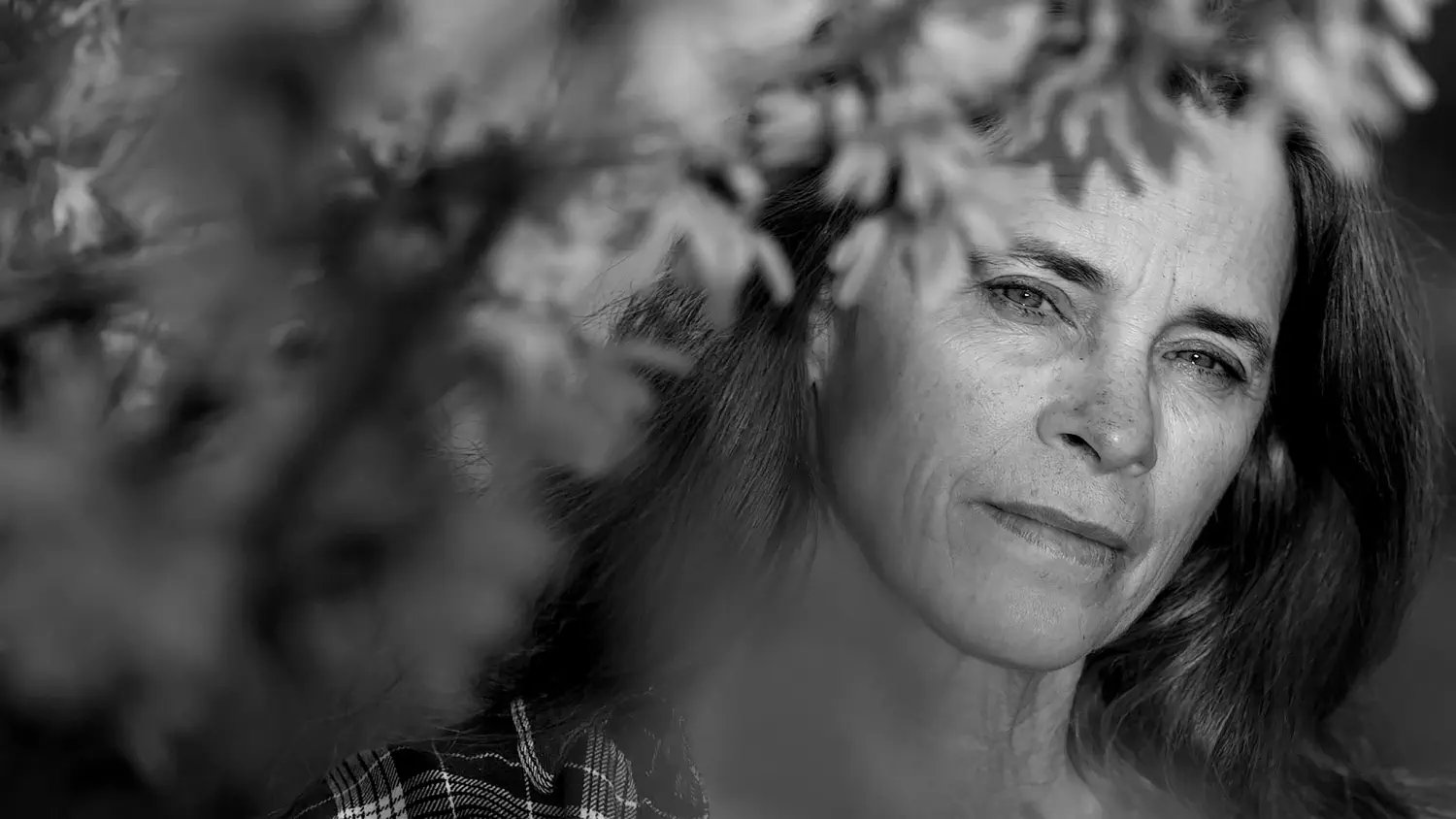
Sally Mann
Sally Mann’s beautiful and haunting photographs of her family and the American South raised profound questions about family, innocence, and representation. Using large-format cameras and antique photographic processes, her work has a timeless, painterly quality that often belies its controversial content.
“Immediate Family” and the Maternal Gaze
Her series “Immediate Family” (1984-1994), which included nude photographs of her young children, sparked a fierce debate about the line between art and exploitation. The images, like the one below, possess a powerful duality, capturing both an idyllic childhood and an unsettling, premature sense of adulthood. Years later, her series “Proud Flesh” offered a tender and unflinching study of her husband’s aging body, radically inverting the traditional gaze to explore love and mortality from a female perspective.
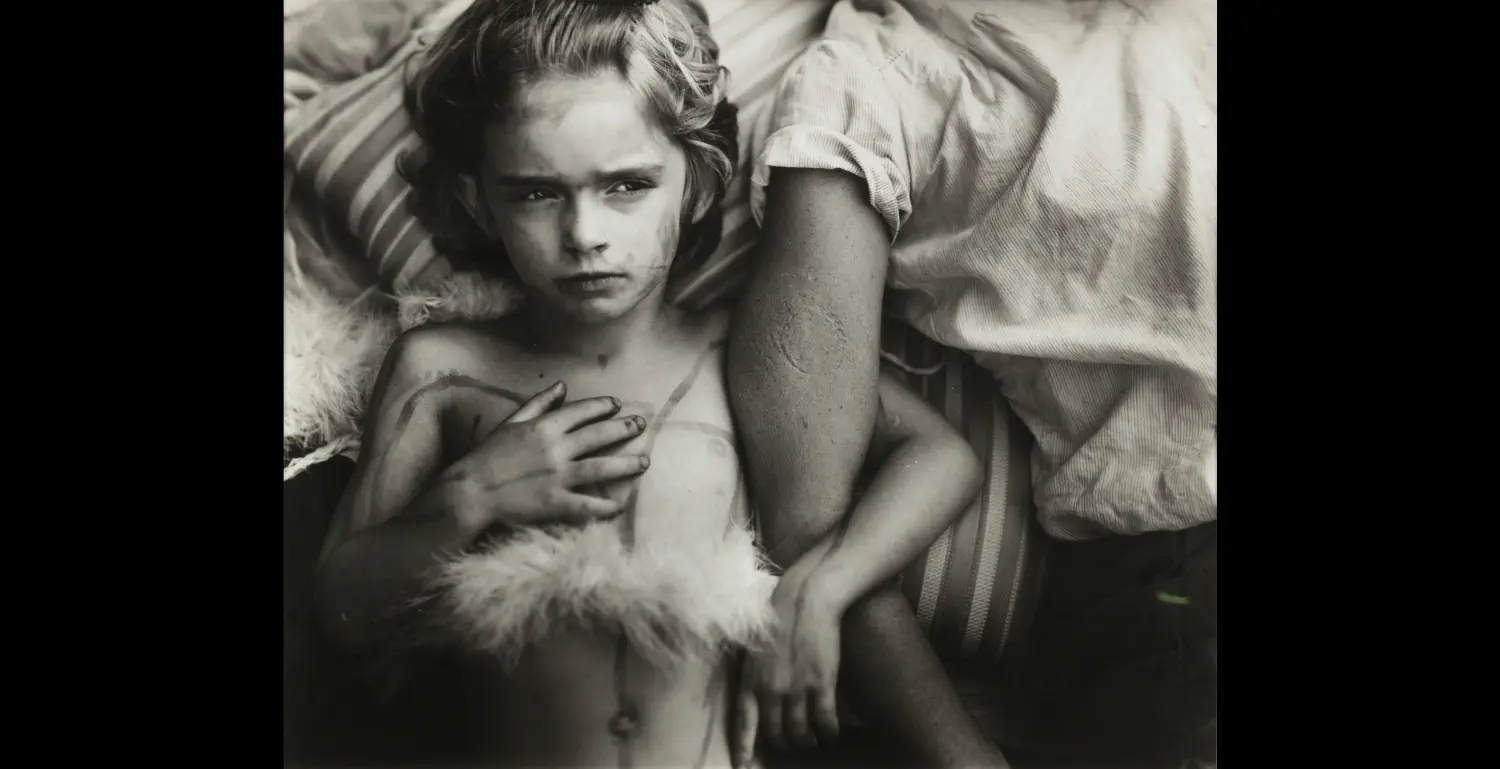
From “Immediate Family”
Joel-Peter Witkin (1939-present): The Grotesque and the Abject Body
Pushing the boundaries of the nude far beyond conventional beauty, Joel-Peter Witkin creates complex, macabre tableaus that explore the darkest corners of human existence. His work is heavily influenced by classical painting, particularly the works of Goya and Bosch, but his subjects are drawn from the extreme margins of society: corpses, hermaphrodites, and individuals with physical deformities.
Confronting the Abject
Witkin’s photography is a direct confrontation with what philosopher Julia Kristeva called the “abject”—that which disturbs identity, system, and order. His work forces the viewer to question their definitions of beauty, normalcy, and the sacredness of the human form. By scratching and altering his negatives, he creates a distressed, antique quality that makes his shocking subjects feel like relics from a forgotten, nightmarish history. While no image is included here due to their graphic nature, works like “The Kiss” (featuring a severed head) are landmarks of challenging, transgressive art.
Cindy Sherman (1954-present): The Postmodern Body Deconstructed
While her early work deconstructed female archetypes, Cindy Sherman’s later work in the contemporary era began to deconstruct the body itself. In the late 1980s and 1990s, she moved away from self-portraiture to use medical mannequins and prosthetic body parts to create grotesque, unsettling scenes. Her “Sex Pictures” series, for example, features dismembered anatomical dolls in explicit, almost clinical poses. These images are a powerful critique of the objectification and fragmentation of the female body in pornography and popular culture. By removing her own presence and using artificial bodies, Sherman takes the conversation about the nude to a postmodern conclusion: the “natural” body is gone, replaced by a simulation, a collection of parts to be arranged and rearranged.
Reclaiming the Body: Identity, Race, and Queerness
This era saw artists from marginalized communities use political nude art to reclaim their identities and challenge a history of art that had often excluded or stereotyped them. For these artists, the nude was not just personal; it was an act of political self-affirmation and historical correction.
Rotimi Fani-Kayode (1955-1989): The Post-Colonial Body
Rotimi Fani-Kayode’s work was a powerful exploration of race, sexuality, and post-colonial identity. Drawing on his Nigerian Yoruba heritage and his experiences as a gay man, he created staged, symbolic portraits that re-appropriated the Black male body from the colonial gaze. In “Bronze Head” (1987), he juxtaposes his living, breathing body with a classical African artifact, creating a profound dialogue about origins, spirituality, and the reclaiming of both the body and cultural heritage.

“Bronze Head” (1987) by Rotimi Fani-Kayode
Ajamu X (1963-present): The Queer Archive of Joy
Ajamu X is a British artist whose work is a vibrant and unapologetic celebration of Black queer identity. His portraits are explicitly political, challenging stereotypes and focusing on themes of desire, pleasure, and self-love. His “Black Bodyscapes” series, as seen in the powerful image below, is an ongoing project to create an archive of Black queer life and desire, presenting his subjects with a confidence and joy that is itself a radical act of resistance against a history of erasure.

From “Black Bodyscapes” by Ajamu X
Laura Aguilar (1959-2018): Claiming Space in the Landscape
Laura Aguilar’s self-portraits were a radical act of claiming space. As a large-bodied, working-class, Latina lesbian, she used her work to challenge conventional beauty standards and give visibility to bodies often ignored by mainstream art. In her “Nature Self-Portrait” series, she places her nude body in the stark landscapes of the American Southwest. The resulting images, like the one below, show her form merging with rock and earth, creating a powerful statement about belonging, rootedness, and the beauty of all bodies in harmony with nature.

From “Nature Self-Portrait” series (1996) by Laura Aguilar
New Perspectives on Form: Abstraction, Intimacy, and Scale
Other contemporary artists offered different, less directly political approaches, focusing on new ways to represent the form itself or exploring a quieter, more intimate vision of the nude.
Spencer Tunick (1967-present): The De-sexualized Collective
Spencer Tunick is famous for his large-scale installations featuring hundreds or thousands of nude participants. By doing so, he de-sexualizes the nude and transforms the collective human form into a living, abstract sculpture that interacts with public spaces. His 2007 installation in Mexico City’s Zócalo square, featuring 18,000 nude volunteers, turned the city’s historic center into a vast, temporary landscape of human flesh, challenging our perceptions of public space and the individual body.

“Mexico City 4 (Zócalo)” (2007) by Spencer Tunick
Mona Kuhn (1969-present): The Ethereal and Intimate
Mona Kuhn’s ethereal photographs present the nude body in dreamlike, naturalistic settings. Her work moves away from confrontation, focusing instead on a sense of timelessness, intimacy, and connection with nature. In her “Evidence” series, she photographed residents of a French naturist colony. The resulting images, like the one below, are captured with a soft, warm light that evokes tranquility and a comfortable, un-self-conscious state of being.

From the “Evidence” series (2007) by Mona Kuhn
The Rise of Body Positivity and Self-Expression
A significant recent movement uses photography to directly counter the idealized bodies of fashion and media, celebrating all body types, sizes, and forms. This is a direct response to the often-damaging beauty standards perpetuated by mainstream culture.
Yossi Loloi (1979-present) and the “Full Beauty” Project
Yossi Loloi’s “Full Beauty” project is a direct and powerful celebration of plus-size bodies. By using classical lighting and graceful posing, as seen in the image below, he presents his subjects with the same dignity and artistry historically reserved for idealized, slender forms. His work is a political act of aesthetic re-framing.

From the “Full Beauty” project by Yossi Loloi
Polly Penrose (1974-present) and the Body in Space
Polly Penrose’s self-portraits explore the physical relationship between her body and its immediate environment. She often contorts her form to fit into domestic spaces—draped over a chair, wedged in a corner—creating abstract, humorous, and sometimes unsettling shapes. Her work is a playful yet profound investigation of how our bodies inhabit, and are shaped by, the spaces we occupy.

Polly Penrose
Conclusion: The Body as a Statement
The Contemporary Era established the nude body as a powerful vehicle for personal and political statements. Whether documenting a subculture, challenging stereotypes, reclaiming a marginalized identity, or celebrating body diversity, these photographers moved beyond aesthetics alone. They proved that a photograph of a nude body could be an act of defiance, a declaration of identity, and a profound commentary on the world we live in. This is their most enduring legacy: transforming the nude from a timeless ideal into a timely, urgent, and deeply human statement.
The Artist’s Perspective: The innovation and courage of these contemporary photographers continue to inspire artists today. For collectors and enthusiasts, limited edition works by award-winning nude art photographer Burak Bulut Yıldırım are available on respected platforms like Saatchi Art and Artsper. You can explore his full portfolio of contemporary projects at burakbulut.org.
For over a decade, Yıldırım has also shared his expertise through nude art photography workshops in Berlin. These workshops offer photographers the opportunity to engage with the rich history of the genre and explore contemporary approaches to the nude in a supportive, professional environment. To learn more about upcoming workshops or to discuss collaborations, connect with us on Instagram or email hello@nudeartworkshops.com.